The closest place to park your trailer isn’t always the most practical. If you’re searching for “where to store a trailer perth”, consider more than distance: a tight driveway, limited space at home or awkward access can make the nearest option a poor fit.
A useful storage arrangement should suit your trailer and make collection straightforward when plans change. The right choice depends on the trailer’s full size, how often you’ll use it, how long it needs to be stored and the level of weather protection you want.
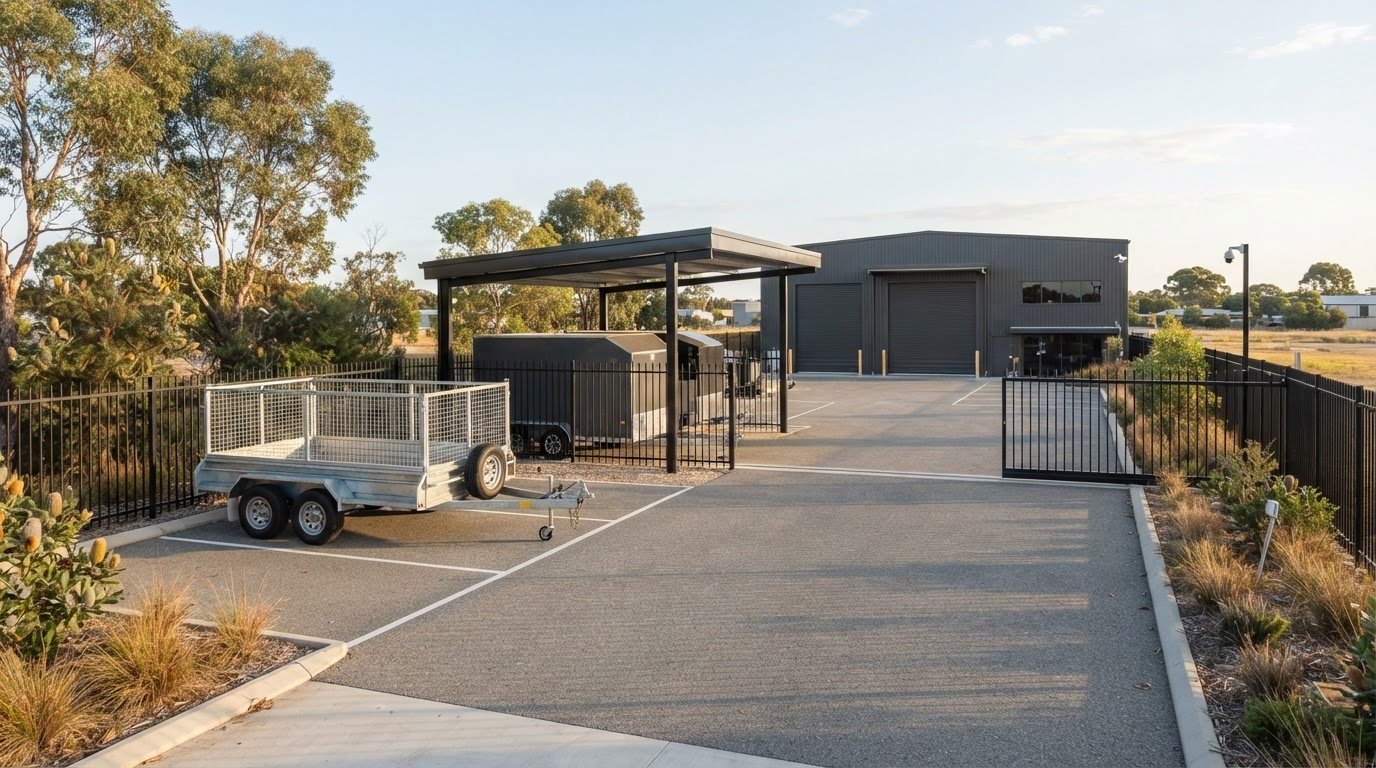
This guide compares practical Perth storage options and explains how to assess fit, access, protection and duration. It also covers simple steps to prepare your trailer before storing it. Allwest Storage & Parking provides truck and trailer storage in hardstand and undercover spaces, with short- and long-term options, 24/7 CCTV monitoring and a facility near major roads.
Key Takeaways
- If driveway or street parking is impractical, a dedicated vehicle storage yard gives your trailer a separate place to stay between trips.
- To decide where to store a trailer perth, measure the full setup and allow room to manoeuvre, not just enough space for its listed dimensions.
- Compare home parking, open-air hardstand and undercover storage by weather exposure, available room and how long the trailer will be stored.
- Before storing your trailer, remove loose items, keep its identifying details accessible and plan how to move it safely in and out.
- Allwest Storage & Parking offers truck and trailer storage in hardstand and undercover spaces, with short- and long-term arrangements.
Where to store a trailer in Perth when home parking is not practical
A trailer can take up valuable space even when it’s only used for occasional jobs or trips. A narrow driveway, shared parking or limited room to turn can make keeping it at home difficult. For Perth owners, a dedicated vehicle storage space is one alternative to driveway or street parking.
Dedicated vehicle storage gives your trailer a place to park away from home. The broader self-storage facilities model includes rented spaces for belongings, while vehicle storage is designed for larger items such as trailers. The main options to compare are home parking, open-air hardstand and undercover storage.
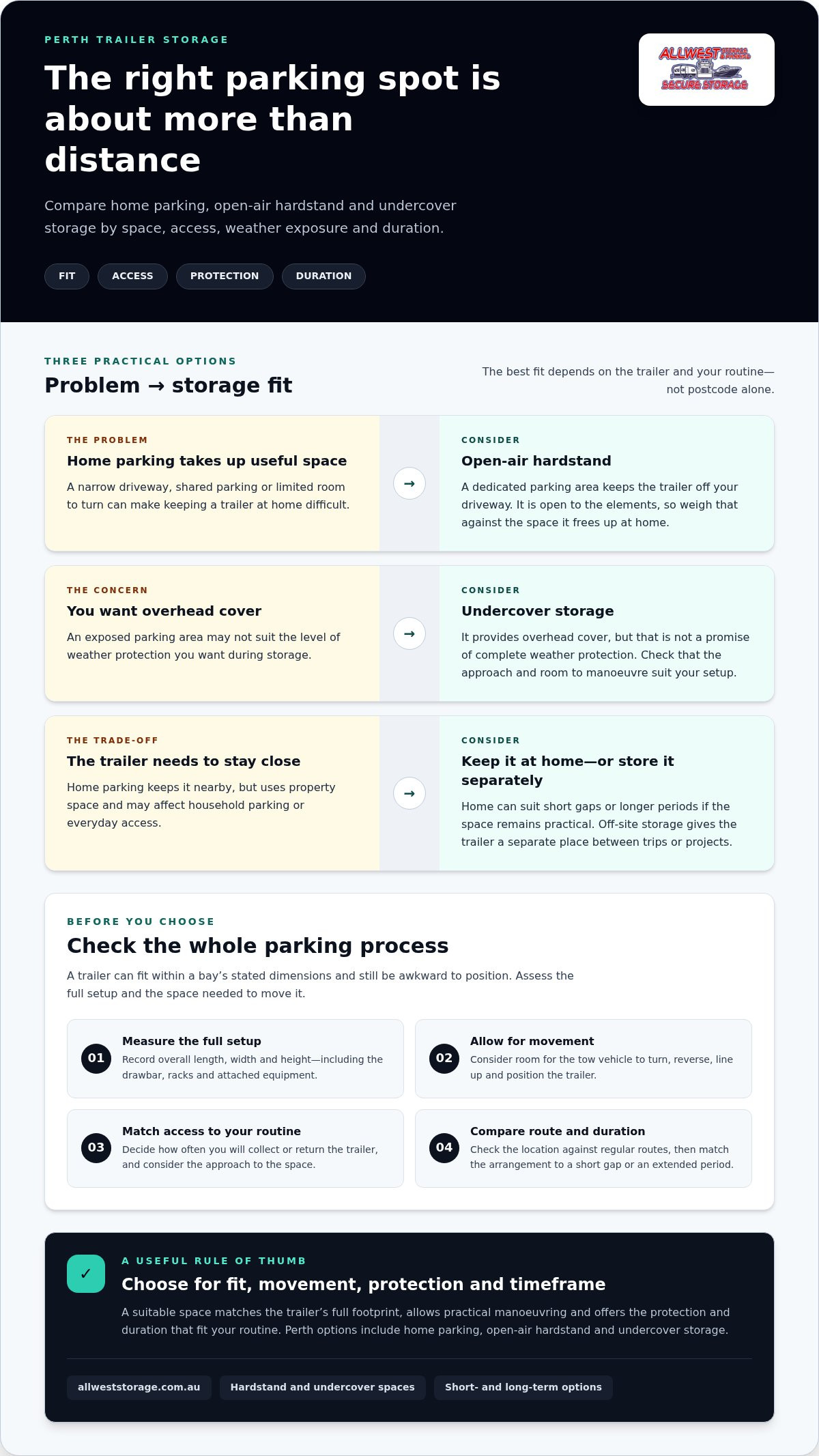
Each option has trade-offs. Home parking keeps the trailer close, but uses space you may need for another vehicle or everyday access. Open-air hardstand provides a dedicated parking area without taking up your driveway. Undercover storage adds overhead cover. The right fit depends on the trailer’s dimensions, how often you need to collect it and whether you’re storing it between jobs or for a longer period.
When is a dedicated trailer storage space useful?
Off-site storage can suit households with a short driveway, shared parking or little room to turn a trailer around. It’s also worth considering if the trailer sits unused for long periods between trips or projects. Moving it out of the way frees up space at home, while a dedicated yard gives it a separate place to stay until you need it.
What trailer details should you note before searching?
Record the trailer’s overall length, width and height, including the drawbar and attached accessories such as racks or equipment. Note whether it’s enclosed, carries equipment or needs frequent access. These details help you compare space and protection options. Also consider the tow vehicle and the room needed to turn, reverse and position the trailer.
Think about the whole parking process, not only whether the trailer fits in a space. A trailer may be within a bay’s stated dimensions but still be difficult to manoeuvre if there’s little room to line up or turn. Compare options based on the trailer’s fit and your routine, not postcode alone.
How to find a trailer storage space in Perth that fits
A suitable storage space needs to work for both the trailer and the way you use it. Use these steps to compare options without relying on a rough size estimate or location alone:
- Measure: Record the full length, width and height, including the drawbar and attached equipment.
- Define access needs: Decide how often you’ll collect or return the trailer, and allow room for towing and manoeuvring.
- Choose protection: Consider whether open-air hardstand or undercover storage better suits the trailer and expected storage period.
- Compare location: Map each option against your regular routes and the roads you’ll use while towing.
- Plan duration: Match the arrangement to whether you need storage for a short gap or an extended period.
How do you check trailer fit and yard access?
Measure the complete setup, not just the trailer body. Include the drawbar, racks and any equipment that stays attached. Then consider the approach: can your tow vehicle turn, reverse and line up with the space without awkward movement? Usable room matters as much as the bay’s listed dimensions. The layout should suit your actual trailer, whether it’s enclosed, heavy or carrying equipment.
Storage terminology and practices can vary. The Self Storage Association of Australasia provides information about the Australian storage industry and can help put commercial storage options in context.
How should Perth location and storage duration affect your choice?
Plot the storage location against the routes you regularly drive, including the roads you’ll take when towing. A location near a convenient route can make collection simpler, but distance alone doesn’t determine fit. Consider whether you need frequent pick-ups and drop-offs or only occasional access. For more on choosing an arrangement by timeframe, read about long-term versus short-term vehicle storage in Perth.
A suitable trailer space matches the full footprint, allows practical movement and offers the protection and duration that fit your routine. Allwest offers Perth truck and trailer storage in hardstand and undercover spaces, with short- and long-term options.
Home parking, hardstand or undercover trailer storage: compare the options
Choosing where to store a trailer in Perth depends on the space you have, how often you use it and how much weather exposure you’re comfortable with. Compare the practical trade-offs before deciding.
| Option | Space at home | Weather exposure | Manoeuvring | Storage duration |
|---|---|---|---|---|
| Home or driveway | Uses space on your property and may affect household parking. | Generally exposed outdoors, depending on the parking area. | Convenient if there’s room to turn, reverse and position the trailer. | Can suit short gaps or longer periods if the space remains practical for household use. |
| Open-air hardstand | Keeps the trailer off your driveway. | Open to the elements. | Depends on the space and yard layout available for positioning. | Can suit short- or long-term storage, depending on your needs. |
| Undercover storage | Frees up space at home. | Provides overhead cover, but isn’t a promise of complete weather protection. | Consider the approach and room to move the tow vehicle and trailer. | May suit either short or extended storage, depending on access and protection priorities. |
When might home or driveway parking work?
Parking at home can be convenient if the trailer fits without blocking everyday access. Check whether there’s enough driveway capacity for the trailer and tow vehicle, and whether household members can still use the space comfortably. Consider the whole movement involved: getting the trailer in and out should be manageable, not just possible once it’s parked.
How do hardstand and undercover spaces differ?
Hardstand is open-air parking, so the trailer remains exposed to the elements. Undercover storage provides a roof over the space, reducing direct exposure from above but not guaranteeing complete weather protection. Consider the trailer’s construction, how long it will be stored and how much cover matters to you.
Allwest Storage & Parking offers both hardstand and undercover vehicle storage, including truck and trailer storage. Choose the space type that best suits your trailer and storage plans. For related commercial vehicle storage context, see the guide to long-term truck parking in Perth.
Neither option suits every owner. Home parking may work well if you have ample room and straightforward access. A dedicated hardstand or undercover space may be more practical if the trailer takes up needed household parking or will be stored away for an extended period.
How to prepare a trailer for storage and keep access manageable
A few simple steps before storage can make it easier to identify your trailer and collect it later. Remove items that shouldn’t remain onboard, secure movable parts and organise the details you’ll need when it’s time to pick it up.
What should you do before leaving a trailer in storage?
Use this checklist before parking the trailer:
- Remove loose valuables and personal items. Clear out anything you don’t want left in the trailer.
- Secure movable components. Stow or fasten loose equipment and accessories so they’re ready for storage and won’t shift during movement.
- Record the trailer’s condition. Take photos and note its identifying details and where it’s parked.
- Keep key information together. Save the trailer’s dimensions, photos and relevant access arrangements in one place.
A brief visual check can also help you spot anything that needs attention before the trailer is parked. Keep mechanical preparation simple here: the aim is to leave it identifiable, orderly and ready to move safely.
How can you make pick-up and drop-off simpler?
Plan the towing vehicle’s route into the storage area and allow room to turn, reverse and line up with the trailer. Keeping its dimensions and photos handy can help you identify it quickly. Organising access details ahead of time also reduces last-minute confusion. If the trailer is a caravan, read the guide to secure caravan storage in Perth.
When comparing where to store a trailer perth, include collection in your decision. The arrangement should suit not only the time the trailer spends parked, but also how you’ll move it in and out when a project or trip comes around.
Allwest provides truck and trailer storage in hardstand and undercover spaces, with short- and long-term arrangements.
A practical Perth option for storing trucks and trailers between jobs
For tradespeople and operators, a trailer can be essential for work but take up valuable space when a project wraps up. A dedicated vehicle storage yard offers an alternative to keeping it on a driveway or in a work area. The right arrangement should suit the trailer’s size, how it will be parked and how long it needs to stay between jobs.
What can a dedicated Perth storage yard offer?
Allwest Storage & Parking provides truck and trailer storage in hardstand and undercover spaces. Hardstand is an open-air parking option; undercover storage provides overhead cover. Choose based on the trailer and the protection you want during storage, bearing in mind that cover does not shield it from every weather condition.
A dedicated space can free up room at home or at your workplace. Allwest’s facility is near major roads, a practical consideration when planning regular towing routes around Perth. The site also has 24/7 CCTV monitoring. The trailer’s fit and safe movement in and out remain important parts of choosing a suitable arrangement.
Storage needs can change between projects. Allwest offers short- and long-term options with no lock-in contracts, giving trailer owners flexibility as work schedules shift. This can suit an uncertain next-job date or a trailer that’s only needed at particular times of year.
What is the next step for trailer owners?
Before choosing a space, bring together three practical details:
- Size: Note the trailer’s full length, width and height, including the drawbar and attached equipment.
- Storage period: Decide whether you need a short-term space between jobs or a longer-term arrangement.
- Access frequency: Consider how often you’ll collect or return the trailer and the room needed to manoeuvre it safely.
These details help you weigh hardstand and undercover options against the way you use your trailer. For Perth owners deciding where to store a trailer, a dedicated space can make the gap between jobs easier to manage without giving up useful room at home.
View Allwest Storage & Parking to explore truck and trailer storage options in Perth.
Choose a storage option that fits your next move
The right place for your trailer depends on its full dimensions, how often you’ll need to collect it and how long it will be stored. Compare home parking, hardstand and undercover spaces by fit, manoeuvring room and the level of weather protection you want. Securing loose items and keeping trailer details handy can also make collection easier.
If you’re weighing up where to store a trailer perth, Allwest Storage & Parking offers truck and trailer storage in hardstand and undercover spaces. The facility has 24/7 CCTV monitoring, with short- and long-term options and no lock-in contracts.
Explore truck and trailer storage with Allwest Storage & Parking to find a practical place for your trailer between jobs or trips.
Frequently Asked Questions
Where can I store a trailer in Perth?
You can park a trailer at home if there’s enough space, or use a dedicated vehicle storage facility. Home parking can be convenient, while off-site storage may suit trailers that take up needed driveway or household parking. Allwest Storage & Parking offers truck and trailer storage in Perth, with open-air hardstand and undercover options to suit different storage needs.
Can I store a trailer at a vehicle storage facility?
Yes. A vehicle storage facility provides a dedicated place to park a trailer between trips or work projects. Allwest Storage & Parking offers truck and trailer storage, with hardstand and undercover spaces, 24/7 CCTV monitoring, and short- and long-term options without lock-in contracts. Consider the trailer’s full dimensions and how you’ll tow it into and out of the space when choosing an arrangement.
Is hardstand or undercover storage better for a trailer?
Neither option is best for every trailer. Hardstand is open-air parking, so the trailer is exposed to the elements. Undercover storage provides overhead cover, but shouldn’t be treated as completely weatherproof. Consider how long the trailer will be stored, the protection you want and the room needed to manoeuvre it. Allwest offers both hardstand and undercover vehicle storage in Perth.
How do I choose the right size storage space for a trailer?
Measure the trailer’s overall length, width and height, including the drawbar and attached accessories. Then allow for more than its parked footprint: your tow vehicle needs room to approach, turn, reverse and line up with the space. A trailer may fit on paper but be difficult to park if there’s little manoeuvring room. Note its dimensions before comparing storage options.
Can I store a work trailer between jobs in Perth?
Yes. Dedicated vehicle storage gives a work trailer a place to stay between jobs rather than taking up room at home or the workplace. Allwest Storage & Parking offers truck and trailer storage in Perth, with short- and long-term options and no lock-in contracts. Consider how often you’ll collect it, its size and whether hardstand or undercover storage better suits your needs.
What should I do before putting a trailer into storage?
Remove loose valuables and personal items, secure movable components and check that the trailer is ready to be parked safely. Take photos of its condition and note identifying details and where it’s positioned. Keep these records, its dimensions and relevant access arrangements together. This makes it easier to recognise the trailer and plan its movement when it’s time to collect it.
Is undercover trailer storage completely weatherproof?
No. Undercover storage provides overhead cover, but that doesn’t guarantee complete protection from weather. The degree of exposure can depend on the space and surrounding conditions. Consider the trailer’s construction, how long it will be stored and the protection you want. Allwest offers undercover and open-air hardstand storage, so you can compare these space types with your requirements.
Leave A Comment