
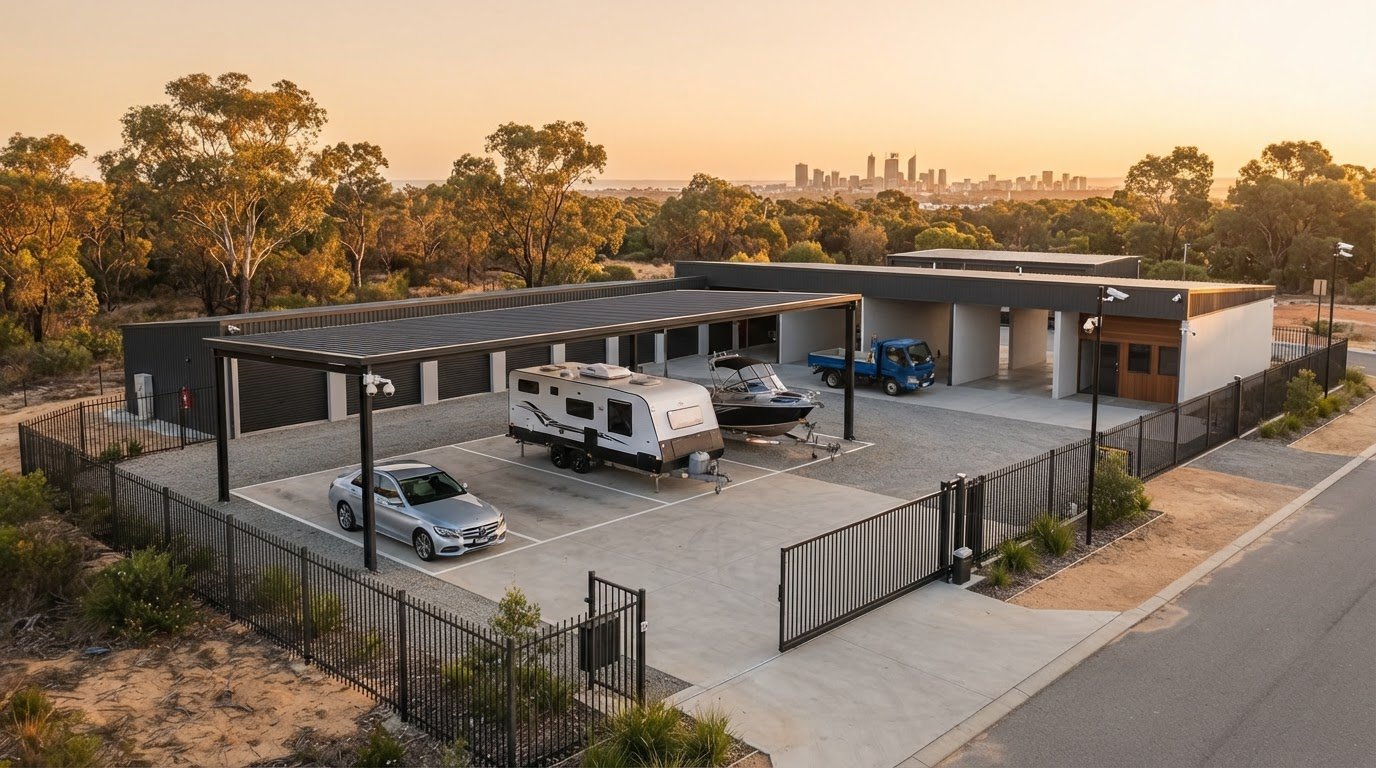
Can your vehicle stay in storage for as long as you need, without tying you to a fixed term? If your plans could change, vehicle storage no lock in contract can offer useful flexibility. The right option still depends on your vehicle, the space it needs and how you want it stored.
It’s understandable to be cautious about committing before you know how long you’ll need storage. No lock-in means you’re not bound to a set storage term, but the agreement still sets out how billing, notice and cancellation work. Flexible storage is most useful when those conditions also suit your vehicle, preferred bay type and security needs.
This guide explains what no lock-in storage means in practice and what to compare before choosing an option in Perth. You’ll learn how hardstand and undercover storage differ, and how to weigh vehicle size, storage duration and security features. Allwest Storage & Parking offers short- and long-term storage for cars, boats, caravans, trucks and trailers, with hardstand and undercover options and 24/7 CCTV monitoring. Use these points to choose an arrangement that fits your plans, whether you need a short stay or longer-term storage.
Key Takeaways
- Vehicle storage no lock in contract means storage without a fixed minimum rental term, but billing, notice and cancellation conditions still depend on the agreement.
- Compare flexible and fixed-term arrangements by how well their commitment suits your expected storage timeline.
- Choose between hardstand and undercover storage based on your vehicle and preferred level of overhead cover.
- Start by considering your vehicle type and dimensions, then weigh storage duration and location in Perth.
- Allwest Storage & Parking offers short- and long-term vehicle storage, hardstand and undercover bays, and 24/7 CCTV monitoring.
What does no lock-in vehicle storage mean for Perth vehicle owners?
No lock-in vehicle storage means there’s no fixed minimum rental term. You don’t have to commit to keeping your vehicle in storage for a predetermined period, which can help if your plans are still taking shape. However, it doesn’t necessarily mean you can end storage immediately or without following the agreement’s conditions.
For Perth owners, a vehicle storage no lock in contract option can help when it’s difficult to predict how long a vehicle will need to be stored. You might be travelling for an uncertain period, storing a boat or caravan between seasons, or waiting for a work project to finish before using a truck or trailer again. A flexible term can make it easier to adapt if those plans change.
Term length is only one part of the decision. Storage facilities can differ in the spaces and arrangements they provide. A general overview of types of self-storage facilities explains the wider category, but vehicle owners also need to consider the specific storage space and agreement that apply to their vehicle.
- Travel: Your return date may shift, changing how long your car or caravan needs to stay stored.
- Seasonal use: A boat or campervan may be stored between trips, with the timing shaped by your plans.
- Changing work plans: Project delays or schedule changes can affect how long a truck or trailer is off the road.
What no lock-in does and does not tell you
No fixed minimum term describes the commitment period, not every condition of storage. Before storing your vehicle, read the agreement for details about billing, when charges are due, any notice required and how cancellation works. These terms determine what you need to do to end storage. Don’t assume “no lock-in” means same-day departure, instant cancellation or no final charges.
Who may benefit from flexible vehicle storage?
Flexible terms can suit owners whose timelines may change. Perth residents storing cars, boats, caravans, trucks or trailers may need storage for a planned short stay or a longer period that shifts as circumstances unfold. Consider what could affect your end date, such as travel plans, seasonal use or a project deadline. This helps you decide whether avoiding a fixed minimum term matters for your situation.
Flexibility is most useful when it gives you room to adapt and the agreement is clear. Understand the conditions before storage begins, then consider your vehicle’s size, preferred storage type and likely duration together. That gives you a practical basis for choosing an arrangement that suits changing plans.
How do flexible and fixed-term vehicle storage arrangements compare?
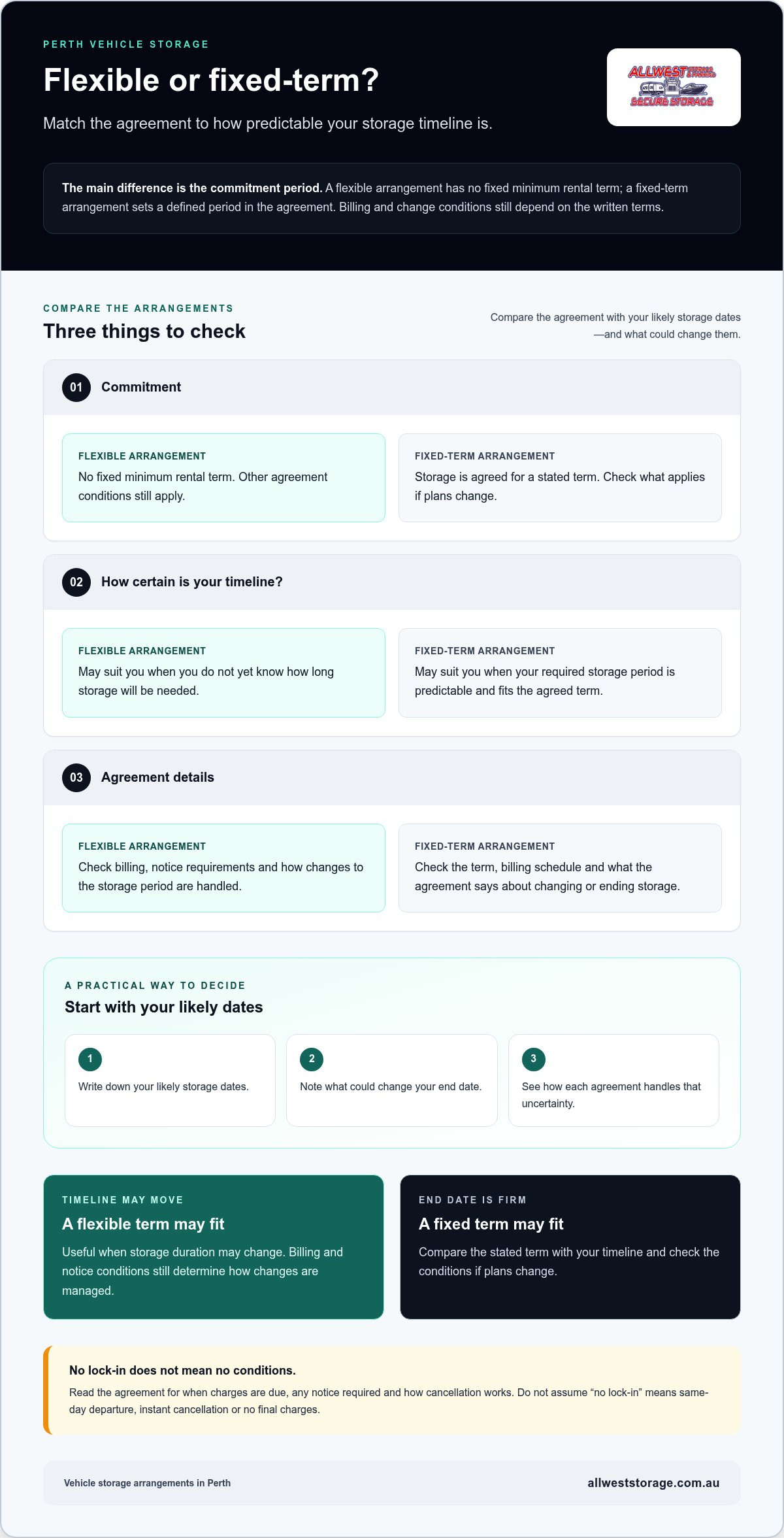
The main difference is the commitment period. A flexible arrangement has no fixed minimum rental term, while a fixed-term arrangement sets a defined period in the agreement. Neither label tells you everything about billing or how changes are handled. Compare the written conditions with how certain you are about your plans.
| What to compare | Flexible arrangement | Fixed-term arrangement |
|---|---|---|
| Commitment | No fixed minimum rental term; other agreement conditions still apply. | Storage is agreed for a stated term; check the conditions that apply if plans change. |
| Uncertain timeline | May suit you if you don’t yet know how long storage will be needed. | May suit you if your required storage period is predictable and fits the agreed term. |
| Details to read | Check billing, notice requirements and how changes to the storage period are handled. | Check the term, billing schedule and what the agreement says about changing or ending storage. |
Flexibility is most useful when your storage duration may change. If you have a firm end date, a fixed-term arrangement may also suit your plans. The better fit depends on how predictable your timeline is, not just which agreement sounds more convenient.
When can a flexible arrangement suit your plans?
An uncertain return date can make a fixed end point difficult to plan around. Overseas travel may run longer than expected, seasonal recreation can shift with your schedule, and temporary work needs can change as a project develops. In these situations, a flexible term avoids a fixed minimum period, while the agreement’s billing and notice conditions still determine how changes are managed.
Which agreement details should you compare?
Read the agreement before storage begins. Look for the rental period, billing schedule, any notice requirements and the process for changing the storage period. Check what it says about your options if plans change earlier or later than expected. A vehicle storage no lock in contract arrangement can offer flexibility, but understanding these details helps you plan how storage will end.
Make a simple comparison: write down your likely storage dates, note what could change them, then see how each agreement handles that uncertainty. If your end date is firm, compare the stated term with your timeline. If it could move, focus on the conditions for adjusting your storage period. This keeps flexibility in view without overlooking practical terms.
For Perth vehicle owners weighing flexible terms against their storage plans, explore flexible vehicle storage in Perth.
Is no lock-in enough? Compare security, storage type and Perth location
A flexible agreement can suit changing plans, but it doesn’t tell you whether the storage space fits your vehicle or preferences. Before deciding, consider the bay type, security features and how practical the location is for your usual routes. These factors matter whether you’re storing a car, boat, caravan, truck or trailer.
For vehicle storage no lock in contract in Perth, compare the arrangement as a whole. A convenient term is useful, but the vehicle still needs a suitable space, and you’ll want to understand which security features the facility provides.
Hardstand or undercover: which suits your vehicle?
Hardstand storage is open-air. It may suit owners who prefer an outdoor bay for a vehicle such as a boat, caravan or trailer. Undercover storage provides a covered bay. This may better suit an owner who prefers overhead cover. Neither option is climate-controlled, so base your choice on the storage format, your vehicle and the conditions you’re comfortable with.
Think about the vehicle’s size and how you’ll use the space. A larger vehicle or trailer may make the bay type especially relevant. Consider whether an open-air or covered setting better fits your practical priorities instead of choosing on contract flexibility alone. The useful comparison brings together vehicle fit and the type of space you want.
What local security and convenience details matter?
24/7 CCTV monitoring contributes to a security-conscious storage environment by monitoring the facility. It’s a useful feature to weigh alongside the storage format, but it isn’t a guarantee against every incident. Consider the security measures in place and how they fit your expectations for storing a valuable vehicle.
Location affects the practical side of storage. Consider the route between the facility and your Perth home or workplace, as well as the roads you’d use to collect or drop off your vehicle. A site near major roads can make those trips more convenient, particularly if you’re moving a boat, caravan or trailer that takes more planning than a car.
- Vehicle fit: Consider the vehicle type and dimensions when comparing bay options.
- Storage format: Choose between an open-air hardstand and an undercover bay based on your preference.
- Security: Include CCTV monitoring in your assessment, without assuming any feature removes all risk.
- Route: Consider how the storage location connects with your usual Perth journeys.
Allwest Storage & Parking offers hardstand and undercover vehicle bays, with 24/7 CCTV monitoring at its Perth facility near major roads. For more context on planning a storage period and choosing an arrangement, the Perth vehicle storage guide explores short- and long-term considerations.
How to choose flexible vehicle storage for your situation
Start with the vehicle, not just the contract label. Use this checklist to compare the storage period, bay type, location and agreement conditions. This makes it easier to decide whether vehicle storage no lock in contract suits your plans and what to consider before you commit.
- Identify the vehicle, its dimensions and your expected storage period. Note whether you’re storing a car, boat, caravan, truck or trailer. Record its length, height and width to understand the space it needs. Estimate how long it may be stored, even if that estimate could change.
- Decide whether your end date is firm or may shift. A known date gives you a clearer basis for comparing a stated rental term. If travel, work or other plans could alter your timing, focus on how the agreement handles changes.
- Choose your preferred bay type. Compare hardstand, an open-air option, with undercover storage, which provides a covered bay. Consider your vehicle and whether you prefer overhead cover.
- Map the Perth location against your routine. Think about the route from home or work, the roads you’ll use and how practical it is to collect or drop off the vehicle.
- Read the agreement conditions. Review the rental period, billing schedule, any notice requirements and the wording on changing or ending storage. Don’t assume these conditions are the same for every arrangement.
Match the storage period to your plans
A firm end date and a shifting timeline call for different comparisons. If you know when you’ll need the vehicle back, compare the agreed term with those dates. If your plans are less certain, consider whether a flexible arrangement gives you room to adapt. Short- and long-term storage options suit different timelines, and the agreement sets out the conditions that apply.
For a closer look at which duration may suit your circumstances, use this long-term versus short-term vehicle storage guide.
Match the bay to the vehicle and routine
A car, boat, caravan, truck or trailer can have different space needs. Use your measurements to consider the bay, then weigh your hardstand or undercover preference. Also think about how often you expect to travel to the site and whether its Perth location works with your usual routes. A suitable option should make sense for both your vehicle and your routine.
Allwest Storage & Parking offers short- and long-term vehicle storage, with hardstand and undercover options in Perth. Find a flexible vehicle storage option in Perth that fits your vehicle and plans.
Flexible vehicle storage in Perth with Allwest Storage & Parking
Allwest Storage & Parking offers Perth vehicle storage with no lock-in contracts and short- and long-term options. You can choose a storage duration without a fixed minimum rental term. The right arrangement still depends on your vehicle, preferred bay and the agreement conditions.
Storage is available for cars, boats, caravans, trucks and trailers. Hardstand and undercover bays provide different storage formats, while 24/7 CCTV monitoring contributes to a security-conscious environment. The Perth facility is near major roads, which can make planning a collection or drop-off more practical.
What Allwest vehicle storage offers in Perth
Flexible storage periods can suit a defined need or plans that may change. You might store a car during a move, keep a boat between outings or park a caravan while it’s not in use. Allwest’s short- and long-term options cater to different timelines, with hardstand or undercover bays to consider alongside your vehicle’s size and your preference.
Caravan owners planning a stay can also use this secure caravan storage guide for Perth to explore relevant storage considerations.
Take the next step with a clear storage plan
Before choosing an arrangement, set out the practical details. Identify your vehicle and its dimensions, your preferred bay type and how long you expect to need storage. If the end date could change, keep that uncertainty in mind as you review the agreement. Read the rental, billing and notice terms so you understand the conditions before storage begins.
A short plan helps you compare the whole arrangement rather than focusing only on flexibility. For example, consider whether open-air hardstand or a covered bay better suits your vehicle, and how the Perth location fits your usual routes. Then weigh those needs against the storage period you expect. If circumstances change, the written agreement explains how to manage the change.
Allwest brings together flexible contracts, short- and long-term options, vehicle bays and CCTV monitoring at a Perth facility near major roads. This gives local owners a practical starting point for matching storage to their vehicle and plans. Review the vehicle storage options and agreement details before making your decision.
View Allwest vehicle storage options and choose a Perth storage arrangement that fits your vehicle, preferred bay and expected duration.
Make your next storage decision with confidence
Plans can shift after a vehicle goes into storage. Start by noting what you know and what could change: your likely storage dates, vehicle dimensions and preferred bay type. This makes it easier to assess whether vehicle storage no lock in contract fits your situation, without treating flexibility as a substitute for understanding the agreement.
Before committing, read the relevant terms and consider how the arrangement would work if your plans changed. A considered choice can help you avoid committing to a period that no longer matches your needs, while keeping the practical details clear from the outset.
For a Perth option that can suit different vehicles and storage timelines, explore flexible vehicle storage in Perth. You can take the next step with a clearer idea of what your vehicle needs and how long you may need the space. A straightforward plan makes it easier to move ahead with confidence.
Frequently Asked Questions
What does no lock-in contract mean for vehicle storage?
It means there’s no fixed minimum rental term, but the agreement still sets out the conditions for using and ending storage. Before placing your vehicle in storage, look for the billing schedule and any notice requirements so you can plan for the end of the stay. A vehicle storage no lock in contract can provide room to adapt, but it doesn’t automatically mean you can leave immediately without following the agreed process.
Can I use no lock-in vehicle storage for a short stay?
Yes, Allwest offers short-term vehicle storage as well as longer-term options. This can suit a temporary need, such as keeping a car off-site during a home move or storing a trailer between uses. No lock-in describes the lack of a fixed minimum rental term; it doesn’t specify how short a stay can be. Read the agreement’s rental and billing details to understand how the arrangement applies to your intended dates.
Does no lock-in mean I can leave whenever I want?
No. No lock-in means you aren’t committing to a fixed minimum term, but it doesn’t necessarily mean storage can end instantly or without conditions. Look at the agreement for the process that applies when you want to remove your vehicle, including any notice wording and how charges are handled. Planning ahead is sensible, especially if you need to coordinate collection with travel, work or another move.
Is flexible vehicle storage suitable if my travel dates change?
It can be a practical fit if your return date is uncertain. For example, if you’re travelling and aren’t sure exactly when you’ll be back to use your car or caravan, avoiding a fixed minimum term may give you more room to adapt. Your agreement still determines how changes are handled, so include its notice and billing conditions in your travel planning rather than assuming the end date can shift without any steps.
Can I choose hardstand or undercover vehicle storage in Perth?
Yes. Allwest offers both hardstand and undercover vehicle bays in Perth. Hardstand is open-air, while undercover provides a covered bay. Your choice may depend on the vehicle and your preference for overhead cover. Consider the overall size of a caravan or boat and the kind of bay you prefer before arranging storage. Neither option should be mistaken for climate-controlled storage.
What vehicles can I store with Allwest in Perth?
Allwest’s vehicle storage suits cars, boats, caravans, trucks and trailers. Before arranging a space, note your vehicle’s dimensions and any attached trailer or towing setup, as these affect the space you need to plan for. Then consider your preferred bay type and how long you may need storage. This gives you a useful starting point for matching the vehicle with a practical Perth storage arrangement.
Does flexible vehicle storage include 24/7 access?
Not necessarily. Flexible contract terms don’t tell you what hours you can access the facility. Allwest provides 24/7 CCTV monitoring, but that refers to surveillance, not customer access. The access arrangements are separate from monitoring, so don’t assume round-the-clock CCTV means you can enter the facility at any time.
Leave A Comment