CCTV coverage and customer access hours are different things. For vehicle storage in Perth’s south east corridor, whether you can reach your car when needed depends on the facility’s access arrangements. Storage can be for cars, caravans, motorbikes, boats, jet skis, vans and trucks, but the space and access requirements differ by vehicle.
It’s reasonable to want clear answers before placing a vehicle in storage, especially when you may need to collect it or make regular payments. This guide explains what types of vehicles can be stored, what to consider when booking and paying monthly, and how to assess security and access features. You’ll also learn how hardstand and undercover options differ, so you can narrow down the arrangement that suits your vehicle and how you plan to use it.
Key Takeaways
- Match the storage space to your vehicle’s size and how you plan to access it.
- Understand how CCTV monitoring differs from customer access hours when comparing storage arrangements.
- Know what to consider when arranging a booking and managing monthly payments.
- Explore hardstand and undercover options for cars, caravans, boats, trucks and trailers.
Security measures, including CCTV, lighting and electronic access
For vehicle storage in Perth’s south east corridor, distinguish security monitoring from customer entry hours. CCTV, lighting and access arrangements each serve a different purpose.
CCTV and lighting
Continuous CCTV monitoring can help record activity around storage areas, while lighting improves visibility in shared spaces. These features work differently: cameras monitor activity, but they don’t provide customer access or guarantee a particular outcome. Check how each feature relates to the vehicle’s storage area and the route between the entrance and parking space. At Belmont, units of 15 m² and above have their own lighting controls, a practical example of lighting being managed at the storage space.
Electronic and facility access
Electronic access means entry is managed through a system, such as a credential-controlled gate or door. It controls entry, but it is not the same as CCTV monitoring. On-site storage keeps the vehicle within the facility rather than at a separate location. For a larger vehicle, consider the route from the entrance to its allocated space, as well as the entry point. Check when customers can enter and how access is managed.
Access hours vary by facility, so CCTV coverage shouldn’t be taken to mean round-the-clock customer entry. Forrestdale access is available 7 days a week, with listed access hours of 5am to 10pm. That gives customers a defined daily window, rather than unrestricted entry at any time. When considering access, match the stated hours to when you expect to collect or park your vehicle. Also distinguish facility access hours from enquiry hours, which may follow a different schedule.
Year-round access depends on the facility’s published entry arrangements, not simply on the presence of monitoring. Before booking, map out when you’re likely to need the vehicle, including routine trips and seasonal use. Then compare those needs with the access window. CCTV monitoring operates continuously at the storage service described here, while the Forrestdale example shows that customer entry can have set hours. Keeping those two details separate helps you choose storage with practical access expectations.
Vehicle storage security features
Registration requirements vary by vehicle and use, while insurance cover depends on your policy wording. Before storing a vehicle in Western Australia, review the relevant documents, including any conditions about keeping it off the road. Prepare the vehicle for the time it will be parked, rather than assuming the same approach suits every vehicle.
Before long-term storage in Perth, wash and dry the vehicle, remove valuables, and secure the doors and windows. For a car or caravan, clear loose items from the cabin and storage compartments. If you use a cover, choose one that fits without trapping moisture against the vehicle. These steps help keep the vehicle organised while it is stored.
Security features have different roles. CCTV monitors activity, while lighting can improve visibility around a vehicle space. Consider the vehicle’s position and whether you can reach it conveniently during customer access hours. Insurance is separate: check your policy wording for cover while the vehicle is stored, and keep the relevant details with your storage records.
Storage type also affects the vehicle’s exposure. Hardstand is an open-air option, while undercover storage provides overhead shelter. Choose based on the vehicle, the space required and your preference for shelter. A car, boat or caravan may have different storage needs, so consider its dimensions and any attached equipment before deciding. Neither storage type replaces insurance or preparation.
Before a longer stay, follow a simple preparation routine: remove personal belongings, close windows and secure loose fittings. Record the vehicle’s condition, including existing marks or damage, for your own reference. For boats and caravans, check accessible compartments and hatches, then leave the vehicle ready for its next planned use.
Registration requirements depend on the vehicle and its use, so review the relevant documents for any conditions while it is off the road. Insurance cover during storage depends on your policy wording. Prepare the vehicle and record its existing condition, including any marks or damage.
Booking and monthly payments
Start by matching the storage space to your vehicle and expected stay. Monthly payments can help you organise ongoing storage costs.
Monthly payments and rental terms
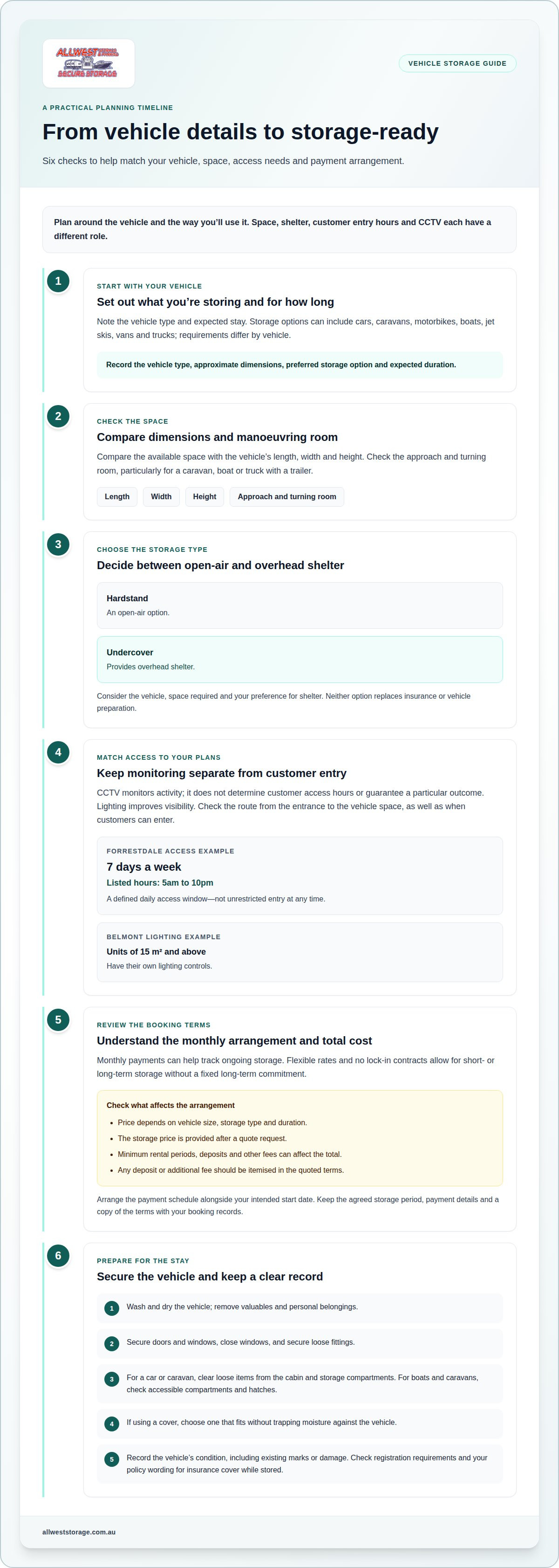
Monthly payments suit storage that continues beyond a brief stay. Flexible rates and no lock-in contracts allow for short-term or long-term storage without a fixed long-term commitment. Minimum rental periods, deposits and other fees affect the total arrangement, so read the booking terms before confirming. The storage price depends on vehicle size, storage type and duration, and is provided after a quote request. Any deposit or additional fee should be itemised in the quoted terms.
Arrange the payment schedule alongside your intended start date. For example, if you’re storing a caravan between trips, consider how long it will remain parked and whether your plans may change. Monthly payments make the ongoing arrangement easier to track, while clear terms support peace of mind. Keep the payment details and agreed storage period with your booking records.
Inspecting and booking a storage space
Compare the available space with your vehicle’s length, width and height. Check the approach and turning room, especially for a caravan, boat or truck with a trailer. Consider whether hardstand or undercover storage better suits the vehicle and your planned stay. These details help you choose a space that is practical to use.
Before booking, set out the key details: vehicle type, approximate dimensions, preferred storage option and expected duration. Confirm the monthly payment arrangement and note the facility’s access hours, so collection plans fit the available window. Keep a copy of the agreed terms and payment schedule. If your plans change, the absence of a lock-in contract provides flexibility around storage duration.
Storage for cars, caravans, motorbikes, boats, jet skis, vans and trucks
Vehicle type and dimensions determine which storage space is practical. In Perth, consider the vehicle, any trailer and the route into the space.
Car, motorbike and van storage
For a car, compare its dimensions with the parking bay and allow room to manoeuvre. An Osborne Park covered and open car bay measures 2.4 m by 5.4 m, or 12.96 m². A motorbike needs less parking area, but positioning and access still matter. Vans vary in size, so assess their height and length against the available space before arranging storage.
Hardstand provides an open parking area; undercover storage provides overhead shelter. A vehicle’s dimensions help determine which option fits. For example, a Leeming hardstand space measures 3.8 m by 5.1 m, or 19.38 m². Use these measurements as examples of how space can be described, not as a universal fit for every vehicle. Include mirrors, racks and other fixed fittings when considering width and height.
Caravan, boat and truck storage
Caravans, boats, jet skis and trucks need space suited to their overall length and width. Include a trailer or tow assembly in the measurements. Wattleup undercover camper storage measures 2.2 m by 6 m, or 13.2 m². That example helps illustrate why a longer caravan may need a different space from a car. Trucks and boat-trailer combinations also need room to enter and leave without difficult manoeuvres.
Before storing a vehicle, match its full dimensions to the space and consider how often you’ll collect it. A compact boat or jet ski may have different parking needs from a truck or caravan, even when both use a trailer. Choose between hardstand and undercover storage based on vehicle size and shelter preference. Arrange vehicle storage that suits what you need to park.
Allwest Storage & Parking: Caravan & Campervan Storage
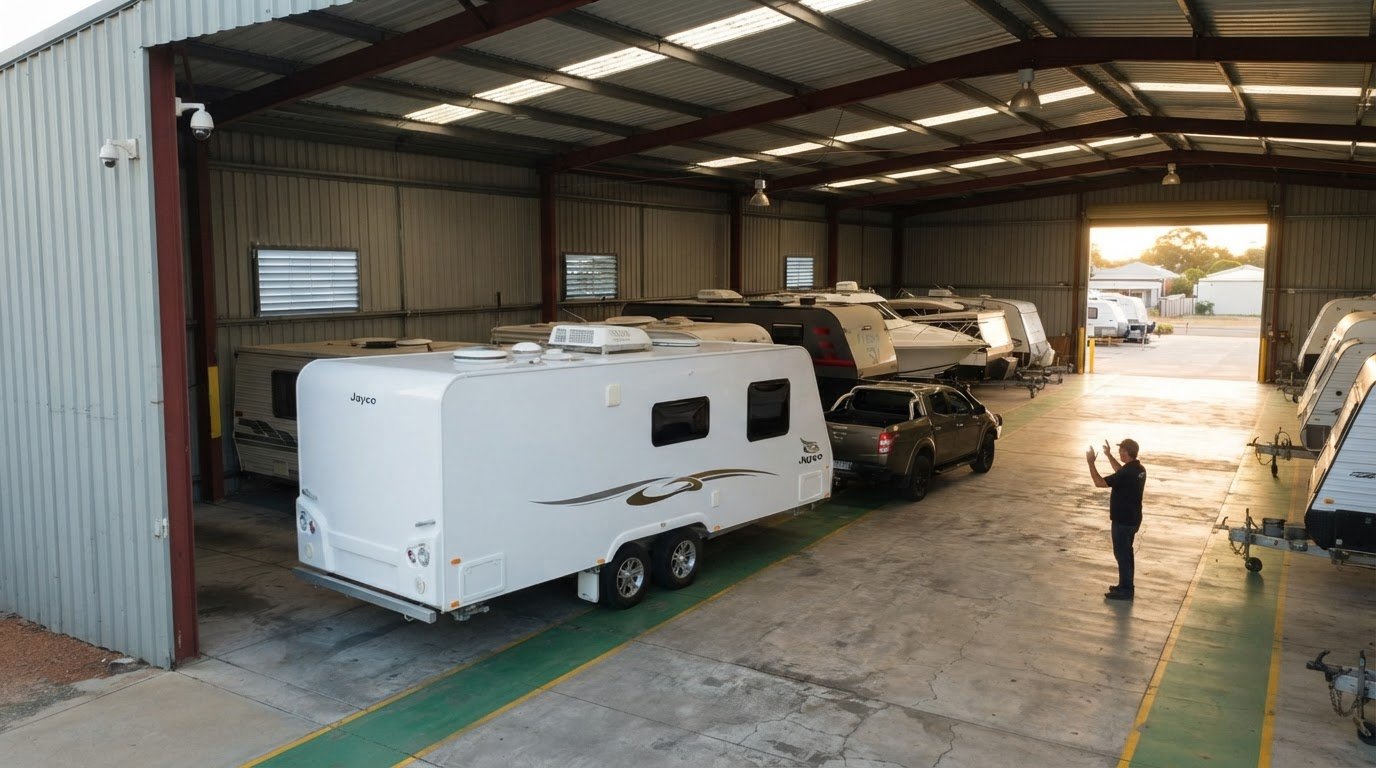
Allwest Storage & Parking offers Caravan & Campervan Storage for owners needing space between trips or for longer-term parking. Boat Storage, Car Storage and Truck & Trailer Storage are also available. Choose between hardstand and undercover options to suit your vehicle and shelter preference. Both short-term and long-term storage are available, with flexible rates and no lock-in contracts. The facility has 24/7 CCTV monitoring.
If your vehicle is ready to be stored, consider which space type suits its dimensions and how long you expect to leave it there. A caravan needing overhead shelter may call for a different option from a car parked between uses. Contact Allwest Storage & Parking to discuss vehicle storage.
Plan storage around your next trip
Plan storage around when you expect to use the vehicle again. Consider how long it will be parked, what needs to be ready before departure, and whether collection hours fit your schedule. A clear timeline helps you prepare without leaving everything until the last minute.
Before storage begins, note your expected collection date and any tasks to complete beforehand. For example, list personal items to remove and equipment to bring when you return. Keeping these details together makes it easier to plan the transition back to regular use.
Review your timeline if your plans change. Adjust your preparation and collection schedule to align with your next trip. Planning ahead makes the transition from storage to the road more straightforward.
Frequently Asked Questions
Can I access my car when I need it?
You can collect your car during the customer access hours set by the storage facility. For an unexpected trip, check whether those hours suit your likely departure and return times. Keep the access arrangements with your booking information and plan your collection before travelling to the facility. CCTV monitoring is separate from customer entry and does not mean access is available at all times.
How much does car storage cost?
Car storage rates depend on the space required and the length of the stay. For a useful budget, consider the full expected period rather than focusing only on the first month. A vehicle that needs more space may affect the quote. Request pricing for your vehicle and intended stay, using the same details when comparing storage options.
What Vehicles Can You Store?
Allwest Storage & Parking provides storage for cars, boats, caravans, campervans, trucks and trailers. If your vehicle has a tow assembly, roof fittings or other attached equipment, include them in its overall measurements. This helps establish the space needed and avoids measuring only the vehicle body. Note unusual dimensions when requesting a quote.
What vehicle storage facilities are available along Perth’s south-east corridor?
Vehicle storage provides an allocated space, with hardstand and undercover options for different needs. Compare how the space and site access fit your vehicle and routine. If you use the vehicle for work, consider whether customer access hours fit your working day. For occasional use, plan collection ahead of time.
Which suburbs are included in Perth’s south-east corridor for vehicle storage searches?
“Perth’s south east corridor” is a useful search description, not a single suburb. The practical location depends on where you’re travelling from and where you expect to use the vehicle. Consider the route between home, work and the storage site. Allwest Storage & Parking is conveniently located near major roads in Perth, making it a practical option to consider.
What are the current prices for car, caravan, boat and trailer storage in south-east Perth?
Your quote depends on the space required and expected storage period. To request a relevant price, provide the vehicle’s dimensions, including any trailer or attached fittings, and your likely start date and length of stay. These details help match the quote to your storage needs. Allwest Storage & Parking offers flexible short-term and long-term storage, with discounted rates for extended stays.
Leave A Comment