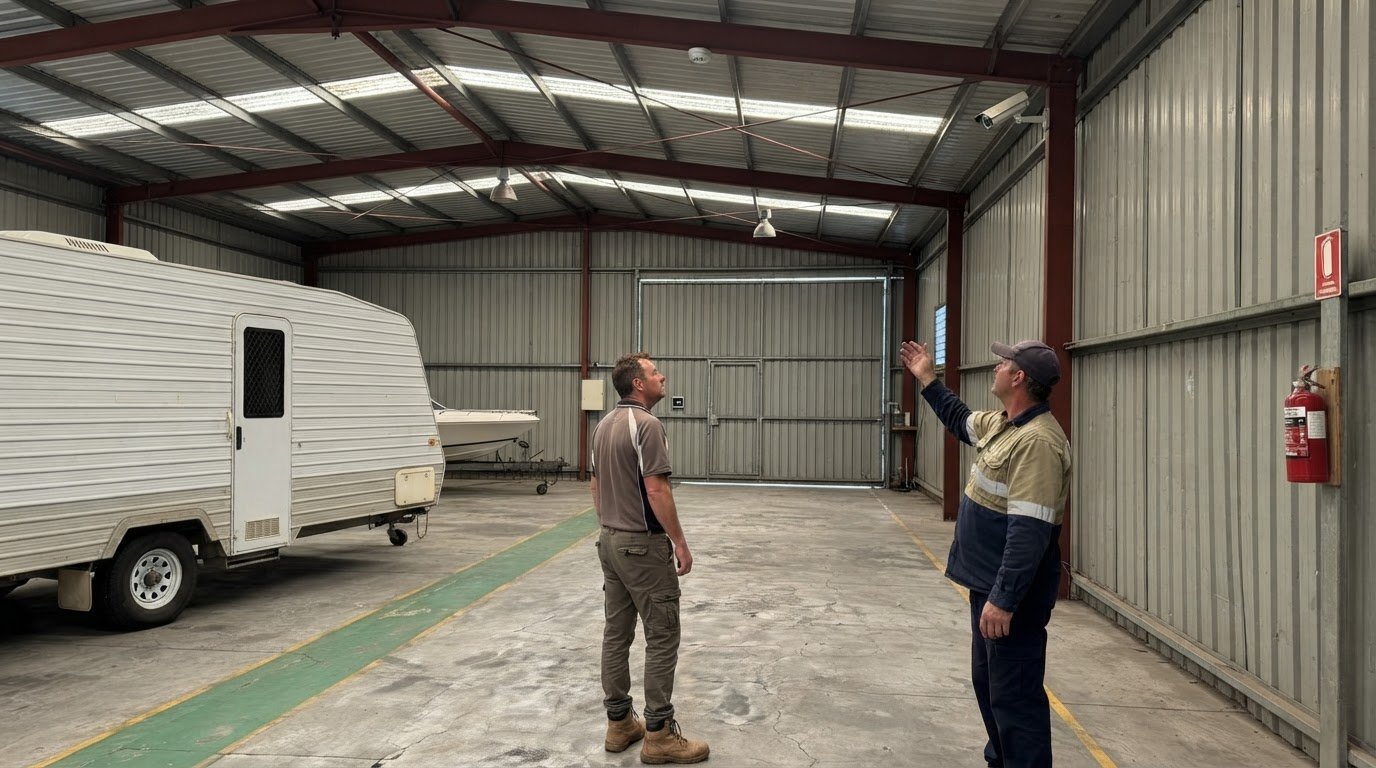
A locked gate alone isn’t a complete security plan. A vehicle storage facility security checklist should cover 24/7 CCTV, controlled entry, good lighting and intruder alarms. Check for fire detection and protection, such as alarms, extinguishers or sprinklers, along with access hours, staff presence and vehicle collection arrangements.
When choosing where to store a valuable vehicle, look beyond the perimeter fence. Controlled entry helps manage who can access the site, while CCTV and fire protection address different risks. Check that the facility’s access arrangements suit how often you expect to visit.
This guide covers security monitoring, entry procedures and fire safety, and explains how to assess whether a storage setup suits your vehicle. Use the checks to compare practical features, including lighting, access records and the condition of the storage area.
Key Takeaways
- Look for CCTV coverage of entrances and storage areas, plus a clear record of who enters and leaves.
- Consider how lighting, intruder alarms, staff presence and access arrangements work together to protect the site.
- Match the storage setup to your vehicle, and understand your own insurance cover while it is stored.
- Check that fire protection includes detection and suitable equipment, such as extinguishers or sprinklers.
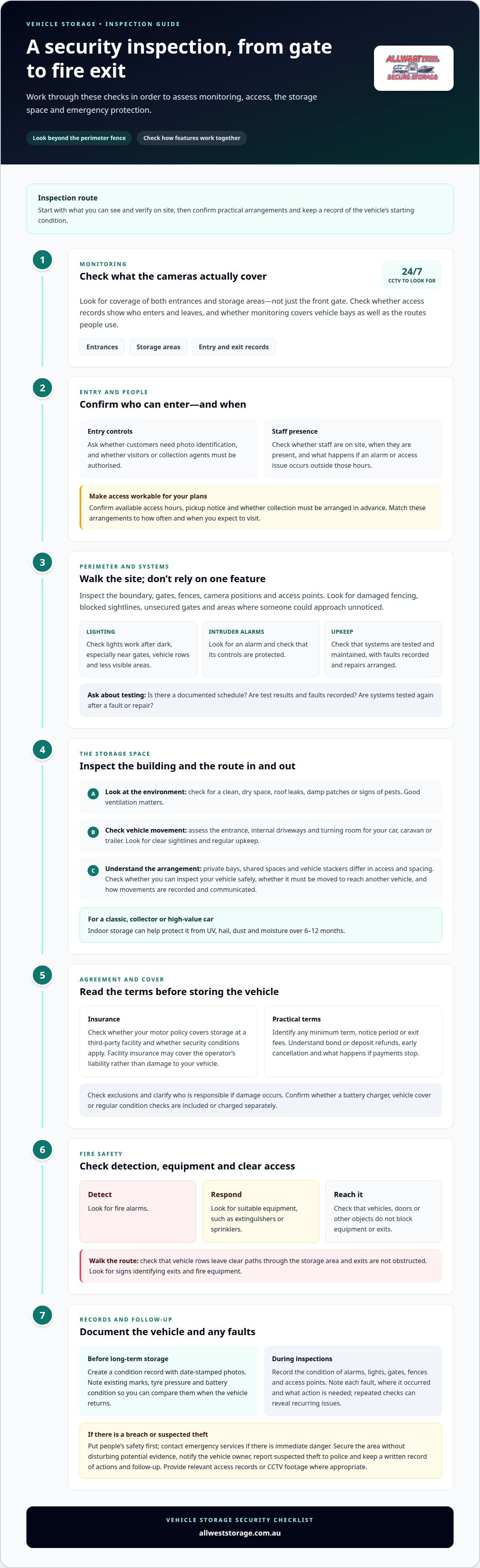
1. CCTV, on-site presence and access controls
For a vehicle storage facility security checklist, start with camera coverage. CCTV should monitor entrances and storage areas, not only the front gate. Check how entry is controlled and whether access records show who enters and leaves. This helps you assess whether monitoring covers both the vehicle bays and the routes people use.
On-site staff can respond to activity differently from remote monitoring. Ask whether staff are present, when they’re on site, and what happens if an alarm or access issue occurs outside those hours. Check whether customers need photo identification and whether visitors or collection agents must be authorised before entering.
Access hours affect how easily you can collect or inspect a vehicle. Confirm when access is available, how much notice a pickup requires and whether collection needs to be arranged in advance. Match these arrangements to your travel plans, especially if you’re storing a vehicle away from home or need access at a particular time.
Include the facility’s location in your access planning. Consider the route for your car, caravan or trailer, and whether the entrance and internal driveways allow safe movement. During a visit, inspect gates, fences, camera positions and the general condition of the storage area. Look for clear sightlines and signs of regular upkeep.
Ask how often security systems are tested and maintained. A sound process follows a documented schedule informed by system instructions, records test results and faults, and arranges repairs when needed. Testing after a fault or repair helps confirm the system is working again.
Before long-term storage, create a condition record with date-stamped photos. Note existing marks, tyre pressure and battery condition so you can compare them when the vehicle returns. This complements site security checks by documenting the vehicle’s condition at the start.
2. Security features at vehicle storage facilities
In Australia, applicable security obligations can depend on a facility’s location and operations. An inspection checklist can support risk assessment, but it doesn’t replace compliance with requirements that apply to the site. Look for an intruder alarm and good lighting, especially around gates, vehicle rows and less visible areas.
Inspect the full security setup rather than relying on one feature. Check that alarm controls are protected, lights work after dark and access points are secured. Walk the boundary and storage area, noting damaged fencing, blocked sightlines, unsecured gates and places where someone could approach unnoticed. A suitable setup should help prevent unauthorised entry and make activity easier to detect.
Operators should assess risks based on the site layout and the vehicles stored there. For example, a poorly lit corner can make it harder to move a vehicle or spot damage. Consider attempted entry, tailgating through a gate, misuse of keys or access codes, and vehicle damage. A classic car may need particular attention to its position and how people can reach it.
A vehicle storage facility security inspection checklist should record the condition of alarms, lights, gates, fences and access points. Note each fault, where it occurred and what action is needed. Repeated checks can reveal recurring faults or areas that need closer attention.
If there’s a breach or vehicle theft, put people’s safety first and contact emergency services if there’s immediate danger. Secure the affected area without disturbing potential evidence, record what happened and notify the vehicle owner promptly. For suspected theft, report it to police and provide relevant access records or CCTV footage where appropriate. Keep a written record of actions and follow-up.
For a practical next step, explore vehicle storage options suited to your needs.
3. Choosing a secure car-storage facility
Visit the facility before committing and inspect the building and storage area in person. Look for a clean, dry space without roof leaks, damp patches or signs of pests. Check that driveways are wide and safe, with enough room to move your car without passing close to other vehicles.
Match the storage arrangement to your car and the period it will be stored. A private bay, shared space and vehicle stacker offer different access and spacing. For a classic, collector or high-value car, indoor storage can help protect it from UV, hail, dust and moisture over 6-12 months. Good ventilation also matters.
Review your insurance terms before storing your car. Check whether your motor policy covers storage at a third-party facility and whether security conditions apply. Facility insurance may cover the operator’s liability rather than damage to your vehicle. Read the agreement for exclusions and clarify who is responsible if damage occurs.
Read the agreement for practical details as well as general terms. Identify any minimum term, notice period or exit fees, and understand how a bond or deposit is refunded. Check what happens if you cancel early or stop paying. Confirm whether items such as a battery charger, vehicle cover or regular condition checks are included or charged separately.
Before choosing, review how vehicle movements are recorded and communicated to the owner. Check whether the storage space allows inspection and safe access, and whether your car will need to be moved to reach another vehicle. These details affect convenience and the risk of incidental contact.
4. Fire detection and protection
Fire protection should include detection and a way to respond. Look for fire alarms and suitable equipment, such as extinguishers or sprinklers. During a site inspection, note where the equipment is located and whether vehicles, doors or other objects block access. An extinguisher is less useful if people can’t reach it quickly.
Consider how the layout affects access in an emergency. Check that vehicle rows leave clear routes through the storage area and that exits aren’t obstructed. A tight aisle between cars, caravans or trailers can make movement difficult. Note whether signs identify exits and fire equipment, and whether the building layout is easy to understand from the storage area.
Ask how alarms and fire equipment are inspected and maintained. A clear process identifies faults, records maintenance and addresses equipment that is damaged or obstructed. Look for signs of upkeep during your visit, including accessible equipment and clear routes. CCTV and intruder alarms address different risks and don’t provide fire detection.
Fire safety also involves using vehicles inside enclosed spaces. RAC WA advises opening garage doors and windows before starting a stored car’s engine to prevent harmful exhaust fumes from building up. If a vehicle needs to be moved during an inspection, consider whether the area is ventilated and the route is clear. Don’t start an engine in an enclosed space without adequate ventilation.
Preparing a vehicle doesn’t replace facility fire protection. For storage lasting months, follow vehicle-specific guidance for items such as fuel and batteries. Tyre pressure or axle stands may matter for long-term storage, but they don’t detect or control a fire. Climate and temperature conditions are also separate from alarms, extinguishers and sprinklers.
For a storage option that suits your vehicle, explore vehicle storage options.
Allwest Storage & Parking
Allwest Storage & Parking provides storage for vehicles when you need a place for a car, caravan, campervan, boat, truck or trailer. Hardstand and undercover options let you choose a setup that suits your vehicle and storage needs. The facility has 24/7 CCTV monitoring, an important feature to consider as part of your security checks.
If you’re comparing storage arrangements, consider which option suits your vehicle and how you expect to access it. Allwest Storage & Parking offers both short-term and long-term storage, with flexible rates and no lock-in contracts. These options can suit changing plans without committing to a fixed contract term.
To discuss storing your vehicle with Allwest Storage & Parking, request a quote through the website.
Make your storage decision with confidence
Turn your vehicle storage facility security checklist into a decision record. Note which features matter most for your vehicle, how you expect to access it and which terms need to suit your plans. This gives you a clear basis for choosing instead of relying on one security feature alone.
Consider how your storage needs might change before choosing. A vehicle kept for a short period may have different access requirements from one stored longer. A written list of priorities can help you choose a suitable arrangement now and revisit it if your plans change.
Allwest Storage & Parking can help you consider storage options for your vehicle. For the next step, contact Allwest Storage & Parking to discuss your requirements and find an option that suits your plans.
Frequently Asked Questions
What security features should a vehicle storage facility in Australia have?
Look for layered protection rather than relying on a single device. A facility’s setup may combine monitored cameras, an intruder alarm, lighting, secured boundaries and controlled entry. Consider how these measures work together at entrances, along vehicle rows and in less visible areas. At a Perth site, inspect the storage layout in daylight and after dark if possible, and note any obscured approaches.
What are the best access control systems for vehicle storage facilities?
Choose a system that limits entry to authorised people and keeps an access record. Individual codes or credentials are more accountable than a shared code because access can be linked to a person and removed when no longer needed. Visitor approval and clear rules for collection agents also help. The setup should suit the facility’s entry points and the way customers arrange vehicle access.
How should CCTV be installed and monitored at a vehicle storage facility?
Cameras should capture useful views of entry routes and vehicle storage areas without obvious blind spots. Check whether gates, parked vehicles or structures block the view. Monitoring should include a clear process for reviewing alerts and retaining footage when an incident is reported. Ask how footage can support an investigation and whether camera views remain useful when lighting conditions change.
What fencing, gates and lighting are recommended for vehicle storage yards?
Look for an intact perimeter fence, gates that close and secure properly, and lighting that covers entrances, vehicle rows and walking routes. Walk the boundary to check for gaps, damaged sections or dark corners. Lighting should help staff and visitors see obstacles without leaving key approaches hidden in shadow. Regular upkeep matters: a loose latch or failed light can undermine the setup.
How can vehicle storage facilities prevent theft, vandalism and unauthorised access?
Use several controls together: restrict entry, record access, maintain cameras and alarms, and keep the site orderly so unusual activity is easier to notice. Clear visitor procedures can reduce unauthorised entry, while records of vehicle movements can help identify discrepancies. Owners can also keep current photos and vehicle details, making it easier to describe a car or trailer accurately if it’s damaged or missing.
How often should vehicle storage facility security systems be tested and maintained?
Test and maintain systems on a documented schedule informed by their instructions, recording test results and faults and arranging repairs as needed. Test them again after a fault or repair to confirm they’re working.
Leave A Comment