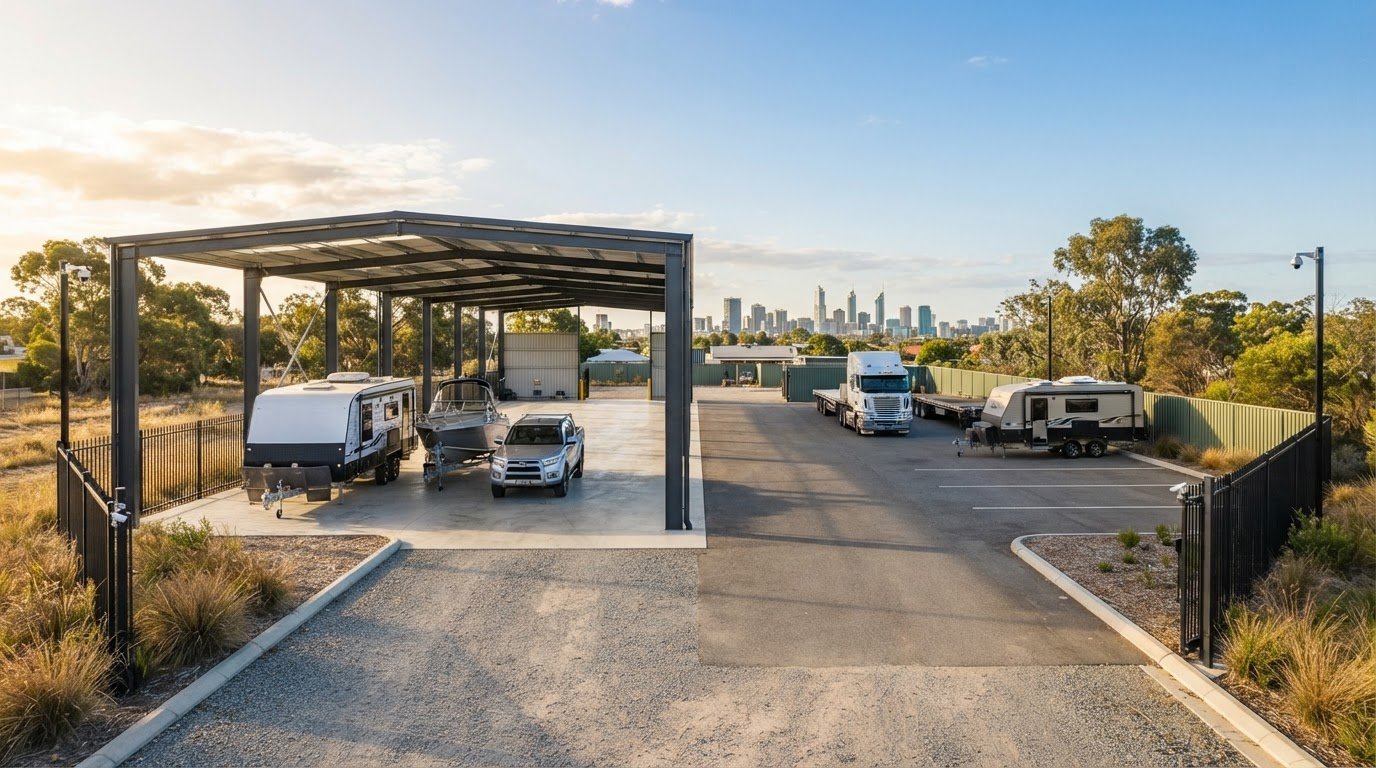
The most sheltered option isn’t automatically the right one for every vehicle. When weighing undercover vs hardstand storage, consider how much protection your vehicle needs and whether shelter matters more than space, access or storage duration. Perth vehicle owners storing a car, boat, caravan, truck or trailer can start by deciding how comfortable they are with outdoor exposure.
Undercover storage provides overhead shelter from direct sun and rain, while hardstand storage offers an open-air space. The right fit depends on your vehicle’s size and condition, how often you’ll need to move it and how long it will be stored. This guide compares exposure, vehicle fit and practical use to help you choose. Allwest Storage & Parking offers both undercover and hardstand vehicle storage in Perth, with short- and long-term options, flexible rates, no lock-in contracts and 24/7 CCTV monitoring.
Key Takeaways
- Understand how undercover and hardstand storage differ, including why shelter doesn’t mean sealed or climate-controlled storage.
- Compare exposure, vehicle fit and how you plan to use your vehicle before choosing a storage type.
- Consider how long your vehicle will be stored when deciding how much protection from the elements matters to you.
- Measure your vehicle, including any attached trailer or towing equipment, before choosing a storage space.
- Match your priorities with Allwest’s Perth storage options and flexible short- and long-term arrangements.
Undercover vs hardstand storage: what is the practical difference?
The main difference is shelter. Undercover storage places a vehicle in a sheltered bay, while hardstand storage provides an open-air space. This affects how much direct exposure a vehicle receives, but it doesn’t determine how secure the facility is. In the undercover vs hardstand storage comparison, assess weather protection and security separately.
Undercover means sheltered, not sealed. It isn’t climate-controlled storage and doesn’t promise complete protection from every weather condition. Hardstand is an open-air vehicle space; the Hardstand Wikipedia article provides further background on the term and its uses.
What does undercover vehicle storage provide?
An overhead shelter reduces a vehicle’s direct exposure to sun and rain. This may appeal if you’d prefer to keep paintwork, fittings or other surfaces out of direct weather where possible. The shelter doesn’t enclose the vehicle or control temperature, and conditions can still reach it from the sides. If your vehicle will be stored for an extended period, consider whether reducing direct exposure is a priority for you.
What does hardstand vehicle storage mean?
Hardstand storage is an open-air space for parking a vehicle outside a covered bay. A car, boat, caravan, truck or trailer stored this way is more exposed to weather and surrounding conditions than it would be under overhead shelter. That doesn’t make hardstand unsuitable. It’s a practical option for owners who are comfortable with outdoor parking. Weigh the exposure against your vehicle’s needs, storage period and plans for using it.
Security and weather protection are different things. CCTV helps monitor a storage facility, but it doesn’t shield a vehicle from rain or direct sun. A roof reduces some direct exposure, but shelter alone doesn’t monitor activity around a vehicle. Allwest Storage & Parking has 24/7 CCTV monitoring and offers both undercover and hardstand storage in Perth. Consider each feature on its own rather than assuming one replaces the other.
For example, if you store a vehicle between occasional trips, you may prioritise a space and shelter that suit its size and condition. If it will be parked for an extended period, consider how comfortable you are with ongoing outdoor exposure. Neither option is automatically best for every vehicle. Start by identifying what each type provides, then match those features to your priorities.
Compare undercover and hardstand storage for protection, access and use
The right choice depends on more than whether a roof is available. Compare the amount of shelter, your vehicle’s exposure and fit, and how often you’ll need to move it. Storage duration matters too: a vehicle parked for months may raise different concerns from one stored between regular outings. Neither option is automatically best for every vehicle or owner.
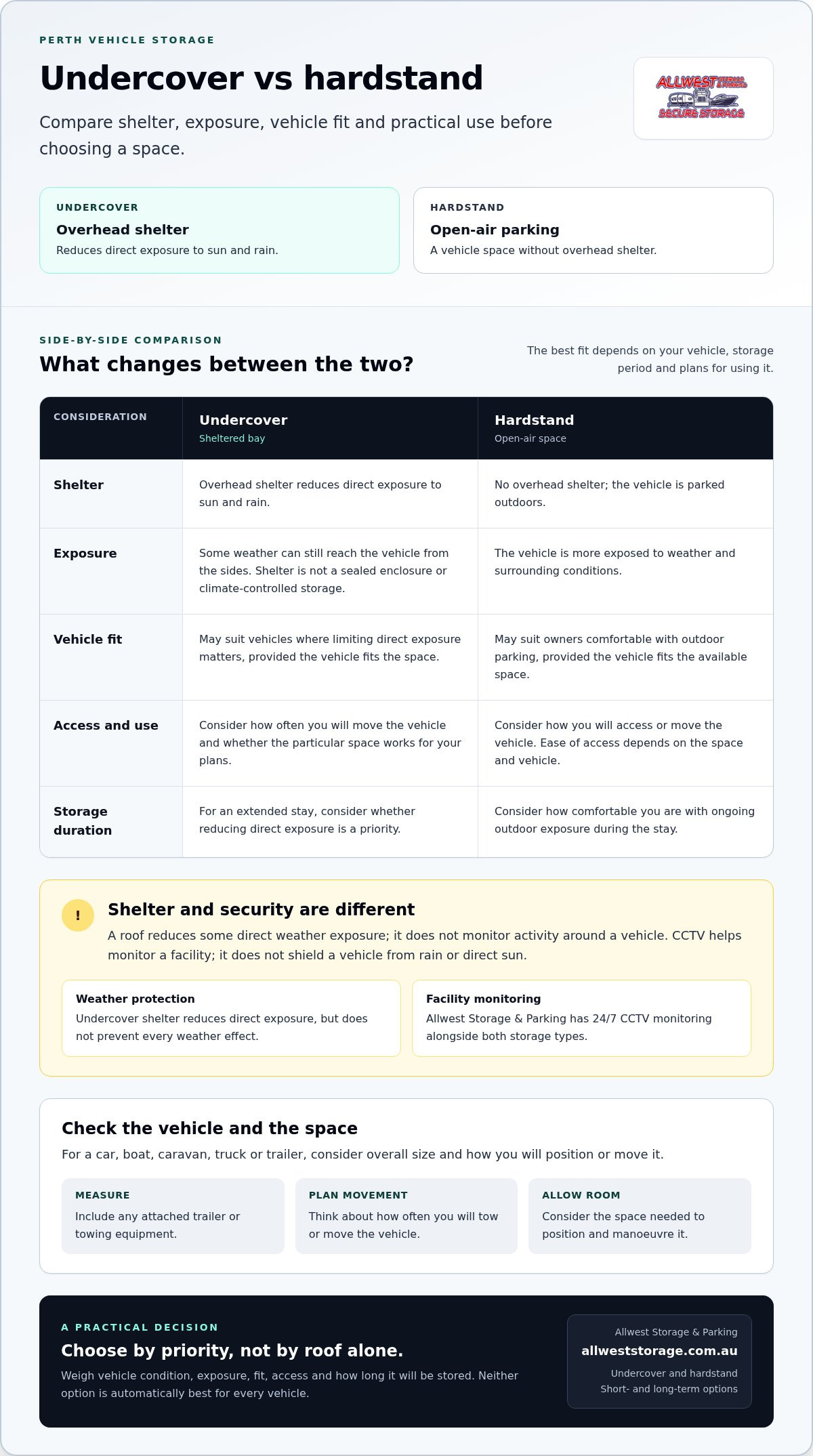
| Consideration | Undercover storage | Hardstand storage |
|---|---|---|
| Shelter | Overhead shelter reduces direct exposure to sun and rain. | Open-air parking, with no overhead shelter. |
| Exposure | Some weather can still reach the vehicle; shelter isn’t a sealed enclosure. | The vehicle is more exposed to weather and surrounding conditions. |
| Vehicle fit | May suit vehicles where limiting direct exposure is a priority, provided the vehicle fits the space. | May suit owners comfortable with outdoor parking and a vehicle that fits the available space. |
| Decision factors | Consider shelter, vehicle condition and storage duration. | Consider exposure, vehicle size and how you’ll access or move it. |
How does shelter affect vehicle exposure?
In Perth, base your decision on the vehicle’s condition and how long it’ll be parked, rather than relying on a blanket rule about local weather. Undercover storage may appeal if you’d prefer to keep surfaces out of direct sun and rain. Hardstand may suit a shorter stay or owners who are comfortable with open-air conditions. Neither option prevents every weather effect, and undercover storage doesn’t control temperature.
Exposure is only one part of the comparison. CCTV monitoring helps monitor a facility, but it doesn’t provide shelter. Allwest Storage & Parking has 24/7 CCTV monitoring alongside both undercover and hardstand options. Storage categories also vary, as illustrated by U-Haul Vehicle Storage Options, but your choice should reflect your vehicle and intended use.
Which storage type suits different vehicle uses?
A car used regularly needs a space that works with your planned movements. For boats, caravans, trucks and trailers, consider overall size and the effort involved in positioning or moving the vehicle. Think about whether you’ll tow it out often, whether equipment will remain attached and how much room you need to manoeuvre. Don’t assume one storage type offers easier access; that depends on the particular space and your vehicle.
Caravan owners can explore more vehicle-specific considerations in this Perth caravan storage guide. To compare Allwest’s Perth vehicle storage options, start with your vehicle type, access needs and preference for shelter.
Does undercover storage justify choosing it over hardstand?
Not automatically. Undercover storage can reduce a vehicle’s direct exposure to sun and rain, but the value of that benefit depends on what you’re storing, how long it’ll be parked and what matters most to you. Hardstand can be a practical choice if open-air storage suits your vehicle and plans. Rather than defaulting to the most sheltered option, decide whether shelter addresses a concern that matters to you.
When might undercover storage be worth prioritising?
Consider undercover storage if your vehicle will be unused for an extended period and you’d prefer to limit repeated direct exposure to the elements. Owners of a high-value car, boat or caravan may place greater importance on a sheltered space, particularly if the vehicle is used infrequently. Shelter can reduce direct exposure, but it doesn’t enclose the vehicle, control temperature or guarantee that weather-related deterioration won’t occur.
Duration is one factor, not a rule. A vehicle parked for longer has more time in storage, which may make exposure a bigger consideration for you. The vehicle’s condition, your tolerance for outdoor conditions and how often you’ll use it count too. A shorter stay doesn’t automatically make hardstand right, just as a longer stay doesn’t make undercover essential.
When can hardstand storage be a practical fit?
Hardstand may suit owners who are comfortable with open-air parking and need a space that fits their vehicle. It can be a sensible option for a truck, trailer, boat or caravan if shelter isn’t a priority and the vehicle will be accessed or moved as needed. Choosing hardstand doesn’t prepare a vehicle for time off the road, so consider how to prepare it for storage.
Think through your likely use before deciding. If you’ll take a boat out regularly or move a trailer between jobs, consider how often you’ll need to access and manoeuvre it. If a car will stay parked while you’re away, you may give more weight to reducing direct exposure. For a large vehicle, size and positioning may matter as much as shelter. Base your decision on the actual vehicle and intended use, not just its category.
Use these questions to weigh the trade-off:
- How long will it be stored? A longer period may make exposure more relevant to your decision.
- What concerns you most? Decide whether limiting direct sun and rain or choosing open-air storage better fits your priorities.
- How will you use it? Consider how often you’ll retrieve, tow or reposition the vehicle.
- What are you storing? Account for the vehicle’s size, condition and any attached trailer or equipment.
If you’d prefer to keep a less-used vehicle sheltered, undercover may feel like the more suitable choice. If outdoor parking meets your needs, hardstand may be entirely practical. Compare your priorities first, then select the storage type that fits. This is a more useful way to approach the undercover vs hardstand storage decision than assuming one option is always superior.
How to choose between undercover and hardstand storage in Perth
A simple four-step check can turn the undercover vs hardstand storage decision into a practical match between your vehicle and your plans. Identify what you’re storing, record its full size, rank your priorities, then choose the option that best fits.
- Identify the vehicle. Note whether you’re storing a car, boat, caravan, truck or trailer. Consider its condition and how you’ll use it while it’s in storage.
- Measure the full vehicle. Record its length, width and height. Include a boat trailer, caravan fittings, towing equipment or anything else that extends the vehicle’s overall footprint.
- Rank your priorities. Decide how important shelter, reduced direct exposure, convenient movement and flexible storage duration are to you. Put your main concern first.
- Match the storage type. Choose undercover if overhead shelter is a priority and it suits your vehicle. Choose hardstand if open-air parking fits your needs and you’re comfortable with greater exposure.
Measure the vehicle and consider how it is used
Measurements help you make a more informed choice than relying on a vehicle label alone. A caravan with fittings or a boat on its trailer takes up more room than the vehicle body by itself. Note the complete length, width and height, then consider the space needed to position and move it. If you’ll take the vehicle out regularly, factor in how often you’ll tow it away and return it.
Rank your storage priorities before deciding
Ask yourself what matters most. If shelter from direct sun and rain is high on your list, undercover may suit you better. If an open-air space meets your needs, hardstand may be a practical fit. Think about storage duration too. A short stay and a long stay can raise different concerns, but neither automatically dictates the right option. For more help weighing the time factor, see this long-term versus short-term vehicle storage comparison.
Keep security separate from weather exposure. CCTV monitoring relates to surveillance, not shelter; a roof reduces direct exposure but doesn’t provide monitoring. Allwest Storage & Parking offers both storage types in Perth, with short- and long-term options and no lock-in contracts. These terms can help you align a storage arrangement with your plans without treating the shelter choice as a security measure.
Once you’ve noted your vehicle’s full dimensions and ranked your priorities, compare them with Allwest’s Perth vehicle storage options to choose a suitable fit.
Choose a Perth storage option that fits your vehicle and plans
There isn’t one storage type that suits every vehicle. Undercover storage prioritises shelter from direct exposure, while hardstand suits owners who are comfortable with open-air parking. Let your vehicle, its expected time in storage and your own priorities guide the choice. A clear preference makes it easier to compare practical options without assuming that extra shelter is always necessary.
What Allwest storage options offer Perth vehicle owners
Allwest Storage & Parking offers both undercover and hardstand vehicle storage in Perth. Options are available for cars, boats, caravans, trucks and trailers, giving owners a choice of storage type for different vehicle needs. Consider the vehicle as a whole, including any trailer or attached equipment, and have its dimensions and likely storage duration in mind as you decide.
Security and weather exposure are separate considerations. Allwest’s 24/7 CCTV monitoring is a security feature; it doesn’t provide shelter or protect a vehicle from the elements. Undercover storage provides overhead shelter, while hardstand is open-air storage. Neither description means climate-controlled storage. Keeping these features distinct helps you choose based on what each option actually provides.
Take the next step with a clear storage preference
Before arranging storage, decide which vehicle you need to store and whether you expect the arrangement to be short or long term. Think about what matters most: shelter, open-air parking or storage terms that can accommodate changing plans. Allwest offers short- and long-term options, flexible rates and no lock-in contracts, so you can consider the storage period without committing to a fixed contract term.
A little preparation helps you make a more informed choice. Note the vehicle’s overall dimensions, including attached equipment, and identify your preferred storage type. Then consider how the storage duration fits your plans. These details give you a practical starting point for exploring vehicle storage in Perth, whether you’re storing a car between uses or keeping a caravan, boat, truck or trailer out of the way.
Choose the option that aligns with your vehicle and plans, then explore Allwest vehicle storage in Perth.
Make your storage choice with confidence
Before settling on an option, write down what would make storage feel right for you. It might be reducing direct exposure, keeping a vehicle parked between trips or choosing an arrangement that fits your plans. This gives you a clear basis for deciding, rather than second-guessing whether you chose the most sheltered option.
Your priorities can change as your vehicle use changes. A boat used regularly may have different storage needs from one kept aside for an extended break. Revisit your choice if your plans or vehicle circumstances shift. The best undercover vs hardstand storage decision is one that continues to suit the way you use and store your vehicle.
Allwest offers Perth vehicle storage options for a range of needs, with flexible short- and long-term arrangements and no lock-in contracts. Explore Allwest vehicle storage in Perth and choose an option that fits your vehicle and plans.
Frequently Asked Questions
Is undercover vehicle storage completely weatherproof?
No, undercover vehicle storage isn’t completely weatherproof. A roof can reduce direct exposure, but wind-driven rain, dust and surrounding conditions may still reach a vehicle. For example, water may collect on exposed surfaces even if the vehicle is under shelter. Treat undercover storage as one layer of protection, not a sealed enclosure. Consider your vehicle’s condition and follow its manufacturer’s storage guidance, particularly if it’ll be parked for an extended period.
Can hardstand storage suit a vehicle stored for several months?
Yes, hardstand storage can suit a vehicle kept for several months if you’re comfortable with outdoor exposure and the space fits its size and use. Before deciding, consider the vehicle’s condition, whether you’ll need to move it during storage and how you’ll prepare it. A longer stay doesn’t automatically rule out hardstand; it gives you more time to weigh exposure against your other storage priorities.
How should I measure a caravan or boat before choosing storage?
Measure the full vehicle in its storage configuration, including length, width and height. For a caravan, include fittings or equipment that extend its overall dimensions. For a boat, measure it on its trailer and include the tow hitch and any attached equipment. Record the measurements clearly, using the same units, and note anything that could affect positioning. This gives you a more useful guide than relying on the vehicle’s model name alone.
Does 24/7 CCTV monitoring protect a vehicle from weather?
No. CCTV monitoring relates to security surveillance, not weather protection. It doesn’t block rain, sun, dust or wind. Think of these as separate parts of your storage decision: monitoring concerns security, while the choice between undercover and hardstand affects overhead shelter. Allwest Storage & Parking has 24/7 CCTV monitoring at its Perth facility, but the cameras don’t change how exposed a vehicle is to outdoor conditions.
Should I prepare a vehicle differently for undercover and hardstand storage?
Preparation depends more on the vehicle and how long it’ll be stored than on the storage label alone. Remove personal belongings, close windows and secure loose items before leaving it. For a longer stay, consult the owner’s manual for relevant storage guidance on items such as the battery and tyres. Don’t assume undercover storage removes the need to prepare a vehicle, as it isn’t a sealed or climate-controlled space.
Can Allwest store caravans, boats, cars, trucks and trailers?
Yes. Allwest Storage & Parking provides storage in Perth for caravans, boats, cars, trucks and trailers. Vehicle dimensions and your preference for shelter can help guide whether undercover or hardstand storage is the practical fit. Short- and long-term arrangements are available, with flexible rates and no lock-in contracts. Have your vehicle type and intended storage period in mind as you consider the available options.
Leave A Comment