
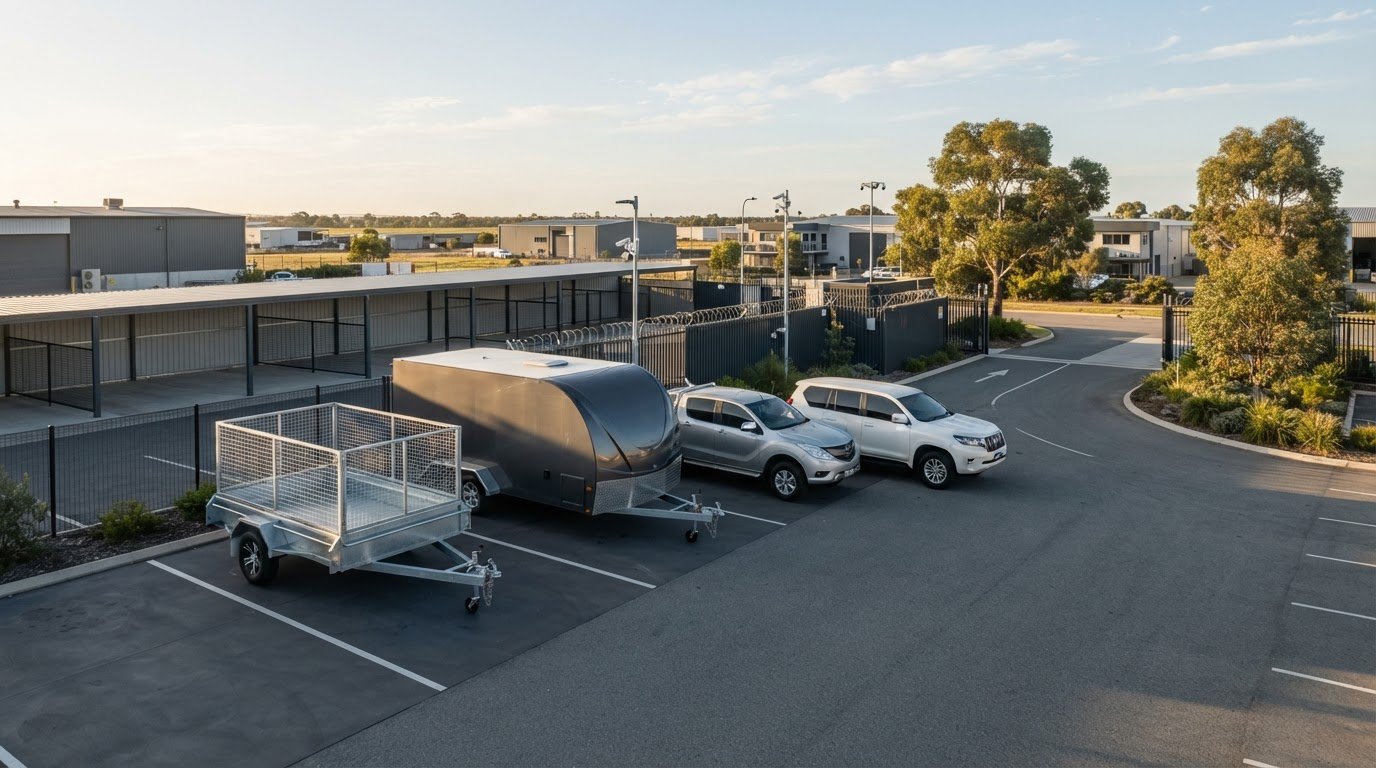
The closest space may not be the best choice for trailer parking Welshpool owners need. A trailer needs room to fit, suit the way you use it and park somewhere you’re comfortable leaving it.
Finding room near home, work or a regular route can be difficult, especially when you’re weighing open-air hardstand against undercover parking. The right choice depends on your trailer’s size, how often you access it and how long you need to store it. This guide compares practical options around Welshpool and explains what to consider before choosing a space.
You’ll also see how hardstand and undercover parking differ, and how short- or long-term arrangements can suit changing trailer use. Allwest Storage & Parking offers truck and trailer parking in Perth, with hardstand and undercover options, 24/7 CCTV monitoring and flexible rental terms without lock-in contracts. Its Perth facility is near major roads, which can be useful when planning trips around Welshpool and the wider metro area. Use the points below to assess the fit and choose a practical storage arrangement.
Key Takeaways
- For trailer parking Welshpool, compare the location with your regular routes, not just the distance from home or work.
- Measure the complete trailer footprint, including the drawbar and towing setup, to check whether a space is practical.
- Weigh open-air hardstand against undercover parking based on your priorities for exposure and day-to-day convenience.
- Plan around how often you’ll move the trailer and how long you need the space, then choose a rental term that suits your use.
- Consider turning room and route suitability for both your trailer and tow vehicle before arranging parking.
Trailer parking near Welshpool: what makes a space suitable?
Trailer parking is an allocated vehicle space sized and arranged for a trailer, rather than general car parking, a holiday park or a household storage unit. That distinction matters: a trailer needs room for its full length and towing setup, plus enough manoeuvring space to enter and leave without repeated repositioning.
If you’re looking for trailer parking Welshpool owners can use as a practical base, start with your regular routes and parking needs. A space convenient to work may suit a trailer used between jobs, while a Perth location near major roads may work better if you tow in different directions. Compare the actual journey from Welshpool or your workplace with your usual travel, rather than judging convenience by a suburb name alone.
Trailers vary in design and purpose. A box trailer used for equipment has different parking needs from a boat trailer or a work trailer carrying bulky gear. This overview of types of trailers and their uses provides useful context, but the practical test is how your own trailer fits and moves.
When a dedicated trailer parking space makes sense
A separate parking base can help when a work trailer sits unused between jobs, a recreational trailer is only used seasonally, or there’s no suitable place to keep it at home. An allocated space can free up a driveway or reduce clutter at a worksite. For a Welshpool-area business, it can keep a trailer separate from daily vehicle movements; for a Perth owner, it offers an alternative to parking the trailer at home.
What to assess before comparing Welshpool-area options
Write down the trailer’s full length, width and height, including overhangs or fittings that affect its footprint. Note whether it stays hitched to the tow vehicle or is parked separately. Then consider how frequently you’ll collect and return it. A trailer moved most workdays has different access needs from one kept for occasional trips.
- Dimensions: Measure the complete trailer, not only the deck or cargo area.
- Towing setup: Account for the drawbar and whether the tow vehicle will remain attached.
- Turning room: Consider the space needed to line up, reverse and leave safely.
- Location: Compare the route from Welshpool or your workplace with the wider Perth drive.
Check the journey as well as the parking space. Allwest’s Perth facility is near major roads, making it a practical point to consider for travel around the metro area. Compare the drive from your starting point, the roads you typically use and the time involved in picking up the trailer. This gives you a clearer idea of convenience for your routine.
How to choose trailer parking around Welshpool: a four-step comparison
A useful comparison looks at the trailer, your routine and the parking space together. Use these four checks to narrow down practical options for trailer parking Welshpool owners may be considering, rather than choosing on location alone.
- 1. Check the complete trailer fit. Record the overall length, width and height, including the drawbar, spare wheel, jockey wheel and fixed equipment. The required footprint is larger than the deck. If you park with the tow vehicle attached, include its length too. A space that only fits the trailer body can make parking or hitching impractical.
- 2. Map your arrival and departure needs. Think about how often the trailer will leave the site and whether you’ll usually tow it with the same vehicle. A work trailer used between jobs calls for a different routine from one stored for an extended period. Consider the approach, turning room and space needed to reverse or line up. Match the parking arrangement to the way you plan to use the trailer.
- 3. Choose a surface to suit your priorities. Hardstand is an open-air parking option, while undercover parking provides overhead cover. Consider how much exposure matters for your trailer and how often you need to move it. Either way, check the full footprint and manoeuvring room.
- 4. Match the rental period to your plans. Short-term parking can suit a project or changing work schedule, while a longer arrangement may make sense for a trailer used less often. Allwest offers short- and long-term storage, flexible rates and no lock-in contracts, so you can choose an arrangement that suits changing needs.
Match the space to the trailer and its use
Measure before making an enquiry, then note whether the trailer will be stored hitched or separately. A tow vehicle needs room to enter, turn and leave, especially if you’ll collect the trailer frequently. For occasional use, consider whether the parking arrangement suits the full period you expect to keep it there. This fit-first approach is also useful for long-term truck parking in Perth, where vehicle dimensions and intended use also shape the choice.
Compare parking conditions and rental flexibility
Consider the parking surface and rental period together. A trailer used regularly for a temporary work assignment may need a different combination from one kept between seasonal trips. Allwest Storage & Parking provides hardstand and undercover options in Perth, with 24/7 CCTV monitoring. Its facility is near major roads, which can help with travel around Perth. For a broader view of available arrangements, explore Allwest vehicle parking options.
Before deciding, compare the drive from your usual starting point with the trailer’s expected collection schedule. A space that suits both the vehicle and the route can make regular pick-ups easier to plan. Weigh these details together so the arrangement works for your needs around Welshpool and across Perth.
Hardstand or undercover trailer parking near Welshpool?
Choosing between hardstand and undercover parking comes down to the trailer’s dimensions, how you use it and how much overhead protection matters. For trailer parking Welshpool owners are comparing, neither option is automatically the better fit. Choose the one that accommodates the complete trailer and suits the way you’ll park and retrieve it.
| Consideration | Hardstand parking | Undercover parking |
|---|---|---|
| Exposure | Open-air parking leaves the trailer exposed to sun and local weather. | Overhead cover can reduce direct exposure to sun and rain, but doesn’t mean the trailer is fully protected from weather. |
| Convenience | An open parking area may suit a straightforward yard-style approach, particularly when the trailer’s overall height makes overhead clearance a consideration. | Cover may suit owners who prioritise overhead protection, provided the trailer can fit beneath it. |
| Likely use | Consider it for a trailer used regularly or where open-air parking meets your priorities. | Consider it for a trailer kept between trips when reducing direct overhead exposure is important. |
| Questions of fit | Check the full footprint and room to manoeuvre into and out of the space. | Check the full footprint as well as the trailer’s height and towing configuration. |
When hardstand parking may suit a trailer
Hardstand is an open-air option that can be practical for larger vehicles or trailers when a straightforward yard-style parking arrangement suits the way you arrive and leave. It avoids the need to fit beneath overhead cover, but the trailer remains exposed to sun and local weather. Consider the trailer’s materials, fittings and intended use when deciding whether that exposure works for you.
When undercover parking may be worth considering
Undercover parking adds overhead protection, which can reduce direct exposure to sun and rain. It doesn’t provide complete weather protection, so keep that distinction in mind when weighing your priorities. Height is essential: include the trailer’s highest point and any fixed fittings in your measurements. Allwest offers both hardstand and undercover vehicle parking in Perth.
Compare the entire parking arrangement, not just the surface. Think about how often you’ll tow the trailer, how easily you can manoeuvre it and whether overhead cover matters more than open-air access. A frequently used work trailer may call for a different balance from one parked for occasional use. The right option is the one that fits both the vehicle and your routine.

Plan trailer parking around Welshpool: access, timing and preparation
A smooth storage arrangement starts before you tow the trailer to its parking space. Details about the trailer, tow vehicle and expected storage period help you plan the move and choose an option that fits your routine. When considering trailer parking around Welshpool, assess the journey from work, home or regular destinations rather than relying on a suburb name alone.
Prepare the trailer and towing vehicle details
Gather the information you’ll need to describe the trailer accurately. Include its complete measurements and how it will be parked. Registration details can help keep your records organised. Check the trailer’s condition before leaving it, noting existing marks or damage for your own reference. Remove loose valuables and secure detachable equipment so it isn’t left unsecured during storage.
- Trailer: Record overall length, width and height, including the drawbar and fixed fittings.
- Towing setup: Note the tow vehicle’s configuration and whether it will remain attached or be parked separately.
- Condition: Check tyres, lights, coupling and visible wear before the trip. This is a visual check, not a substitute for maintenance.
- Equipment: Remove loose valuables and secure detachable items that could shift or be misplaced.
Route planning matters too. Consider the roads you’ll take from Welshpool or your usual starting point, then assess whether the route and destination suit your trailer and tow vehicle. Allow room to turn, reverse and line up on arrival. A route that works for a car may feel restrictive when towing, so plan for the complete combination rather than the trailer alone. Allwest’s Perth facility is near major roads, which can support travel across Perth.
Plan arrival, departure and storage duration
Think through a typical collection: how often will you need the trailer, and will you have enough time to position it safely? Frequent work use can make straightforward arrival and departure especially important. For seasonal or project-based use, estimate how long the trailer will be parked and whether that timeframe could change. Allwest offers short- and long-term storage to suit different periods of use.
For a closer look at how rental duration can suit changing plans, compare long-term and short-term vehicle storage in Perth. Before arranging parking, keep your measurements, towing setup, route considerations and likely storage period together. These details give you a clear basis for matching the trailer to a practical Perth parking option.
Ready to plan a suitable arrangement? Explore Allwest vehicle storage options for trailer parking in Perth.
Arrange trailer parking with Allwest Storage & Parking
The right trailer parking arrangement should match four practical factors: the trailer’s full dimensions, how often you need to move it, the parking surface and the rental period. If you’re searching for trailer parking Welshpool owners can use, compare the journey from Welshpool with the Perth routes you travel. Allwest Storage & Parking offers truck and trailer parking in Perth, near major roads.
What Allwest’s trailer parking options offer
Allwest provides allocated vehicle parking for trailers, with hardstand and undercover options. Hardstand is open-air parking; undercover parking adds overhead cover to help reduce direct exposure to sun and rain. The facility also has 24/7 CCTV monitoring. These options let trailer owners weigh the vehicle’s dimensions, parking conditions and storage priorities.
Before choosing an option, bring together the details that affect fit and use:
- Trailer dimensions: Include overall length, width and height, not just the deck.
- Towing arrangement: Note whether you’ll store it hitched or separately, and allow for the tow vehicle when relevant.
- Parking preference: Decide whether open-air hardstand or overhead cover better suits your priorities.
- Use pattern: Consider how often you expect to collect and return the trailer.
- Rental period: Identify whether your need is short-term, long-term or likely to change.
Take the next step towards a suitable parking space
Share these details when enquiring so your parking needs are clear from the start. A trailer used frequently for work may call for a different arrangement from one parked during a quieter project period. Think about your typical route, how you’ll manoeuvre on arrival and whether your expected storage period could shift. These points help you compare options against your actual use, rather than choosing on surface type alone.
Allwest offers short- and long-term storage, flexible rates and no lock-in contracts. You can choose a rental period that fits a current project or ongoing trailer use without a lock-in commitment. The Perth facility is near major roads, so include the journey from Welshpool in your decision.
Have your trailer dimensions, preferred parking type and intended duration ready. Enquire about trailer parking with Allwest to discuss a suitable Perth parking arrangement.
Choose a parking arrangement that works for what’s next
Trailer parking Welshpool owners choose should support more than today’s parking need. Your work schedule may change, a project may run longer than planned, or a trailer used seasonally may be needed more often. Keep your measurements and intended use handy so your choice reflects how you’ll actually use the space. A workable arrangement can help keep the trailer out of the way at home or work and ready for its next job.
Allwest Storage & Parking offers Perth trailer parking with hardstand and undercover options, 24/7 CCTV monitoring, and flexible short- and long-term storage with no lock-in contracts. Consider which arrangement suits your trailer and plans, then take the next step with those details in mind.
Discuss a trailer parking arrangement with Allwest Storage & Parking. A clear plan can help you move forward with confidence.
Frequently Asked Questions
Can I park a trailer without its towing vehicle attached?
Yes, a trailer can be parked separately if the parking arrangement suits its footprint and it can be left stable. Lower the jockey wheel or support leg as designed, engage the trailer brake if fitted and use wheel chocks where appropriate. Check that the drawbar and coupling won’t create a trip hazard or obstruct nearby movement. Include the trailer’s full length, not just the body, when assessing a space.
Should I leave tools or equipment inside a parked trailer?
It’s generally safer to remove valuable tools and portable equipment rather than leave them inside. Items can move during towing, and unsecured gear may be vulnerable if the trailer is accessed. If equipment must stay, secure it out of sight in a locked compartment and avoid leaving documents or personal items behind. Make a brief inventory before storage so you know what remains in the trailer and can spot anything missing later.
How should I secure a trailer while it is parked?
Use the trailer’s fitted security points and consider a suitable hitch lock or wheel clamp to make unauthorised movement more difficult. Lock doors and storage compartments, and take keys with you. Choose devices designed for your trailer’s coupling or wheel, and make sure they don’t interfere with safe placement. Security measures work best alongside a suitable parking arrangement; no single lock or monitoring feature can prevent every risk.
Can I park a boat trailer or work trailer at a vehicle storage yard?
Yes. A vehicle storage yard can be a practical option for a boat trailer between outings or a work trailer between assignments. Allwest Storage & Parking offers boat storage and truck and trailer parking in Perth. Before arranging a space, consider whether the trailer will be empty or carrying equipment, as its loaded condition may affect its weight, clearance and parking footprint.
What should I check on a trailer before leaving it parked for a while?
Do a visual check before storage. Look for obvious tyre damage, loose fittings, water entry, corrosion and signs that the coupling or lights need attention before the next trip. Remove rubbish and perishable items, and leave the trailer clean and dry where practical. If it will sit unused for an extended period, follow the trailer or component manufacturer’s guidance for tyres, batteries and other equipment.
Is trailer parking the same as renting a self-storage unit?
No. Trailer parking is for storing the vehicle itself in an allocated parking space. A household self-storage unit is an enclosed space intended for belongings, not a substitute for a vehicle parking arrangement. For trailer parking around Perth, consider the trailer’s footprint, how it will be positioned and whether it needs to be hitched to the tow vehicle. Those details shape the type of parking space that makes sense.
Leave A Comment