
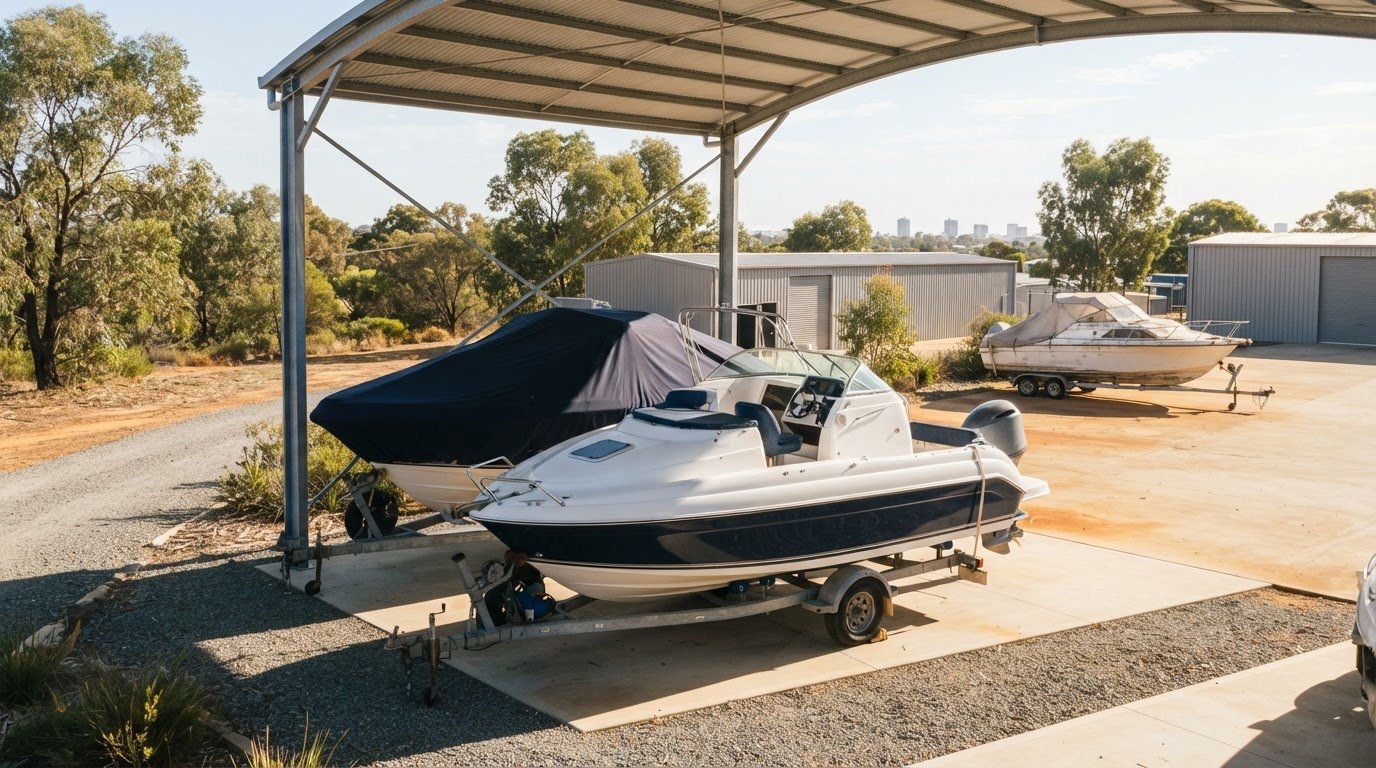
A boat cover can reduce direct sun, but it isn’t the only factor in protecting a vessel while it’s stored. Sun damage can affect gelcoat, paint, upholstery, vinyl, and rubber or plastic fittings, causing fading, chalking, and cracking over time. Effective sun damage protection for boats in storage starts with identifying exposed surfaces, preparing them appropriately, and choosing a storage setup that suits your boat.
Whether an outdoor cover will be enough depends on your vessel, the materials that need protection, and how much exposure you want to reduce. A well-fitted, UV-resistant cover can help limit direct sunlight on the areas it covers. Undercover storage may provide another layer between your boat and the sun. Neither option removes every risk, so preparation and regular checks still matter.
This guide explains which surfaces and fittings need attention, how to prepare your vessel for storage, and what to consider when comparing a cover with undercover storage. For Perth boat owners, it also covers the differences between open-air hardstand and undercover options, so you can make a practical choice for your vessel.
Key Takeaways
- Sun damage protection for boats in storage starts with identifying exposed surfaces and fittings, not just the hull.
- Compare a fitted cover, open-air hardstand, and undercover storage based on sun exposure, access, and the checks each option needs.
- Before storing your boat, follow its care guidance, inspect exposed areas, and record their condition.
- Undercover storage may reduce direct sun exposure, but it doesn’t eliminate UV exposure or all material wear.
- When choosing boat storage in Perth, check that the option suits your vessel, expected storage period, and protection needs.
Sun damage protection for boats in storage: what is at risk?
Sun damage protection for boats in storage means reducing direct sunlight and ultraviolet (UV) exposure while a vessel is not in use. It matters because exposed surfaces and fittings can receive prolonged sun, particularly in open-air storage. A suitable cover or storage position can reduce exposure, but neither can prevent every kind of deterioration.
Fading is often the easiest change to spot, but it isn’t the only sign to watch for. Depending on the material and its condition, ongoing exposure may contribute to chalking, cracking, or brittle surfaces. UV light and oxygen can break down some polymers through a process called photo-oxidation. The effects vary between materials, so check your boat and its care guidance rather than assuming every surface will respond in the same way.
Which boat surfaces need attention before storage?
Check more than the hull. Upholstery, dashboards, exposed plastics, and painted or gelcoat surfaces may all benefit from reduced sun exposure. Inspect ropes, canvas, and other fittings too, and follow the manufacturer’s care advice for each material.
Look for existing fading, fine cracks, or areas that feel unusually brittle. Note which parts need extra attention and record their condition with notes or photographs. This gives you a reference when you next check the boat.
Why Perth sun exposure matters to storage decisions
Perth’s sunny conditions make it sensible to consider how much direct light reaches a stored boat. Exposure varies by site and season. The boat’s position and orientation, as well as available shade, can affect which surfaces receive direct sun.
For a current indication of UV conditions, check the Bureau of Meteorology’s UV Index information. It can help you understand conditions at the time, but storage decisions should also account for the boat’s position and how long it will remain there. A surface under a cover or shade may receive less direct exposure than one left uncovered, though indirect UV can still reach it.
Set realistic expectations when comparing options: a cover may shield particular surfaces, and undercover storage may reduce direct sun compared with open-air hardstand. Neither guarantees protection from all wear. Consider how much of your boat each option covers and how you’ll check it during storage.
How sunlight and UV exposure affect a boat during storage
Sunlight reaches more than the top of a boat. The vessel’s position, the angle of the sun, and any uncovered areas influence which surfaces receive direct exposure. An uncovered boat may have its cockpit, seating, or dashboard exposed. A cover with gaps can also leave parts of the vessel in direct sun. Check the cover’s coverage and the storage position instead of relying on the storage label alone.
UV exposure can contribute to fading and wear, but the outcome depends on the material and its condition. Gelcoat, upholstery, plastics, and canvas are common examples to assess, not materials with a guaranteed response. Formulations, previous care, and manufacturer recommendations all affect how a surface should be protected. Ready4Sea outlines potential damage to boat materials; use your boat and material manufacturers’ guidance for advice that applies to your specific vessel. Avoid assuming a particular rate of deterioration without reliable, material-specific information.
How UV exposure can affect common boat materials
Inspect exposed gelcoat, upholstery, plastic fittings, and canvas before choosing your protection. Look for fading or surface wear and note where it appears. Care instructions can differ between materials, so check before applying a protectant or using a storage cover. If the manufacturer recommends a particular product or method, follow that advice rather than treating all boat surfaces alike.
Why a cover’s fit and condition matter
A cover only helps shield the areas it actually covers. Gaps around the edges, uncovered fittings, or a poor fit can leave sections open to direct sunlight. Before storage, check for worn or damaged areas and confirm that the cover fits securely and is approved for the way you plan to use it. Don’t assume every cover blocks all UV or is suitable for every storage setting.
Sun protection is only one part of storage planning. A cover or undercover bay may reduce direct sunlight, but it doesn’t automatically address moisture, dust, or security. Consider those as separate concerns and follow the cover maker’s instructions for use and ventilation. Site monitoring supports security, not protection from sun-related wear.
For sun damage protection for boats in storage, match the coverage to your vessel’s exposed parts and check the arrangement periodically where access allows. If you’re comparing open-air hardstand with an undercover option in Perth, review boat storage options and ask about suitability for your boat.
Boat covers vs undercover storage: compare sun protection options
The right choice depends on your vessel, how much direct sun it may receive, and how often you’re prepared to check its cover. A boat cover and undercover storage aren’t competing solutions: a suitable cover can provide an extra layer of protection even when a boat is stored undercover. Neither option guarantees complete protection from UV exposure.
| Option | Direct-sun reduction | Coverage and access | Ongoing checks |
|---|---|---|---|
| Fitted boat cover | Can shade the areas it covers. | Coverage depends on fit and design. Access may mean removing or opening part of the cover. | Check condition, fit, and securement during storage. |
| Open-air hardstand | Generally leaves the boat more exposed to direct sun than undercover storage. | Coverage depends on whether you use a suitable cover. Confirm access arrangements with the storage provider. | Inspect the cover and any exposed areas where practical. |
| Undercover storage | Shelter may reduce direct sun compared with open-air hardstand, but doesn’t make the space UV-proof. | Suitability depends on the bay and vessel dimensions. Confirm access arrangements before booking. | Check any cover you use, as well as surfaces that remain exposed. |
When a boat cover may be a practical choice
Choose a cover that matches your vessel’s size and design, and follow the boat and cover manufacturers’ guidance. A loose fit or gaps can leave areas exposed, while a cover that isn’t suitable for the storage setting may not provide the protection you expect. Check for wear and secure fit before storage, then inspect it periodically, especially after changing weather or an extended period in storage.
When undercover boat storage may suit your needs
An undercover bay can reduce direct exposure compared with open-air hardstand. It may suit owners seeking shelter without relying on a cover alone, but it won’t eliminate UV exposure or prevent every kind of material wear. Confirm the bay’s dimensions, access arrangements, and suitability for your vessel before deciding.
Allwest Storage & Parking offers boat storage in Perth, with hardstand and undercover options. Ask about current availability and whether an undercover bay suits your boat. For layered sun damage protection for boats in storage, you can also use a suitable cover beneath shelter, provided it’s approved for that use and kept in good condition.

How to prepare a boat for storage to limit sun exposure
A few checks before storage can help you choose suitable protection and spot changes later. Follow your boat’s care guidance first. Then inspect exposed areas, prepare a suitable cover, and confirm the storage arrangement fits your vessel. Effective sun damage protection for boats in storage is an ongoing routine, not a one-off decision.
A simple pre-storage sun-protection checklist
Use this sequence before taking the boat to storage:
- Check care instructions. Review the boat and cover manufacturers’ directions for storage, cleaning, and suitable products. Materials can have different requirements.
- Inspect exposed areas. Look over the gelcoat or paint, upholstery, dashboard, plastics, canvas, and other exposed fittings. Note any fading, cracking, or wear.
- Record the condition. Take clear photos and make brief notes. This gives you a useful reference when you next inspect the boat.
- Prepare surfaces as directed. Follow the manufacturer’s cleaning guidance and let surfaces dry as recommended before fitting a cover.
- Check the cover. Look for wear and confirm it fits the vessel. Fit and secure it according to the manufacturer’s instructions, checking that important exposed areas are covered.
Don’t apply a product or use a cover based on a general recommendation alone. If the boat or cover manufacturer gives specific instructions, use those as your guide.
Check the storage position and protection plan
Confirm whether the space is open-air hardstand or undercover. Undercover storage may reduce direct sun exposure compared with an open-air position, but it isn’t necessarily UV-proof. A suitable cover may add another layer, provided it’s appropriate for that setting and fitted as instructed.
Before committing, check the vessel’s overall dimensions against the available space. Ask the storage provider to confirm suitability, access arrangements, and any requirements for bringing the boat in or retrieving it. A space that suits the boat on paper still needs to work for your planned access.
Set a schedule for periodic checks that reflects how long the boat will be stored and the manufacturer’s care advice. Look for changes to exposed surfaces and check that the cover remains in good condition and secure. If your storage period or position changes, review whether your protection plan still makes sense.
For Perth boat owners comparing hardstand and undercover options, ask about boat storage options, including suitability for your vessel and current availability.
Choose boat storage in Perth with sun protection in mind
Choose a storage arrangement based on your boat’s likely sun exposure, how you plan to cover it, how often you’ll need access, and how long it will be stored. A short stay with a suitable cover may call for a different setup from a longer period outdoors. Identify the surfaces that will remain exposed, then weigh whether open-air hardstand or an undercover space better fits your protection priorities.
Questions to ask before choosing a Perth boat storage space
Confirm the practical details before you book. These questions can help you check that the space and your protection plan work together:
- Which storage options are available for my boat’s size? Share the vessel’s dimensions and ask about current hardstand and undercover options.
- Will I be able to access the boat as needed? Confirm access arrangements and any site requirements before making a booking.
- Is my cover suitable for this space? Check the cover manufacturer’s instructions and ask whether its use is appropriate in the selected storage setting.
- How long will the boat be stored? Consider whether the expected duration affects your choice of cover, storage position, or planned checks.
Undercover storage may reduce direct sun exposure compared with open-air hardstand, but it doesn’t remove all UV exposure or prevent every form of material wear. A cover may provide additional coverage, but only for the surfaces it fits and shields. Match the options to your boat rather than treating one arrangement as a complete solution for sun damage protection for boats in storage.
How Allwest boat storage fits into a protection plan
Allwest Storage & Parking offers boat storage in Perth, with hardstand and undercover options. Undercover storage may suit owners looking to reduce direct exposure, while hardstand provides an open-air alternative. Ask which option is suitable for your vessel and confirm current availability before making plans.
The facility has 24/7 CCTV monitoring as a site security feature. CCTV supports monitoring, not protection from sunlight or material wear. Allwest also offers flexible short- and long-term stays without lock-in contracts, which may help you choose an arrangement that fits your storage period.
Before deciding, confirm your boat’s suitability, the available bay type, access arrangements, and any requirements for using your cover. Ask Allwest about boat storage options and current availability, then choose the protection plan that best suits your vessel and storage needs.
Make a practical plan for your boat’s next stay
Effective sun damage protection for boats in storage combines sensible preparation with a storage choice that suits your vessel. Check care instructions, document the boat’s condition, and use a cover that fits and is approved for your storage setup. Undercover storage may reduce direct sun exposure compared with open-air hardstand, but it won’t eliminate UV exposure or every type of wear.
For Perth boat owners, Allwest Storage & Parking offers hardstand and undercover storage, with flexible short- and long-term stays and no lock-in contracts. The facility’s 24/7 CCTV monitoring supports site security, not protection from sunlight or material deterioration. Confirm your boat’s suitability, the bay type, and current availability before choosing an option.
Ask Allwest about boat storage options and take the next step towards a storage plan that fits your boat. With practical preparation and a suitable arrangement, you can reduce avoidable exposure and store your vessel with greater confidence.
Frequently Asked Questions
Can a boat cover prevent sun damage while the boat is in storage?
A suitable, well-fitted cover can reduce direct sun exposure on the areas it covers, but it shouldn’t be treated as a complete UV barrier. Its fit, material, and condition matter, as does whether the boat is stored outdoors or under shelter. Follow the cover maker’s instructions and check the boat periodically. Undercover storage may add another layer by reducing direct sunlight, though it doesn’t eliminate all UV exposure.
Is undercover boat storage better than hardstand for sun protection?
Undercover storage can reduce direct sun exposure compared with open-air hardstand, but the protection depends on the specific bay and conditions. Neither option eliminates all UV exposure. Consider how long the boat will be stored, whether you’ll use a cover, how often you need access, and the space available. If you’re considering Perth boat storage, ask the facility to confirm whether your vessel suits its current undercover options.
How do I protect a boat cover from sun damage in storage?
Follow the cover manufacturer’s care and storage instructions. Before use, check that the cover suits your boat, fits securely, and has no visible wear. Inspect it during storage where practical, looking for movement, damage, or areas that may leave the boat exposed. Repair or replace it according to the maker’s advice. Don’t assume a cover blocks all UV or will remain protective indefinitely.
What parts of a boat are most exposed to sun damage in storage?
Surfaces left uncovered are most directly exposed. Depending on the boat’s design and position, these may include upholstery, dashboards, plastics, canvas, and painted or gelcoat areas. Materials can respond differently depending on their formulation, condition, and care. Before storage, inspect exposed surfaces for existing wear and follow the relevant manufacturer’s instructions. This helps you identify which areas may need more protection.
Does a boat still need a cover in undercover storage?
It depends on the boat, the conditions in the storage space, and the manufacturer’s guidance. Undercover storage can reduce direct sunlight, but may not block all UV or prevent dust from reaching the vessel. A suitable cover may add protection for the surfaces it covers when used as directed. Check the bay conditions and confirm that your cover is appropriate for that space before fitting it.
How often should I check a boat stored outdoors in Perth?
There’s no single inspection interval that suits every boat, cover, or storage arrangement. Follow the boat and cover manufacturers’ recommendations, and consider the storage duration and how exposed the position is. Where practical, check for visible changes, cover movement, and wear. Before storing your boat, ask the provider about access arrangements so you can plan inspections that are practical for the site.
Leave A Comment