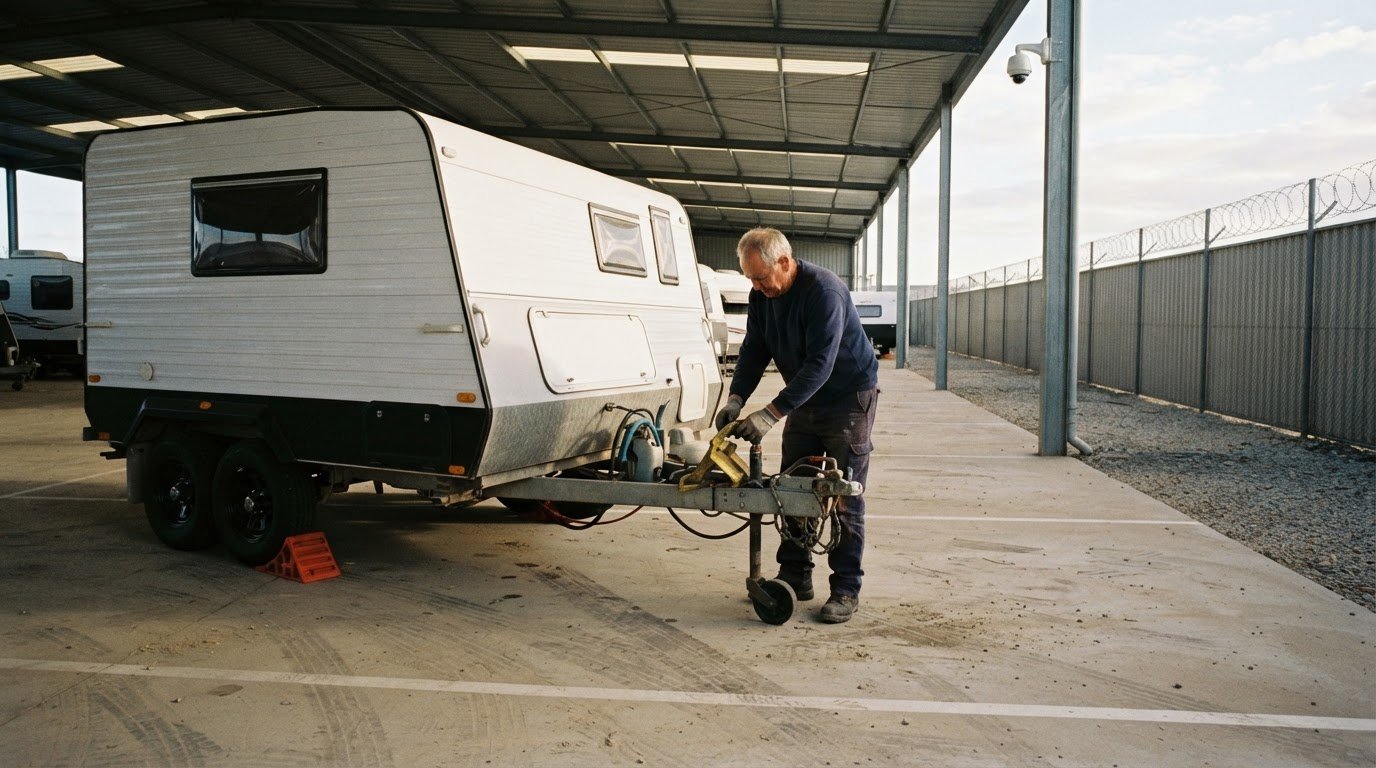
A driveway may be the easiest place to keep a caravan, but convenience comes with trade-offs. The risk of storing a caravan at home depends on local rules, your rental agreement and how exposed the van is to theft, weather and damage. A secure, suitable space at home may work; otherwise, off-site storage in Perth could be a better fit.
Keeping the caravan close makes it easier to prepare for trips and check its condition. But it may leave a valuable vehicle visible, exposed to the elements or in the way. Consider the space available and how long the caravan will be parked.
This guide explains where you can store a caravan in Australia, what to check with your local council and rental agreement, and the practical pros and cons of home storage. You’ll also learn how visibility, security and weather affect your decision, so you can balance convenience with the protection your caravan needs.
Key Takeaways
- Check local council requirements and your rental agreement before choosing a driveway or other residential space for your caravan.
- A visible caravan can attract unwanted attention and make it clearer when your home is unattended; layered security can reduce exposure.
- Compare the convenience of keeping your caravan close with its exposure to weather, pests and accidental damage.
- If home storage isn’t suitable, consider whether a dedicated caravan storage option better fits your space and security needs.
1. Local rules for residential caravan storage
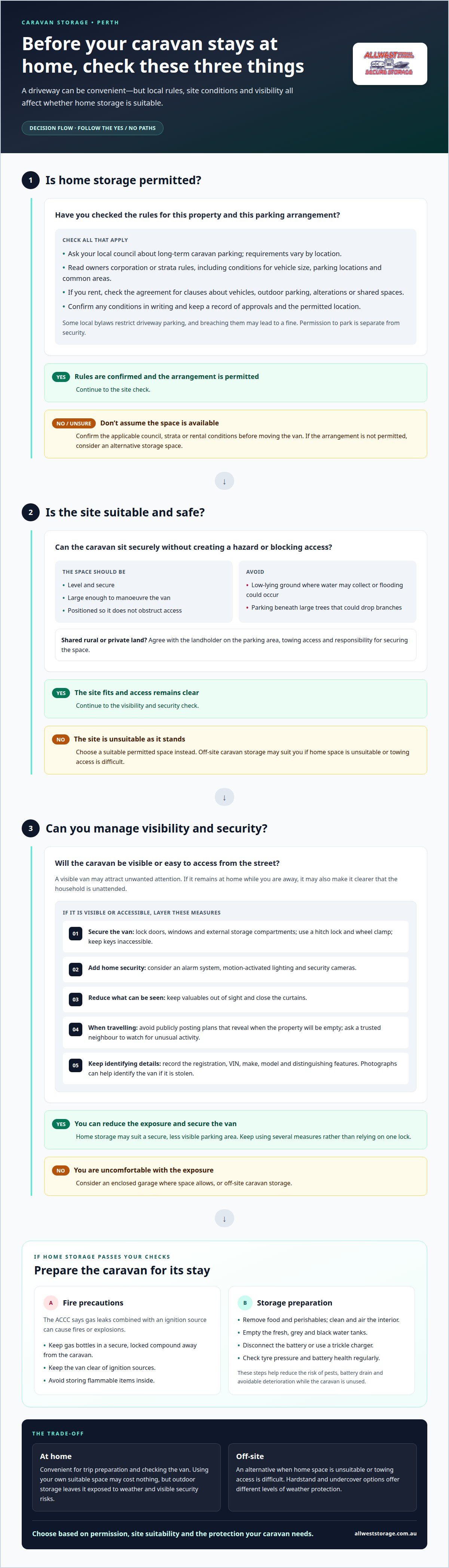
In Perth, ask your local council about rules for long-term caravan parking at home. Requirements vary by location, and some residential areas restrict outdoor storage. Before choosing a driveway, garage or side yard, confirm that the space and parking arrangement meet local requirements. A level, secure area also helps keep the caravan stable and suited to local conditions.
Check the site for practical hazards. Avoid low-lying ground where water may collect or flooding could occur, and park away from large trees that could drop branches. On shared rural or private land, agree with the landholder on the parking area, towing access and responsibility for securing the space. The site needs enough room to manoeuvre the van without obstructing access.
Fire precautions matter. The ACCC says gas leaks combined with an ignition source can cause fires or explosions. Before long-term storage, keep gas bottles in a secure, locked compound away from the caravan. Keep the van clear of ignition sources and avoid storing flammable items inside.
Prepare the caravan before storing it. Remove food and perishables, empty the fresh, grey and black water tanks, and clean and air the interior. Disconnect the battery or use a trickle charger, then check tyre pressure and battery health regularly. These steps help reduce the risk of pests, battery drain and avoidable deterioration while the caravan is unused.
Outdoor storage can be economical, and using your own suitable space may cost nothing. It also keeps the caravan close for spontaneous trips, but leaves it exposed to weather and visible security risks. Off-site caravan storage in Perth is an alternative when home space is unsuitable or towing access is difficult. Allwest Storage & Parking offers hardstand and undercover options, so you can choose based on the space and weather protection your caravan needs.
2. Risks of leaving a caravan visible at home
The main risks of storing a caravan at home in Australia include theft, vandalism, weather exposure and making your absence obvious. A caravan parked on a front-facing driveway or lawn is easy to notice, particularly in an urban area. If it remains there while you’re away, its visibility may also signal that the household is empty.
A driveway leaves the caravan accessible to people passing your property. Thieves may target a visible van, and attempted theft or vandalism can damage its body, windows, doors or towing equipment. A caravan that can be hitched and moved quickly may also be easier to steal. Reduce the opportunity with a hitch lock and wheel clamp, and keep the keys inaccessible.
Use several security measures rather than relying on one lock. Lock the doors, windows and external storage compartments whenever the caravan is unattended. A wheel lock immobilises a wheel; a hitch lock helps prevent the caravan being attached to another vehicle. Home alarm systems, motion-activated lighting and security cameras can add another layer. Keep valuables out of sight and close the curtains so passers-by can’t readily see inside.
Before leaving the caravan at home while travelling, avoid publicly posting plans that reveal when the property will be empty. Ask a trusted neighbour to watch for unusual activity, such as someone inspecting the van or lingering near the driveway. Record its registration, VIN, make, model and distinguishing features. Photographs can help identify it if it’s stolen.
If a visible driveway makes you uncomfortable, consider an enclosed garage where space allows, or choose off-site caravan storage. Home storage may suit owners with a secure, less visible parking area. Where the van remains exposed to passers-by, combine physical locks with household security measures instead of relying on visibility alone to deter theft.
3. Local bylaws and rental agreement restrictions
An owners corporation or strata scheme may restrict caravan parking under its rules. Don’t assume your driveway or a shared parking area is available for long-term storage. Read the scheme rules and any written parking conditions before leaving the van there. For example, rules about vehicle size, parking locations or common areas could affect where you can keep it.
For a Perth home, check local council requirements as well as property rules. Some local bylaws restrict driveway parking, and breaching them may lead to a fine. Confirm whether a restriction applies to your planned arrangement, especially if the caravan will remain parked for an extended period or occupy space beyond your property boundary. Keep a copy of the relevant conditions with your household records.
If you rent, read the rental agreement before parking a caravan at the property. A landlord may prohibit driveway storage, even if the driveway appears large enough. Look for clauses covering vehicles, outdoor parking, alterations or shared spaces. Follow any conditions before arranging towing or moving the van onto the property. This avoids relying on a verbal assumption that parking is allowed.
Rules and security are separate considerations. Permission to park doesn’t prevent thieves noticing a visible caravan, so consider how its position affects sightlines from the street. Cameras and motion-activated lights may add a layer of home security, but they don’t override a council rule, strata condition or rental clause. Before your next trip, confirm the parking arrangement is permitted and arrange a suitable alternative if it isn’t. Keep a written record of approvals and the permitted parking location to help avoid misunderstandings.
4. Benefits and drawbacks of storing a caravan at home
Keeping your caravan at home makes it easy to prepare for a trip, access equipment and check its condition. You can also avoid towing it to another location before each adventure. That convenience is most useful when the caravan has a secure, suitable parking space and won’t obstruct everyday access to the property.
The trade-off is exposure. Prolonged rain can lead to dampness and mould, while ultraviolet rays can discolour the exterior and weaken seals. Wind-blown objects may cause damage, and low-lying areas can collect water or flood. A well-fitting cover helps reduce wear from rain, sun and debris, but doesn’t provide complete protection from severe weather.
Consider the practical steps before storing your caravan outdoors. Remove valuables or lock them out of sight, and take food out to reduce the chance of attracting pests. Inspect the tyres and battery regularly during storage. A home garage offers shelter, but household equipment or activity in the space can also cause accidental damage.
Don’t assume home insurance automatically covers a caravan parked at your residence. Cover depends on the policy conditions. Check that the caravan’s storage location meets the insurance requirements for damage or theft, particularly if you move it between home and another site.
Home storage is a practical choice when the space is permitted, secure, clear of flooding risks and convenient for towing. If weather exposure, visibility or limited room outweighs easy access, off-site storage may suit better. Explore caravan storage options when you need a separate place to keep your van.
Allwest Storage & Parking: Caravan & Campervan Storage
Allwest Storage & Parking provides caravan and campervan storage when home parking is restricted, exposed or impractical. Choose between hardstand and undercover options to suit your storage needs. The site has 24/7 CCTV monitoring, and both short-term and long-term storage are available.
Off-site storage gives you a separate place for your caravan when a driveway isn’t suitable or property rules prevent home parking. Allwest Storage & Parking offers flexible terms, no lock-in contracts and discounted rates for extended stays. The right option depends on your caravan, preferred storage type and how long you need space.
For a practical next step, contact Allwest Storage & Parking to discuss caravan storage.
Make a storage choice that suits your next season
Judge the risk of storing a caravan at home against how you’ll use it. Consider how often you travel, whether home parking fits your routine and whether you’re comfortable with the van remaining there between trips. Set your priority before choosing a location. Easy access may matter most if you travel frequently, while a separate storage space may suit owners who want to keep the caravan apart from everyday household activity.
Allwest Storage & Parking provides caravan and campervan storage, as well as boat and car storage, in Perth. If your home setup no longer suits your plans, consider whether a dedicated space would make the next season simpler. Request a quote to explore storage options and choose a place for your caravan before your next trip.
Contact Allwest Storage & Parking to discuss your caravan storage needs. You can choose the arrangement that fits your plans and look forward to your next adventure.
Frequently Asked Questions
Where can I store my caravan?
You can store a caravan in a suitable home garage, driveway or private-land space, or use an off-site facility. For home storage, consider towing access, the surface condition and whether the van will obstruct household parking. In Perth, Allwest Storage & Parking offers hardstand and undercover options. Choose a location that suits your access needs and how long the caravan will be stored.
Do Australian councils restrict parking or storing caravans at home?
Yes, some local areas restrict outdoor caravan storage at residential properties, and requirements vary between councils. Check the rules for your specific address before leaving a caravan parked long-term. A driveway arrangement, for example, may be treated differently from parking in a garage or on private rural land. The property’s zoning and the caravan’s position can affect which local requirements apply.
What are the rules for storing a caravan on a nature strip, driveway or street in Australia?
There isn’t one rule that applies to every Australian nature strip, driveway and street. Local council requirements vary by location and parking situation. A nature strip or road is not the same as a private driveway, so don’t assume permission for one covers the others. Check the relevant council rules for the exact location and intended parking period before positioning the caravan.
How can I reduce caravan theft and break-in risk at home?
Use more than one security measure. A hitch lock makes it harder to attach the caravan to a tow vehicle, while a wheel clamp helps immobilise it. Keep keys inaccessible and lock doors, windows and external compartments. If the caravan is stolen, report it to police promptly and provide its registration, VIN and photographs. Accurate identifying details can help distinguish your van from similar models.
Can storing a caravan at home damage the driveway, lawn or underground services?
It can, depending on the caravan’s load and the condition of the parking surface. Soft lawn may rut under the wheels, while a surface or underground service not suited to the load could be damaged. Before parking, inspect the route and intended position for soft ground, cracks, drains and service covers. Avoid manoeuvring over areas that appear fragile, and use firm, level ground where possible.
How much does secure caravan storage cost in Australia compared with storing it at home?
Using your own suitable space may involve no storage charge, while off-site storage has a fee. The cost depends on factors such as caravan size, storage duration and whether you choose hardstand or undercover space. Home parking can still involve spending on security measures. For off-site storage in Perth, the price is provided after a quote request, based on the storage option and required term.
Leave A Comment