
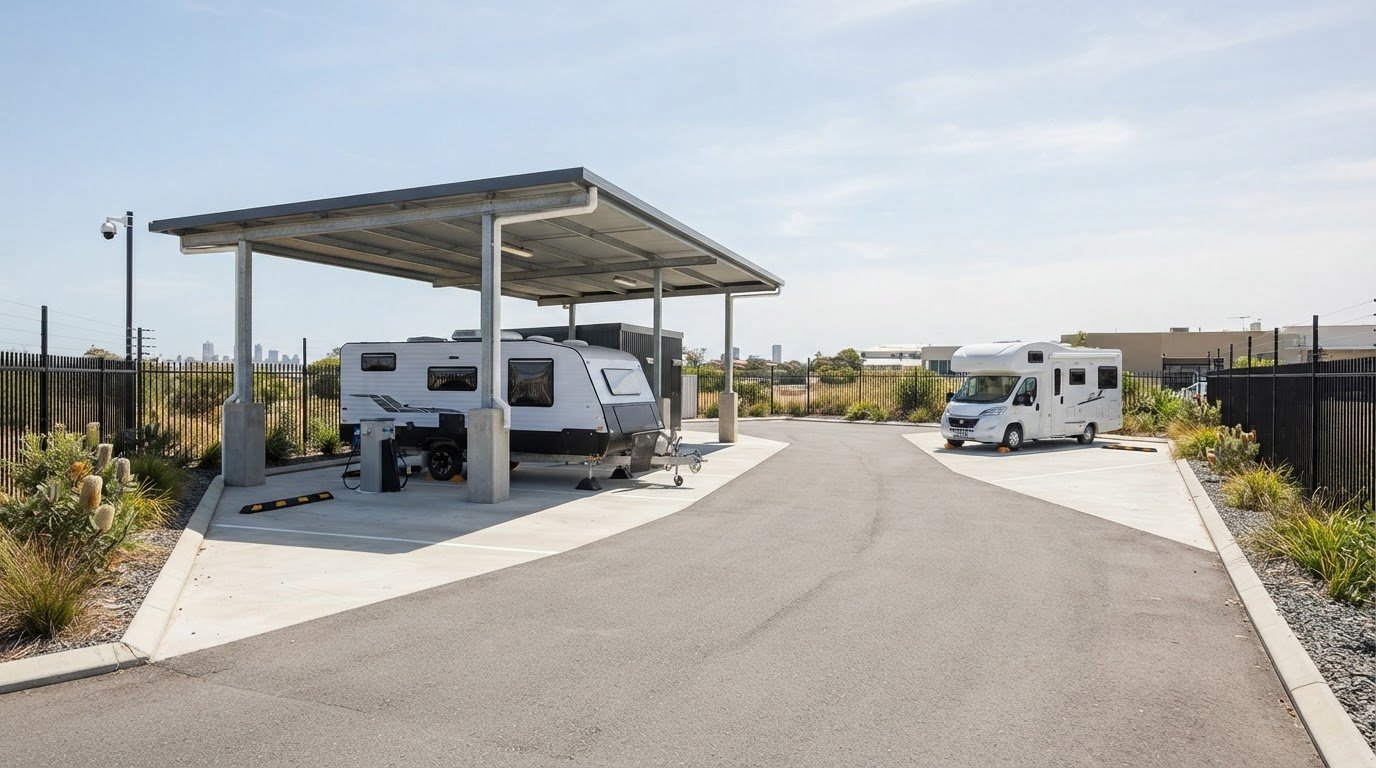
The most sheltered-looking option isn’t automatically the best fit for your RV. Recreational vehicle storage in Perth should suit your vehicle’s dimensions, how often you’ll use it and how long it will be parked. An undercover bay may suit one owner, while hardstand storage may be the practical choice for another.
Before leaving a valuable vehicle unused, weigh your priorities for shelter and security, and plan how you’ll access it. You’ll also need to account for the vehicle and its fittings, and take a few straightforward steps to help it stay organised for your next trip.
This guide explains how to compare open-air and undercover storage, prepare your RV, and plan for access and storage duration. Allwest Storage & Parking provides caravan and campervan storage in Perth, with hardstand and undercover options, 24/7 CCTV monitoring, and short- and long-term arrangements without lock-in contracts. Use the checks below to choose a setup that fits your vehicle and plans.
Key Takeaways
- Match recreational vehicle storage to your vehicle’s dimensions, shelter needs and how often you expect to use it.
- Compare hardstand and undercover options against your priorities and intended storage period.
- Use a practical preparation checklist before parking your caravan or campervan, and keep model-specific maintenance separate.
- Plan access and collection before your RV goes into storage to make organising your next trip easier.
- Allwest offers Perth caravan and campervan storage with hardstand and undercover options, CCTV monitoring, and short- and long-term arrangements.
Recreational Vehicle Storage in Perth: What to Plan Before You Park
Recreational vehicle storage is a dedicated space for parking a caravan or campervan when it’s not in use. In Perth, start by checking three things: whether the vehicle fits, how much shelter you want and how you’ll access it. This section focuses on caravans and campervans, rather than every vehicle type sometimes grouped under the RV label. For a broader overview, see Recreational vehicle (RV).
Storage can be useful between holidays, during an extended trip or when a large vehicle takes up too much room at home. A dedicated vehicle space can free up a driveway or make your parking area easier to use. Home parking may still be a good fit if you have enough space and convenient access. Your travel plans matter too: if you expect to retrieve the vehicle regularly, factor access into your decision from the outset.
Which vehicles count as recreational vehicles for storage planning?
Caravans and campervans are common Australian examples, and their storage needs vary with their size and configuration. A towable caravan needs room for its full length and a suitable route in and out. A campervan is driven into position. Attachments can affect the space required for either vehicle.
Measure the complete parked length, including the drawbar and fitted equipment such as a bike rack. Record the width and height as well. These measurements give you a clearer idea of the space needed and help you avoid planning around the vehicle body alone.
Why store a caravan or campervan away from home?
Home parking may work well if you have enough room and easy access. For other owners, a long caravan can limit driveway use, make it harder to park another vehicle or take up space needed for everyday tasks. A dedicated space can leave more room at home for other uses.
Time away is another reason to plan ahead. If your caravan or campervan will sit unused between trips or while you’re travelling, storage gives it a designated place without disrupting household access. Think about when you’ll want it back, too. A vehicle used often calls for a different access plan from one parked for a longer break.
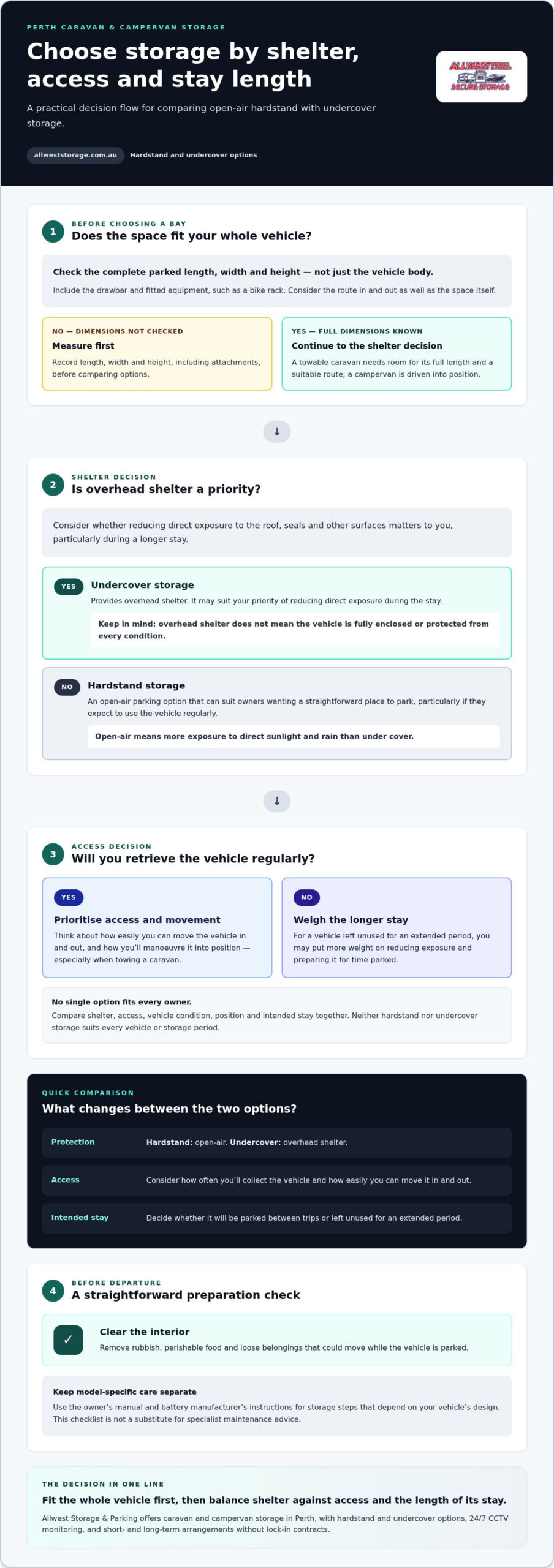
Before comparing options, write down the vehicle’s full dimensions, how often you expect to retrieve it and how much shelter you want. These details make it easier to weigh hardstand against undercover storage without assuming one option suits every vehicle or owner.
How to Choose Recreational Vehicle Storage in Perth
The right setup depends on what you want to protect, how you use your vehicle and how long it will be parked. Hardstand and undercover storage offer different levels of shelter, but neither is automatically the better choice for every caravan or campervan. Compare the practical trade-offs before deciding.
Hardstand or undercover: which setup better suits your vehicle?
Hardstand storage is an open-air parking option. It can suit owners who want a straightforward place to park and expect to use their vehicle regularly. Because the space is open to the elements, the vehicle is more exposed to direct sunlight and rain than it would be under cover.
Undercover storage adds overhead shelter. This may be a priority if reducing direct exposure to the roof, seals and other surfaces matters to you, particularly during a longer stay. Overhead shelter does not mean the vehicle is fully enclosed or protected from every condition, so consider the level of protection you’re looking for.
Use this quick comparison to organise your decision:
- Protection: Hardstand is open-air; undercover storage provides overhead shelter.
- Access: Consider how often you’ll collect the vehicle and how easily you can move it in and out.
- Intended stay: Decide whether the vehicle will be parked between trips or left unused for an extended period.
Perth owners should weigh their own exposure concerns rather than rely on general assumptions about local weather. The vehicle’s condition, its position and the length of its stay all affect which trade-off makes sense for you.
How vehicle size, access and storage duration affect your choice
Before arranging a space, note the vehicle’s length, width and height, including attached equipment. This helps you assess whether the space and approach will suit the whole vehicle, not just its main body. Consider how you’ll manoeuvre it into position, especially if you tow your caravan.
Then think about how you’ll use it. If you plan to retrieve your RV often, access and ease of movement may matter as much as shelter. For a longer stay, you may put more weight on reducing exposure and preparing the vehicle for time parked. Neither hardstand nor undercover storage suits every vehicle or storage period.
Allwest Storage & Parking provides caravan and campervan storage in Perth, with hardstand and undercover options. Once you’ve considered fit, shelter and access, explore Allwest vehicle storage as an option for your plans.
How to Prepare a Caravan or Campervan for Storage
A short preparation routine helps you leave your vehicle organised and ready for its next use. For recreational vehicle storage, separate everyday tasks, such as clearing loose items, from model-specific care. Your owner’s manual and battery manufacturer’s instructions should guide any storage steps that depend on the vehicle’s design.
Use this checklist before departure. Adapt it to your caravan or campervan, and don’t treat it as a substitute for specialist maintenance advice.
- 1. Clear the interior. Remove rubbish, perishable food and loose belongings that could move while the vehicle is parked. Check cupboards and storage areas as well.
- 2. Secure openings. Check that windows, doors, roof hatches and external compartments are closed. Make sure catches are properly fastened.
- 3. Check the exterior. Look over the body, seals and tyres, and note any existing marks or damage. Take dated photos for your personal records so you have a reference when you return.
- 4. Prepare the battery. Follow the vehicle and battery manufacturer’s instructions for storage. Battery arrangements vary, so don’t assume that disconnecting it or leaving it connected is right for every model.
- 5. Consider the water system. The appropriate steps depend on the system’s design and expected storage conditions. Use the owner’s manual for guidance on tanks, taps and other water components.
- 6. Secure accessories. Stow detachable equipment so it can’t shift or come loose. Take valuable loose items with you and keep essential documents in a safe place.
What should you do with batteries, water and accessories?
There isn’t one universal procedure for batteries or water systems. A campervan and a caravan may have different equipment, and the length and conditions of storage can affect what preparation is appropriate. Check the relevant manuals before changing battery connections, draining or filling a system, or carrying out other model-specific steps.
Keep general tidying separate from maintenance. Removing food and securing belongings are straightforward preparation tasks. Work on mechanical, electrical or plumbing components calls for instructions suited to your vehicle. Avoid improvising if the manual’s guidance isn’t clear.
Before you leave, do one final walk-around. Confirm openings are shut, accessories are secure and your condition notes are saved. A consistent checklist helps you avoid overlooking small tasks, while the manufacturer’s guidance keeps technical decisions specific to your vehicle.
Plan Storage Access, Security and Stay Length in Perth
Storage planning isn’t finished once you’ve chosen a space. Think about when you’re likely to collect the caravan or campervan, what you’ll need for the trip and how the expected stay affects preparation. A clear plan can make your return journey easier and help you choose an arrangement that fits how you use the vehicle.
How to make collection and return trips easier
Keep the keys, registration details and essential vehicle information together so they’re ready when you collect your RV. Before setting out, consider the towing vehicle, route and room needed to manoeuvre the caravan. For a campervan, plan the drive in and out, including any equipment or belongings you’ll need to load.
Allwest Storage & Parking’s Perth facility is near major roads, a practical consideration when planning a journey across the metro area. Security is another factor to consider. Allwest has 24/7 CCTV monitoring. CCTV is a security feature, not a guarantee that incidents cannot occur, so keep your keys and vehicle records organised as well.
What to consider for short-term and long-term storage
A brief gap between trips may call for a simple routine that leaves the vehicle ready to use again. An extended period away gives you more reason to plan preparation carefully and consider whether your preferred level of shelter suits the duration. If your travel plans change, review your preparation rather than assuming the original plan still applies.
Allwest offers short- and long-term caravan and campervan storage arrangements with no lock-in contracts. For more detail on how storage duration can shape your choice, read the guide to long-term and short-term vehicle storage in Perth.
Before leaving, note your likely collection timing, keep key information accessible and make sure your preparation suits the expected stay. If you’re organising recreational vehicle storage in Perth, explore caravan and campervan storage with Allwest.
Arrange Recreational Vehicle Storage with Allwest in Perth
A suitable storage arrangement starts with four practical decisions: whether the space suits your vehicle’s full dimensions, how much shelter you want, how you’ll access the vehicle and how long it’s likely to stay. Having these details ready makes it easier to compare options and organise recreational vehicle storage around your travel plans.
What Allwest Storage & Parking offers RV owners
Allwest Storage & Parking provides caravan and campervan storage in Perth, with hardstand and undercover options. Hardstand is open-air parking; undercover storage adds overhead shelter. Choose between them based on your priorities, including exposure, intended stay and how you plan to use the vehicle.
Allwest’s facility has 24/7 CCTV monitoring. This is a security feature, not a guarantee against incidents. Short- and long-term arrangements are available, with no lock-in contracts, giving you flexibility if your plans change.
Your next steps for arranging a suitable storage space
Before taking the next step, gather the details that will help you make a clear choice:
- Vehicle dimensions: Note the full length, width and height, including attached equipment.
- Estimated stay: Decide whether the vehicle will be stored between trips or for a longer period.
- Storage priorities: Weigh the shelter you want against your expected access needs.
- Preparation: Use the vehicle manual for model-specific steps, and secure loose items before leaving.
These checks help match the storage type to your vehicle and circumstances. If your plans or expected stay change, review your choice and preparation rather than relying on assumptions made at the start.
For a Perth storage option with both hardstand and undercover parking, view Allwest’s caravan and campervan storage options.
Make Your RV Storage Plan Work for You
A suitable recreational vehicle storage setup starts with the basics: measure the vehicle and its attachments, weigh hardstand against undercover shelter, and choose an arrangement that fits your expected stay and access needs. Before parking, follow your vehicle manual for model-specific preparation, secure loose items and note the vehicle’s condition.
Allwest Storage & Parking offers caravan and campervan storage in Perth, with hardstand and undercover options, 24/7 CCTV monitoring, and short- and long-term arrangements without lock-in contracts. The facility is near major roads, which can be useful when planning collection and return trips. CCTV is a security feature, not a guarantee against incidents.
With your vehicle dimensions and estimated storage period in hand, you can make a more informed choice. View recreational vehicle storage options with Allwest and take the next step when you’re ready. A clear plan now can make your next trip easier to organise.
Frequently Asked Questions
How should I prepare a caravan for storage?
Before storing a caravan, clear rubbish and remove loose belongings or food that could shift. Check that windows, doors, roof hatches and external compartments are closed. Secure detachable accessories and take valuable loose items with you. Follow the vehicle and battery manufacturers’ instructions for batteries and water systems, using your owner’s manual for model-specific steps. Preparation should reflect your caravan’s design and expected storage period.
Is undercover storage better for a recreational vehicle?
Undercover storage adds overhead shelter, while hardstand is an open-air option. The better fit depends on what matters most to you, how long the vehicle will be parked, its dimensions and how often you need access. Undercover may suit owners who prioritise shelter; hardstand may suit those comfortable with open-air parking. Neither option is right for every vehicle, and overhead cover doesn’t prevent all exposure to weather.
Can I store a campervan or caravan in Perth between trips?
Yes. Storage between trips can provide a dedicated space if home parking is limited or you’d prefer to keep your driveway or parking area clear. Allwest provides caravan and campervan storage in Perth, with hardstand and undercover options. Before arranging storage, consider how you’ll access the vehicle and allow for its full dimensions, including attached equipment. Vehicle size and configuration vary, so fit depends on the space required.
How do I choose between hardstand and undercover RV storage?
Hardstand is open-air parking, while undercover storage provides overhead shelter. To choose, weigh your shelter priorities against your vehicle’s length, width and height, how often you’ll collect it, and how long you expect it to stay. For example, frequent trips may make access a priority, while a longer stay may influence how much shelter you prefer. Owners’ needs differ, so neither option is universally best.
What should I check before leaving my recreational vehicle in storage?
Before leaving your recreational vehicle in storage, secure doors, windows and external compartments, and remove rubbish and loose belongings. Organise the keys and keep essential vehicle information accessible. Check the owner’s manual for preparation steps specific to your model, especially for batteries and water systems. Record the vehicle’s condition and any existing damage for personal reference. These checks help you prepare, but no checklist can eliminate every risk.
Is recreational vehicle storage in Perth available for short and long stays?
Yes. Allwest offers short- and long-term storage arrangements in Perth, with no lock-in contracts. Consider how long you expect the vehicle to be stored and whether a change in plans could extend that period. Your intended stay can affect which storage option suits your priorities and what preparation is appropriate. Follow your vehicle manual for model-specific guidance, particularly if the expected storage period changes.
Leave A Comment