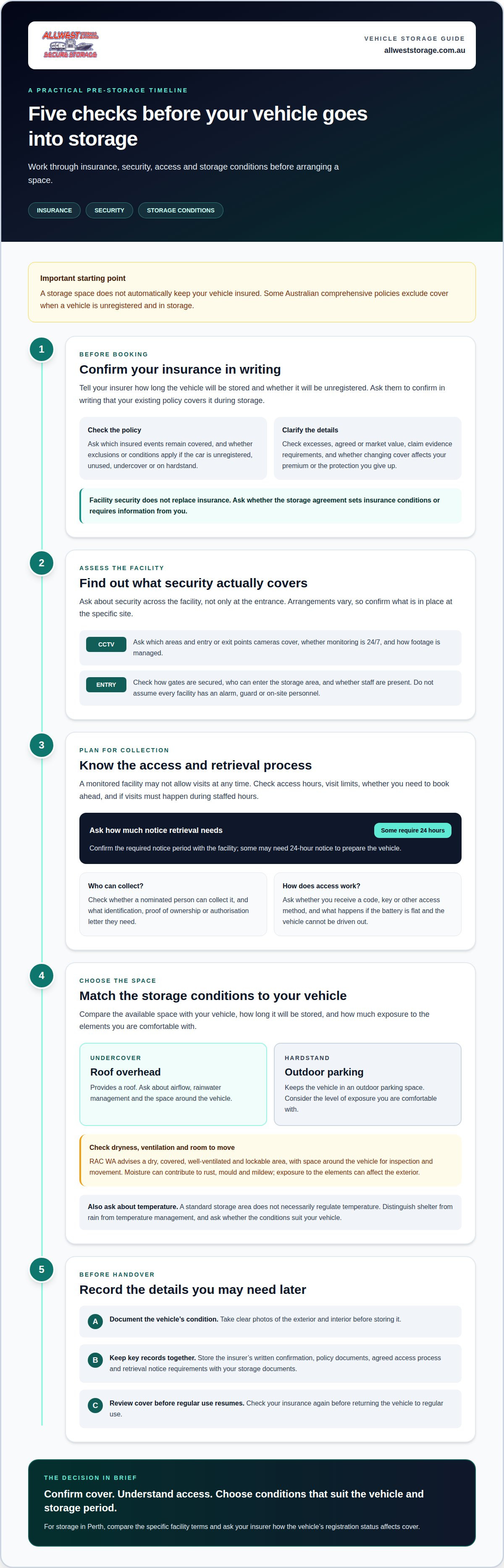
A secure storage space doesn’t automatically keep your vehicle insured. Some Australian comprehensive car insurance policies exclude cover when a vehicle is unregistered and in storage, so tell your insurer about your plans and confirm the vehicle remains covered. The key questions to ask a vehicle storage provider should also cover security, access arrangements and the conditions where your vehicle will be kept.
Look beyond the storage space itself. Make sure you understand what security is in place, how retrieval works and whether the storage option suits your vehicle and the length of time it will be stored.
This guide explains what to ask about insurance, CCTV monitoring and access, undercover or hardstand storage, ventilation and vehicle fit. You’ll also find practical points to consider when choosing a provider in Perth, so you can make an informed decision before arranging storage.
Key Takeaways
- Tell your insurer about the planned storage and confirm your policy still covers the vehicle, especially if it will be unregistered.
- Clarify how facility security works and what notice or identification is needed to retrieve your vehicle.
- Choose storage conditions that suit your vehicle, with attention to cover, ventilation, dryness and space.
- Compare the storage option with your vehicle’s dimensions and storage period to make a practical choice.
1. Does your insurance cover a stored vehicle?
Storage doesn’t automatically extend your motor insurance. Some Australian comprehensive car insurance policies exclude cover for vehicles that are unregistered while in storage. Before storing a car, tell your insurer how long it will be kept and whether it will be unregistered. Ask them to confirm in writing that your existing policy still covers it during storage.
What does vehicle storage insurance include, and what should you arrange yourself? Storage provides a place for the vehicle, not automatic insurance cover. Your own policy’s terms determine your protection, so confirm which insured events remain covered and whether any exclusions or conditions apply.
Check the policy wording for relevant exclusions, excesses and requirements. For example, ask whether cover changes if the car is unregistered, left unused or kept undercover rather than on hardstand. Clarify whether the policy covers the vehicle’s agreed or market value, and what evidence the insurer needs if you make a claim. Don’t assume facility security replaces insurance.
Insurance can affect both storage costs and resale value. Ask your insurer whether adjusting cover while the vehicle is stored would change your premium, and what protection you would give up. A lower premium is not useful if an uncovered event damages the vehicle. Suitable cover can help protect its financial value, but it doesn’t guarantee a particular resale price.
Do vehicle storage requirements or prices vary across Australian states and cities? They can vary by location and facility, while insurance terms depend on your insurer and policy. For storage in Perth, compare the specific storage terms and ask your insurer how your vehicle’s registration status affects cover.
Useful questions to ask a vehicle storage provider include whether the storage agreement sets insurance conditions and what details you need to supply. Record the vehicle’s condition before storing it, with clear photos of the exterior and interior. Keep your insurer’s written confirmation with your policy documents, then review the cover again before returning the vehicle to regular use.
2. Vehicle storage security and access controls
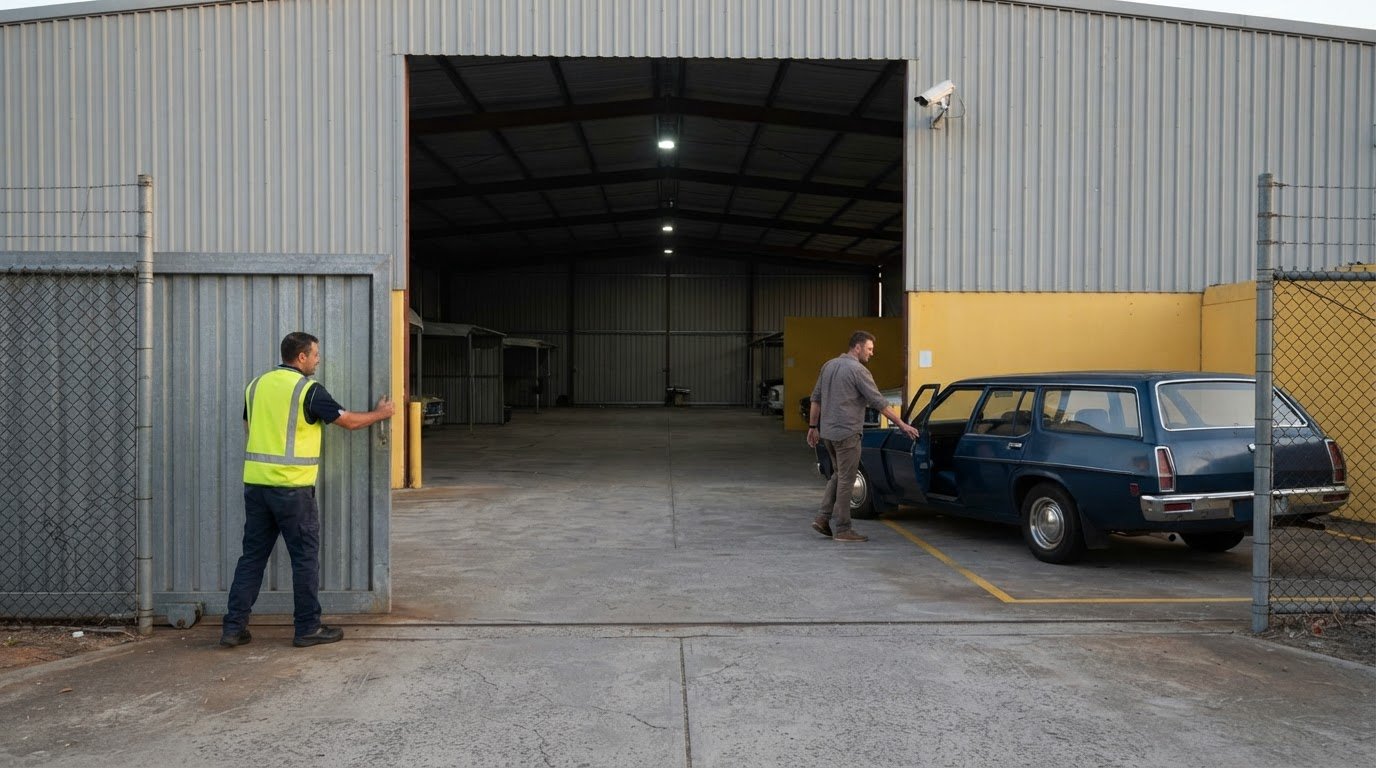
Ask what security operates across the facility, not just at its entrance. Some Australian vehicle storage facilities use 24/7 CCTV monitoring. Find out which areas cameras cover, whether entry and exit points are monitored, and how footage is managed. Ask how gates are secured and who can enter the storage area. These details help you understand the practical controls around your vehicle.
Location matters when you need to retrieve a vehicle. Consider the facility’s distance from your regular routes, then ask about access hours and any limits on visits. Don’t assume a monitored site allows access at any time. Ask whether you need to arrange a visit during staffed hours, book ahead or follow a specific entry process.
Retrieval can involve advance notice. Some facilities require notice before releasing a vehicle, and some may need 24-hour notice to prepare it. Clarify the required notice period, who can collect the vehicle and what identification or paperwork is needed. A facility may request proof of ownership or an authorisation letter before release.
- Ask how gate access works, including whether you receive a code, key or other access method.
- Confirm whether a nominated person can collect the vehicle, and what authorisation they must bring.
- Ask what happens if the vehicle’s battery is flat and it cannot be driven out at the planned time.
These answers are especially useful if your plans change or someone else needs to collect the vehicle. Keep the agreed access process and any retrieval notice requirements with your storage documents. That gives you a clear reference before arranging collection.
For secure storage with 24/7 CCTV monitoring, explore vehicle storage options and consider which access arrangement fits your plans.
3. Choosing a dry, covered and secure storage area
Vehicle storage in Australia commonly includes undercover spaces and hardstand areas. Undercover storage provides a roof; hardstand storage keeps the vehicle in an outdoor parking space. Choose based on your vehicle, the storage period and how much exposure to the elements you’re comfortable with.
RAC WA advises keeping a car in a dry, covered, well-ventilated and lockable area, with space around it for inspection and movement. Ask how the facility manages rainwater, airflow and access around parked vehicles. A tight space can make inspection or retrieval difficult, while poor ventilation can leave stagnant air around the vehicle.
What can damage a vehicle in storage, and how can those risks be limited? Moisture can contribute to rust, mould and mildew, while exposure to the elements can affect the exterior. A dry, covered and ventilated area helps limit these risks. Ask how the site keeps the space maintained and clear around vehicles.
Temperature is another condition to consider, especially for a vehicle stored long term. Ask what the space is like in changing weather and whether it suits your vehicle’s storage needs. A standard storage area does not necessarily regulate temperature, so distinguish between shelter from rain and temperature management.
Security features differ between facilities. Some combine surveillance cameras with on-site security personnel, and some offer 24/7 surveillance. Ask which areas cameras cover, how entry points are monitored, and whether staff are present. Don’t assume an alarm or guard is part of every facility’s security arrangements.
Locks and boundaries matter too. Ask how gates are secured, who can enter the storage area and whether each vehicle has a designated space. A lockable area adds a physical access control, while clear boundaries help prevent unnecessary movement around your vehicle.
- Match undercover or hardstand storage to your vehicle and preferred level of shelter.
- Ask about ventilation, drainage, temperature conditions, camera coverage and gate security.
- Check there’s enough space to inspect and move the vehicle safely.
4. Choosing a storage provider
A suitable provider should match the vehicle’s dimensions, storage period and access needs. Start by giving accurate measurements, including attachments that affect the overall length, width or height. For a caravan longer than 8 metres, confirm the full dimensions before arranging storage. For a boat with a T-top or radar arch, include its height when discussing clearance.
Ask how the provider allocates space and what happens if your vehicle’s measurements change. A vehicle that fits on paper still needs room for parking, inspection and retrieval. For example, a trailer attached to a caravan affects the space required, so include it in your measurements and explain how the vehicle will arrive.
Check that the storage arrangement suits the full period you need, not just the initial booking. Ask how extensions, early collection and changes to the arrangement are handled. A clear process helps if travel plans change or you need the vehicle sooner than expected.
Are there contract terms, minimum stays, deposits or cancellation fees to check? Yes. Read the agreement for the storage period, any minimum stay, deposit conditions, cancellation terms and how charges are calculated. Make sure you understand when notice must be given and how changes affect the agreement.
Compare the written terms with your practical requirements. Check what is included in the agreed arrangement, how vehicle collection is organised and whether another person can collect it with authorisation. If the vehicle is a boat, caravan or trailer, make sure the provider understands its dimensions and any attached equipment.
Choose a provider whose space and agreement fit your vehicle, rather than relying on a general description. A clear quote should identify the vehicle type, dimensions, storage option and period used to calculate the charge. Ask for the agreed terms in writing so you can refer to them throughout storage.
To discuss a storage solution suited to your vehicle and planned storage period, enquire about storage arrangements.
Allwest Storage & Parking
Allwest Storage & Parking provides storage options for vehicles when you need a practical place between trips, during a move or for longer-term storage. Its services include car, boat, caravan and campervan, truck and trailer storage, with undercover and hardstand options.
Choose the storage type that suits your vehicle and the level of shelter you want. The facility has 24/7 CCTV monitoring, and both short-term and long-term storage are available. Flexible rates and no lock-in contracts can suit changing storage plans.
As you arrange storage, keep your insurer’s cover separate from the facility’s security features. Confirm your policy directly with your insurer, then consider whether the storage option, access arrangements and agreement suit your vehicle and plans.
Contact Allwest Storage & Parking to discuss your vehicle storage requirements.
Make your storage decision with confidence
Before arranging storage, bring your plans together in a short written brief. Include the vehicle’s dimensions, expected storage period, preferred arrangement and who may need to collect it. Keeping these details together makes it easier to see whether the storage terms suit your circumstances.
Use the questions to ask a vehicle storage provider as a decision tool, not just a checklist. Note the points that affect your plans, then compare the answers with what you need from the storage arrangement. If your vehicle, schedule or collection plans change, revisit the agreement to make sure it still suits you.
A clear record also helps keep communication straightforward. You can refer to the same details when discussing the booking and make decisions without relying on memory. Take the next step when you’re ready to discuss your requirements with Allwest Storage & Parking.
Frequently Asked Questions
Does your insurance cover a stored vehicle?
Storage itself doesn’t automatically extend your insurance cover. Your policy determines whether a stored vehicle is insured, including any conditions about registration or periods when it isn’t being driven. Tell your insurer about the storage arrangement and ask how cover applies to your vehicle. Keep the insurer’s response with your policy documents so you can refer to the agreed terms.
Is my car insured?
Your car is insured only if your own motor policy covers it in its current circumstances. Facility CCTV is a security measure, not insurance for damage or loss. Check your policy schedule and ask your insurer about exclusions that may apply while the car is stored. If someone else owns or insures the car, make sure the relevant policyholder discusses the arrangement with the insurer.
Is the facility climate-controlled?
No. Allwest Storage & Parking offers hardstand and undercover storage, not climate-controlled storage. Undercover space provides shelter from weather, but it doesn’t mean the temperature or humidity is regulated. If controlled environmental conditions are essential for your vehicle or its contents, factor that requirement into your storage decision rather than assuming a roof provides climate control.
Is it safe to store a car long-term in a storage facility?
Long-term storage can be a practical option, but security and vehicle condition are separate considerations. Allwest Storage & Parking provides 24/7 CCTV monitoring, while the vehicle’s ongoing maintenance remains separate from storage. Before leaving a car for an extended period, make arrangements for its care and ensure your insurance terms suit how it will be stored.
When can I access my car?
24/7 CCTV monitoring refers to security surveillance, not round-the-clock physical access. Access and collection arrangements depend on the storage booking. Before leaving your car, agree on how to arrange a visit or retrieval, whether advance notice is needed, and what identification or authorisation a collector must provide. This helps avoid planning a collection around assumed access hours.
Are my goods protected?
Allwest Storage & Parking provides vehicle storage, not household self-storage for loose goods. Don’t treat a vehicle storage booking as cover for belongings left inside a car, boat or caravan. The storage arrangement and your insurance policy may treat the vehicle and its contents differently. Ask your insurer how personal items inside your vehicle are covered, if at all.
Leave A Comment