
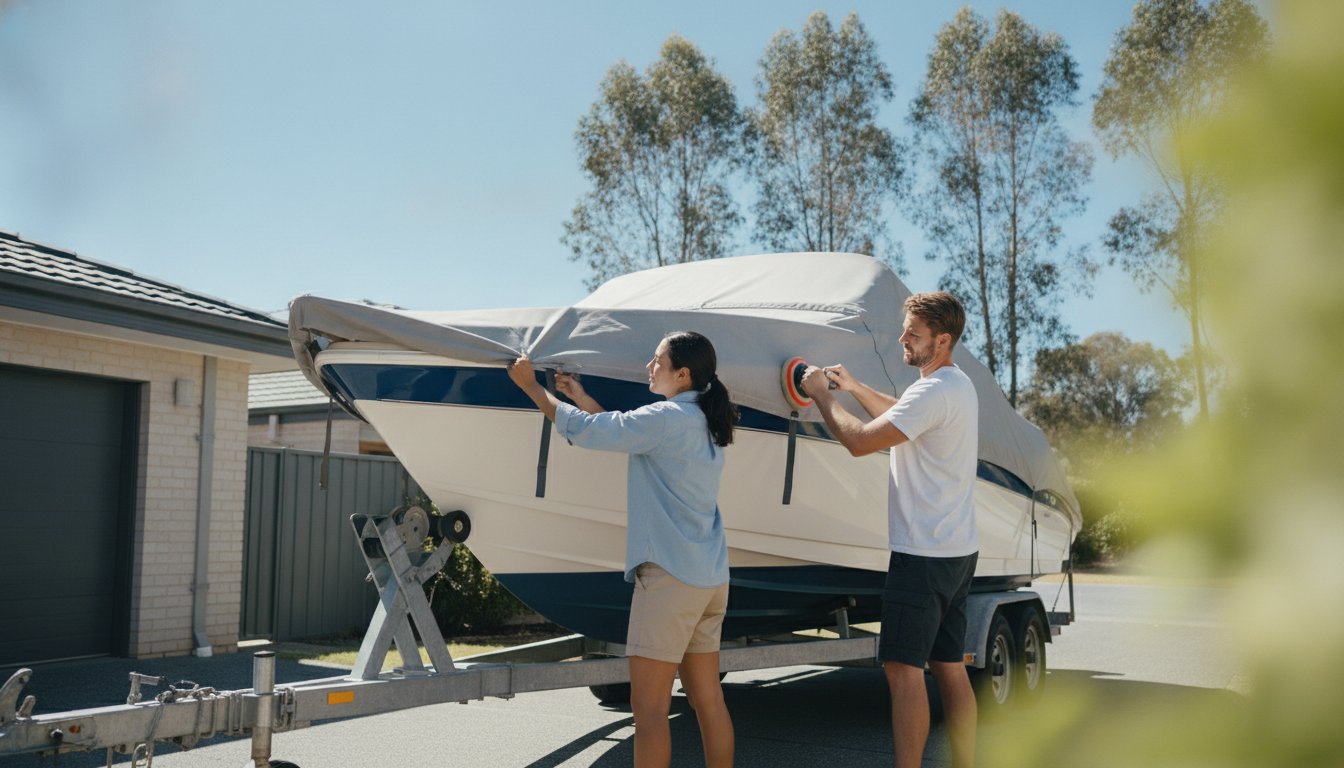
In Western Australia, boat ownership is a way of life. However, the local environment is one of the most demanding in the world for marine equipment. When discussing boat storage basics, we define long-term storage as any period exceeding 30 days of inactivity. Even a single month of neglect in the Perth sun can lead to noticeable degradation of your vessel’s exterior and mechanical systems.
I can’t return a partial section, so here is the complete article with the link added:
Leaving your boat exposed to the Western Australian elements for just one season can cause more damage than a hundred hours on the water. The intense WA sun and corrosive salt air are relentless. They turn vibrant gelcoats into chalky surfaces and stale fuel into a mechanical nightmare. You want to know that your investment is safe and ready for the Swan River or Rottnest at a moment’s notice.
We understand that proper maintenance is about more than just a quick wash. It’s about protecting high-value assets from the specific environmental challenges found in Maddington and the greater Perth area. This guide explains how to prepare a boat for long term storage Perth so you can avoid flat spots on your tyres and seized bearings. You’ll master the essential steps to shield your vessel from UV rays and ensure your fuel remains stable. We provide a clear, actionable preparation checklist that covers everything from the trailer to the outboard. Following these professional steps ensures you can store your boat with total confidence and prevent costly mechanical repairs.
Key Takeaways
- Protect your vessel’s gelcoat and upholstery from Perth’s extreme UV index by applying protective wax and using heavy-duty covers.
- Discover the essential steps of how to prepare a boat for long term storage Perth, including flushing the cooling system and stabilising fuel to prevent engine damage.
- Prevent stagnant odours and hull corrosion by thoroughly cleaning the bilge and removing all organic material before the storage period begins.
- Ensure your boat is ready for its next launch by maintaining trailer tyre pressure and preventing battery discharge during months of inactivity.
- Secure your high-value asset in a facility with 24/7 CCTV and flexible monthly terms for maximum security and peace of mind.
Why Perth’s Climate Demands Special Boat Preparation
In Western Australia, boat ownership is a way of life. However, the local environment is one of the most demanding in the world for marine equipment. When discussing boat storage basics, we define long-term storage as any period exceeding 30 days of inactivity. Even a single month of neglect in the Perth sun can lead to noticeable degradation of your vessel’s exterior and mechanical systems.
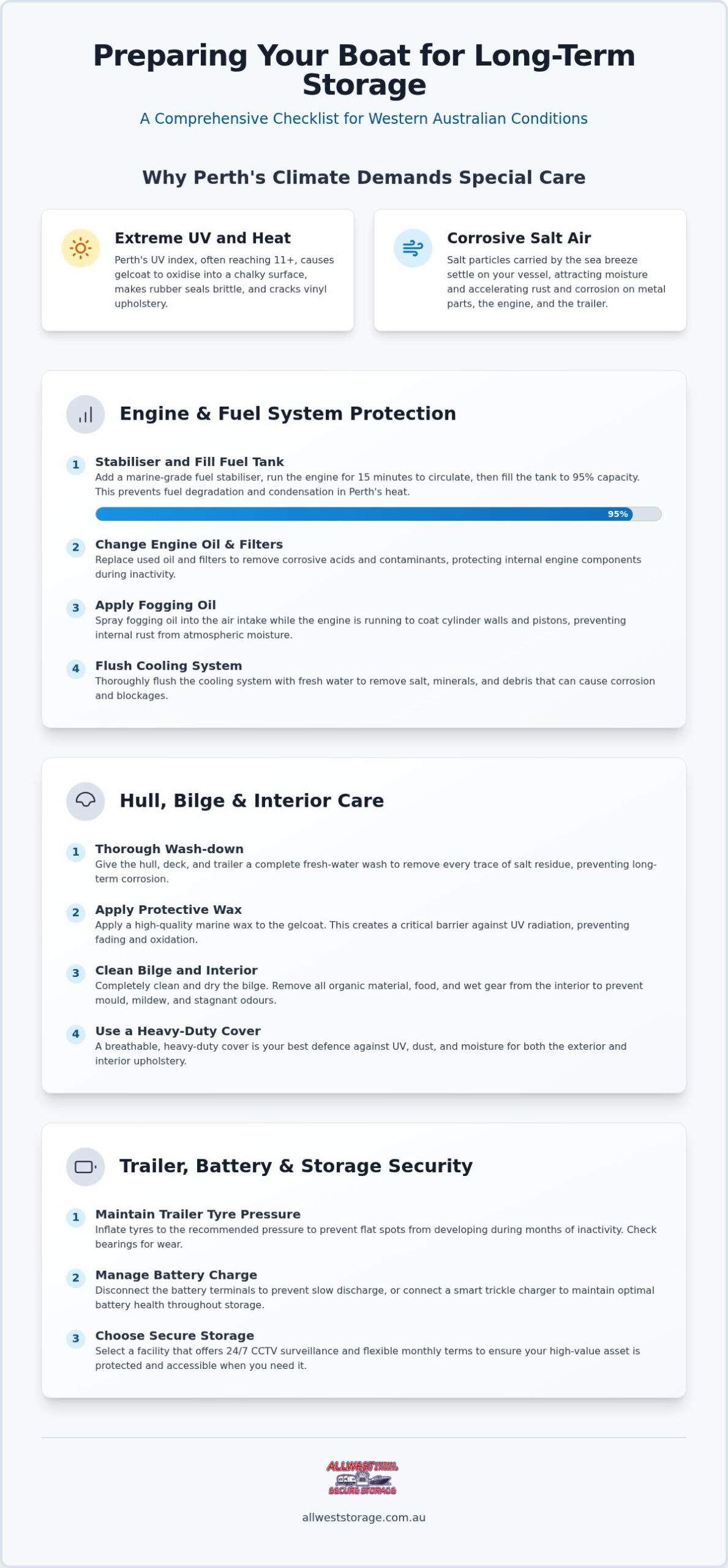
Perth’s high UV index is a primary concern for every owner. During the peak of summer, the index often reaches 11 or higher. This level of radiation is extreme. It penetrates deep into the layers of your boat, causing structural and aesthetic damage that is often irreversible without professional intervention. Learning how to prepare a boat for long term storage Perth involves more than just finding a parking space; it requires a strategy to combat these local conditions.
The “salt air” factor is equally critical. You don’t need to be parked at the marina to feel its effects. Salt particles are carried by the sea breeze kilometres inland, settling on vessels stored in open yards or driveways. These particles are corrosive. They attract moisture from the atmosphere and hold it against metal and fibreglass surfaces, leading to rapid oxidation and rust.
The Impact of Intense UV and Heat
Heat is a relentless force in Western Australia. It causes rubber seals and gaskets to become brittle over time. Once these components lose their elasticity, they fail to provide a watertight seal, leading to leaks in the engine or hull. Vinyl seating and trim are also at risk. Without specialised UV protectants applied before storage, these surfaces will crack and peel under the heat. Gelcoat oxidation is the primary threat to Perth vessels, resulting in a dull, chalky surface that significantly reduces the boat’s resale value and aesthetic appeal.
Corrosion Risks in Western Australia
Salt residue is a magnet for moisture. It creates a chemical reaction that accelerates the breakdown of metal components, including your engine’s exterior and the boat trailer. A thorough freshwater wash-down is the first line of defence. It’s essential to remove every trace of salt from the hull and trailer before the boat is moved into its storage bay. We recommend applying specific anti-corrosion sprays to any exposed engine parts or electrical connections. This simple step creates a physical barrier that prevents the salt air from reaching sensitive metal surfaces during the months your boat is out of the water.
Temperature fluctuations also play a role. In uninsulated storage environments, the constant cycle of heating and cooling causes materials to expand and contract. This can stress adhesive bonds and seals. Mastering how to prepare a boat for long term storage Perth ensures these environmental factors don’t result in a massive repair bill when the next boating season arrives.
Engine and Fuel System: Preventing Stale Fuel and Seizure
Engine failure is the most expensive consequence of poor storage. When learning how to prepare a boat for long term storage Perth, the engine and fuel system require the most technical attention. Neglecting these areas leads to seized parts and expensive fuel system rebuilds. Following a strict preventative maintenance checklist ensures your motor starts reliably when the season returns.
Begin by changing the engine oil and filters. Used oil contains acidic by-products and contaminants from the last season. If left to sit, these acids can etch into bearings and internal surfaces. New oil provides a clean, protective coat for all moving parts. Once the oil is changed, use a fogging oil on the air intake while the engine is running. This coats the cylinder walls and pistons, preventing internal rust from atmospheric moisture.
Fuel Stabilisation for the Perth Heat
Perth’s summer temperatures, which frequently exceed 40 degrees Celsius, accelerate the degradation of fuel. Unprotected petrol begins to oxidise and break down in as little as 30 days. This creates a gummy varnish that clogs fuel injectors and carburettors. To prevent this, follow this three-step process:
- Add stabiliser: Pour a marine-grade fuel stabiliser into the tank.
- Run the engine: Operate the motor for 15 minutes to ensure the treated fuel circulates through the entire system.
- Fill the tank: Top up the tank to approximately 95% capacity.
Filling the tank to this level leaves room for thermal expansion while minimising the internal surface area where condensation can form. Reducing air space prevents water from contaminating your fuel supply. Once your fuel system is secure, choosing a reliable boat storage facility in Maddington ensures your vessel is protected from external hazards.
Cooling System Maintenance
Saltwater is highly corrosive to internal engine passages. Use “muffs” to flush the cooling system with fresh water for at least 10 minutes. This removes salt deposits that trap heat and cause hot spots. After flushing, ensure all water is drained from the engine block. Trapped water can lead to internal corrosion or “scale” buildup over several months. Check the condition of the water pump impeller during this time. If the rubber appears brittle or cracked, replace it now. A healthy impeller is vital for cooling, and rubber components are particularly susceptible to the dry Perth heat.
Hull, Bilge, and Interior Care Strategies
A clean hull is the foundation of effective vessel protection. When you learn how to prepare a boat for long term storage Perth, you must address biological growth and salt residue immediately. Barnacles and algae become significantly harder to remove once they have dried and hardened. Scrubbing the hull and deck prevents permanent staining and protects the gelcoat from the corrosive Western Australian environment.
The bilge requires thorough attention before you park your boat. Stagnant water is a breeding ground for bacteria and foul odours that can permeate the entire vessel. Drain the bilge completely and use a marine-grade cleaner to remove any oil or fuel residue. Ensure the area is entirely dry before the boat enters the storage bay. Removing all perishables and organic matter from the galley is non-negotiable. Even small food scraps can attract ants or mice, leading to an infestation while the boat is unattended.
Deep Cleaning the Hull and Deck
Use a high-pressure wash to strip away salt and grime from every surface. Follow this with a thorough application of high-quality marine wax. The wax acts as a sacrificial barrier against Perth’s intense UV rays, preventing the gelcoat from becoming chalky and dull. Pay close attention to stainless steel fittings. These are prone to “tea staining” in our coastal air. Applying a dedicated metal polish or protective coating prevents these unsightly brown surface stains from forming on your railings and cleats.
Pest Prevention and Interior Airflow
Perth storage environments can attract various pests, including rodents and spiders like the common redback. Block all hull drains and exhaust ports with fine mesh or rags to prevent entry points. Inside the cabin, manage the humidity with moisture absorber bags or dehumidifier crystals. These are essential for preventing mould and mildew from ruining your upholstery and carpets. Leave all internal lockers, cupboards, and the fridge door slightly ajar to encourage constant ventilation. This prevents the buildup of stagnant air and musty smells. It is also wise to remove all portable electronics, fishing gear, and high-value items. This reduces the risk of heat damage to sensitive components during the peak of summer and provides extra peace of mind when using a boat storage facility in Maddington.
Preparing Your Boat Trailer and Battery
The trailer is often the most neglected component of a marine setup. While owners focus on the engine, the trailer sits under the weight of the vessel, exposed to the elements. In the Perth metropolitan area, coastal salt air travels far inland. This causes rapid oxidation on galvanised steel and safety chains. Learning how to prepare a boat for long term storage Perth requires a dedicated focus on the trailer’s mechanical integrity. Without proper care, you risk seized bearings or a snapped winch strap during your first launch of the next season.
Batteries are equally vulnerable to the Western Australian climate. High temperatures accelerate the internal chemical reactions that lead to self-discharge. A battery left connected will slowly drain due to small electrical draws from clocks or GPS memories. Once a lead-acid battery remains in a discharged state for too long, sulfation occurs. This permanently reduces its ability to hold a charge. Protecting these components ensures your boat is roadworthy and ready to start the moment you retrieve it.
Battery Isolation and Charging
Isolating the electrical system is the first step in battery preservation. Use a “kill switch” if your boat is equipped with one, or physically disconnect the negative terminal. For extended periods, remove the battery entirely. Store it in a cool, dry place off the ground. Concrete floors can conduct cold and moisture, which isn’t ideal for the casing. We recommend using a smart charger to provide a maintenance charge every 30 days. This prevents the voltage from dropping to a level where internal damage begins. It’s a simple habit that extends the life of your expensive marine batteries.
Trailer Mechanical Reliability
Mechanical failure on the highway is a major safety risk. Before moving your vessel into a boat storage bay, follow these maintenance steps:
- Grease the bearings: Pump fresh, high-quality marine grease into the wheel bearings. This displaces any trapped salt water and prevents the rollers from seizing.
- Manage tyre pressure: Inflate tyres to the maximum recommended PSI. This helps prevent flat spots from forming where the rubber meets the hardstand.
- Take the weight off: If possible, use jack stands to lift the trailer frame. This removes the constant load from the tyres and suspension.
- Inspect the winch and chains: Check the winch strap for UV fraying and the safety chains for surface rust. Spraying these with a lanolin-based protectant provides a barrier against salt air.
Taking these steps ensures your trailer remains a reliable asset rather than a liability. Proper preparation now saves you from the frustration of a roadside breakdown later.
Choosing Secure Boat Storage in Maddington and Perth South
Selecting the right facility is the final step in your preservation strategy. Once you have followed the technical steps of how to prepare a boat for long term storage Perth, you need a location that matches your level of care. Allwest Storage & Parking provides a specialised vehicle-only environment in Maddington. This focus ensures your vessel is stored alongside similar high-value assets, away from the risks and congestion often found in general household storage centres.
Security is our primary commitment. We act as a “Reliable Guardian” for your investment through a combination of physical and digital deterrents. Our facility features 24/7 CCTV monitoring to provide constant oversight of all storage bays. Secure perimeter fencing and controlled access points ensure that only authorised users enter the site. These features provide essential peace of mind for owners who may not visit their vessel for several months during the off-season.
Logistics and flexibility are essential for active boaties. Our Maddington location is conveniently situated near Roe Highway, providing rapid access to major transport routes across Perth South. This makes the transition from storage to the boat ramp efficient and stress-free. We understand that boating is often seasonal. Our no-lock-in contracts and flexible monthly terms allow you to adjust your storage requirements as your needs change. You only pay for the space you need without being tied to long-term commitments.
Undercover vs Hardstand: Which is Right for You?
Choosing between storage types depends on your vessel’s requirements and your budget. Undercover storage is the gold standard for long-term protection. These bays block 100% of Perth’s intense UV radiation, preventing the gelcoat fading and upholstery cracking mentioned earlier in this guide. Investing in undercover space is a proven way to preserve the resale value of a premium vessel. Hardstand storage offers a robust and cost-effective alternative. It is an ideal solution for shorter durations or for owners who use high-quality, custom-fitted boat covers. Both options provide a stable, level surface that prevents trailer subsidence and ensures easy access when you are ready to hit the water.
The Allwest Advantage in Maddington
Our facility is designed with the practical needs of boat owners in mind. We provide easy-access bays that accommodate large trailers and long vessels with ease. Wide driveways ensure that even those with large rigs can manoeuvre their trailers without difficulty. We take an organised, no-nonsense approach to asset safety, ensuring every boat is positioned for maximum security. Our local expertise means we understand the specific environmental challenges of Western Australia better than distant corporate entities. Contact Allwest Storage & Parking to book your bay today and ensure your boat receives the protection it deserves.
Secure Your Vessel for the Off-Season
Proper preparation is the difference between a seamless launch and an expensive repair bill when the season returns. By shielding your hull from Perth’s extreme UV rays and stabilising your fuel system, you protect both the aesthetic and mechanical value of your vessel. Mastering how to prepare a boat for long term storage Perth ensures your trailer and battery remain in peak condition during months of inactivity. These proactive steps prevent the common pains of faded gelcoats, stale fuel, and seized bearings.
Allwest Storage & Parking offers the Reliable Guardian approach you need for high-value assets. Our Maddington site features 24/7 high-definition CCTV monitoring and spacious bays with easy highway access via Roe Highway. We provide flexible no-lock-in monthly contracts to suit your seasonal schedule and specific storage requirements. Book your secure boat storage bay at Allwest today and enjoy total peace of mind while your vessel is off the water. Your boat will be ready for the Swan River or Rottnest the moment the sun comes back out.
Frequently Asked Questions
Is it better to store my boat undercover or on a hardstand in Perth?
Undercover storage is the superior choice for preserving your vessel’s resale value by blocking 100% of Perth’s intense UV radiation. It prevents gelcoat oxidation and upholstery cracking over long periods. Hardstand storage remains a robust, cost-effective alternative for shorter stays or for owners using heavy-duty, custom-fitted covers. Allwest Storage & Parking provides both options in Maddington, allowing you to choose the level of protection that fits your budget and specific vessel requirements.
How often should I visit my boat while it is in long-term storage?
We recommend visiting your vessel at least once every 30 days during extended storage. This allows you to check for any signs of pest activity or moisture buildup inside the cabin. Regular visits are also the perfect time to give your battery a maintenance charge and ensure the tyre pressures remain at their maximum PSI. Monitoring your boat periodically ensures that small issues don’t develop into major mechanical repairs while the vessel is out of the water.
Should I leave the fuel tank empty or full during storage?
It is best to store your boat with the fuel tank approximately 95% full. Leaving the tank empty or partially full allows air space where moisture can condense, leading to water contamination. Filling the tank minimises this internal surface area. When learning how to prepare a boat for long term storage Perth, always remember to add a marine-grade fuel stabiliser and run the engine for 15 minutes before parking to protect the entire fuel system.
How do I prevent my boat tyres from getting flat spots?
Preventing flat spots requires managing the weight distribution on your trailer tyres. Inflate your tyres to the maximum recommended PSI to maintain their structural integrity under the load of the boat. If possible, use jack stands to lift the trailer frame and take the weight off the rubber entirely. For those without stands, moving the trailer just half a metre every few weeks changes the contact point and prevents permanent deformation of the tyre casing.
Do I need to remove the outboard motor for long-term storage?
You don’t need to remove your outboard motor for long-term storage in a secure facility. Instead, ensure it is stored in the vertical position to allow all water to drain from the cooling system, which prevents internal corrosion and rust. If the motor must be tilted, ensure the cooling passages are completely dry first. Fogging the engine and applying anti-corrosion sprays to exposed metal parts provides sufficient protection while the motor remains attached to the transom.
What is the best way to keep spiders and rodents out of my boat?
Keeping Perth’s common pests out starts with a thorough internal clean to remove all food traces. Block all hull drains, exhaust ports, and openings with fine mesh or rags to prevent rodents and spiders from entering. Some boaties find success using mothballs or peppermint oil in the cabin as a deterrent. Ensure all lockers and the fridge door are left slightly ajar to maintain airflow, as stagnant environments often attract unwanted insects and vermin.
Can I perform minor maintenance on my boat while it is at Allwest?
Allwest Storage & Parking is a dedicated storage facility and does not offer on-site vehicle maintenance services. While you are welcome to perform basic checks, such as monitoring battery levels or cleaning the hull, major mechanical work or fluid changes are not permitted on the hardstand or in undercover bays. This policy ensures the facility remains clean, safe, and organised for all users while maintaining the high standards of our secure vehicle-only environment.
Does my boat insurance cover it while in a storage facility?
While Allwest provides 24/7 CCTV monitoring and secure fencing, your boat insurance remains your responsibility. Most comprehensive marine policies cover your vessel while it is in a professional storage facility, but it is essential to confirm this with your provider. Ensure your policy is active and covers risks such as fire, storm damage, or theft. Some facilities in Western Australia may require proof of third-party liability insurance before you can secure a storage bay.
Leave A Comment