A boat parked for the off-season still needs protection and a practical path back to the water. Choosing off-season boat storage in Perth means weighing undercover space against hardstand storage, while considering how you’ll manage the boat and equipment between trips.
It’s reasonable to want more than somewhere to leave your boat. The right arrangement can provide shelter and security, keep your vessel and gear organised, and make launching and retrieval easier to plan. Think about access too, especially if you want to get back on the water with minimal fuss when the season changes.
This article explains what to consider when arranging off-season boat storage in Perth, from the differences between undercover and hardstand options to protecting equipment and planning access. Allwest Storage & Parking offers boat storage with hardstand and undercover options, helping you choose a practical setup for your seasonal plans.
Key Takeaways
- Choose storage based on the shelter your boat needs and the space available for its trailer and equipment.
- Consider how storage security and access arrangements fit your plans for launching and retrieving the boat.
- Understand the practical differences between undercover and hardstand storage before selecting an option.
- Explore boat storage with Allwest Storage & Parking when you need a seasonal place for your vessel.
Undercover boat and trailer storage
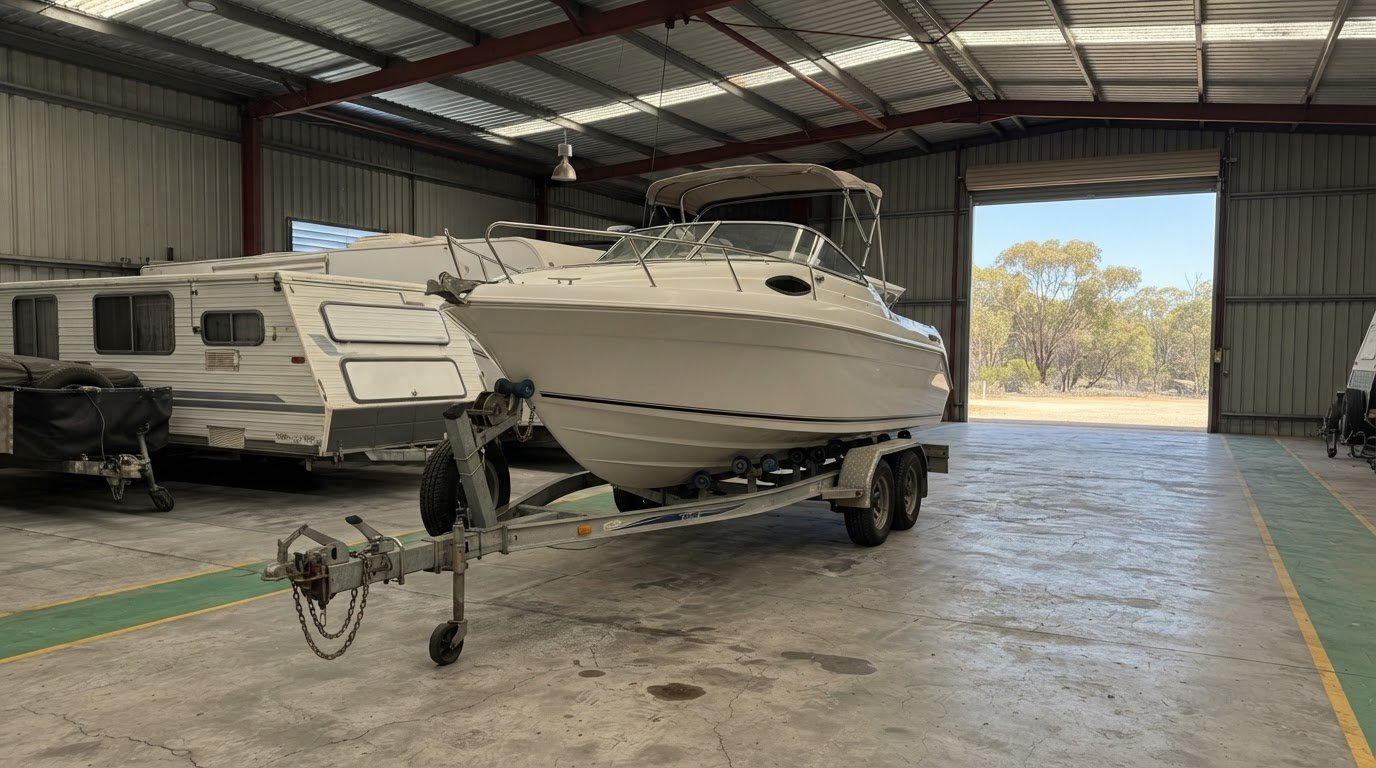
Undercover storage shelters a boat and trailer, while keeping the vessel on its trailer can make it ready for transport. For off-season boat storage in Perth, compare the shelter available with the space and access the complete setup needs.
Available storage options
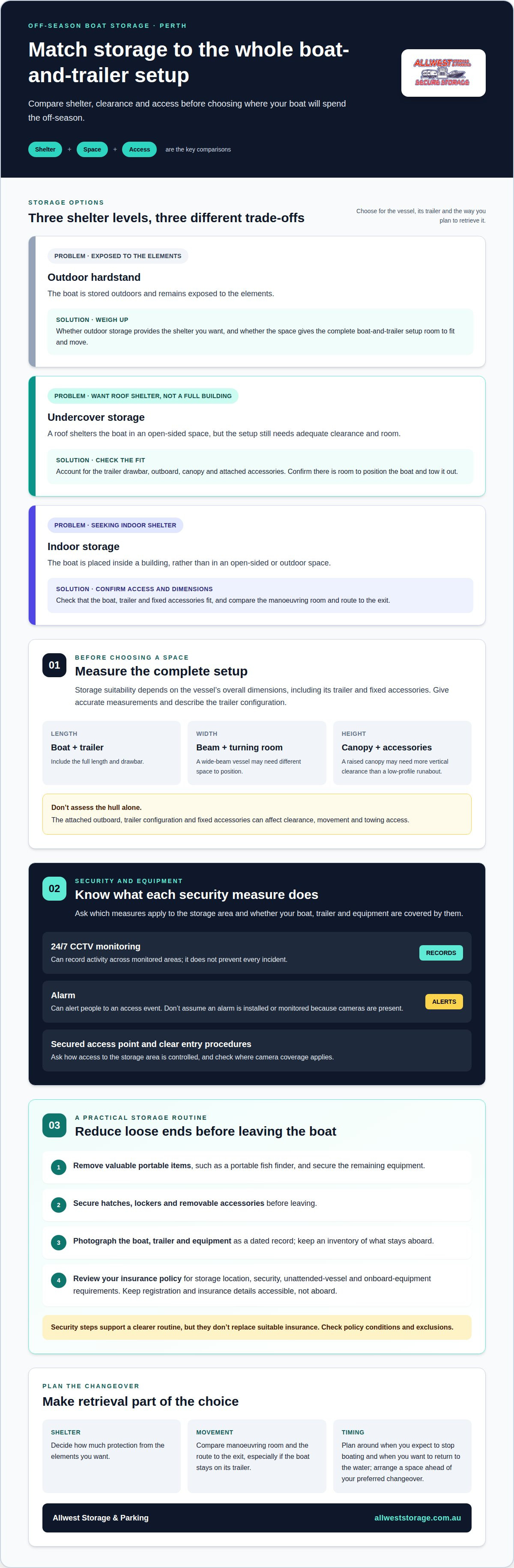
Indoor storage places a boat inside a building. Undercover storage provides roof shelter in an open-sided space, while outdoor hardstand leaves the boat exposed to the elements. Compare the shelter, manoeuvring room and route to the exit. A long drawbar or raised canopy, for example, can affect clearance and towing access.
Rules for keeping a boat trailer in Perth suburbs depend on where it is parked and local requirements. A storage facility offers an alternative to leaving the trailer at home or on a street. When choosing a space, allow for the full length of the boat and trailer, as well as room to position and retrieve it.
Accepted boat sizes and types
Storage suitability depends on the vessel’s overall length, width and height, including its trailer and fixed accessories. A cabin boat with a raised canopy may need more vertical clearance than a low-profile runabout. A sailboat, wide-beam vessel or trailer boat can also need different space and turning room.
Facilities accept boats according to their available space and access layout. Provide accurate dimensions for the complete setup, including an attached outboard or canopy. This helps match the boat type and trailer configuration to a suitable storage area.
Plan seasonal storage around when you expect to stop boating and when you want to return to the water. Arrange a space ahead of your preferred changeover, leaving time to choose a storage type and prepare the boat. Consider your dates, space requirements and preferred option when planning.
Before arranging off-season boat storage in Perth, record the boat and trailer dimensions and decide how much shelter you need. This makes it easier to choose between indoor, undercover and outdoor storage, then plan a straightforward arrival and retrieval.
CCTV and alarm security
Boat storage security involves more than deterring unauthorised access. Theft, vandalism and accidental damage are risks to consider, along with how your insurance policy treats a boat kept in storage.
Ask what security measures apply to the storage area. A facility with 24/7 CCTV monitoring can record activity across monitored areas, but cameras don’t prevent every incident. Consider whether your boat, trailer and stored equipment sit within the camera coverage. A secured access point and clear entry procedures also help control who can reach the storage area.
Alarms and CCTV serve different purposes. An alarm can alert people to an access event, while cameras can provide recorded footage. Don’t assume an alarm is installed or monitored just because cameras are present. Understand which systems are in place and how they relate to the areas where boats are kept.
Think through the risks for your own setup. A portable fish finder left aboard may be easier to remove than fixed equipment. Loose life jackets, tools and fishing gear can also attract attention. Remove valuable portable items, secure remaining equipment and keep a record of what stays with the boat.
Insurance terms matter during storage. Review your policy wording for requirements relating to location, security, unattended vessels and equipment kept aboard. Note any exclusions or conditions that could affect a theft or damage claim. Keep policy details and an inventory of the boat’s accessories together so you can refer to them if an incident occurs.
- Secure hatches, lockers and removable accessories before leaving.
- Photograph the boat, trailer and equipment as a dated record.
- Keep registration and insurance details accessible, not aboard.
These steps support a clearer storage routine, but they don’t replace suitable insurance. For a practical next step, explore boat storage arrangements with security and access needs in mind.
Undercover boat and trailer storage
Undercover storage shelters the boat and trailer, while keeping the vessel on its trailer can leave it ready for transport. Choose an option based on the combined footprint, shelter you want and access plan.
For a boat kept in a Perth suburb, distinguish storage on private property from parking on a public road. Follow the local council requirements that apply to the address, and don’t assume a boat trailer can remain on a verge or street.
Arrange storage before your preferred seasonal changeover if you need a particular space. Timing depends on the boat’s dimensions and whether you want indoor, undercover or outdoor storage, so decide which features matter before making arrangements.
Available storage options
Indoor storage places the boat inside a building, while undercover storage provides a roof without fully enclosing the space. Outdoor hardstand storage leaves the boat exposed to the elements. Compare the shelter, manoeuvring room and trailer access each option provides. For example, a boat used with its trailer may suit a space that allows straightforward towing out.
Look at the whole setup, not just the hull. The trailer drawbar, outboard motor and attached accessories can affect clearance and movement. An undercover option offers roof shelter, but the boat and trailer still need to fit comfortably within the allocated space.
Accepted boat sizes and types
Storage suitability depends on the vessel’s overall length, width and height, including the trailer and any fixed accessories. A cabin boat with a raised canopy, for example, may need more vertical clearance than a low-profile runabout of similar length.
Boat type also affects how it is positioned and moved. A trailer boat, sailboat or vessel with a wide beam can require different space and turning room. Provide accurate overall dimensions and describe the trailer configuration when arranging storage, so the space can be matched to the complete setup.
Before choosing, note the boat’s dimensions, trailer length and the height of anything that stays attached. Include practical access needs, such as room to connect the tow vehicle and manoeuvre the trailer. These details help narrow the choice between indoor, undercover and outdoor storage, and make retrieval more straightforward when boating season returns.
Which Perth facilities offer indoor, undercover, and outdoor boat storage?
Perth storage options include indoor, undercover and outdoor spaces, each offering a different level of shelter. Start by matching the facility type to your boat, trailer and preferred protection. For example, a boat on a road trailer needs room for the complete setup, not just the hull.
Indoor storage places a boat inside a building. Undercover storage provides roof shelter while leaving the space open-sided. Outdoor hardstand storage keeps boats in an open area. These differences affect exposure and manoeuvring, so consider how you’ll tow the boat in and out. A tall canopy, wide beam or long drawbar can affect which space suits.
Compare storage options by the practical details that affect suitability. Consider the space allocated, the surface beneath the trailer and the route to the exit. For example, a tight turn may complicate retrieval for a long boat-and-trailer combination. Plan how you’ll access the space and whether you can move the boat without shifting other items.
- Indoor: prioritise enclosed shelter and suitable clearance.
- Undercover: consider roof coverage and open-sided access.
- Outdoor: assess the exposed location and trailer positioning.
Before choosing, record the overall length, width and height of the boat with its trailer. Include fixed accessories such as a canopy or outboard. These dimensions help match the setup to a suitable space and reduce surprises on arrival. Also consider whether you need to retrieve equipment or prepare the boat before towing it away.
For seasonal storage in Perth, choose the facility type that balances shelter with straightforward towing access. To explore boat storage options, consider the space your complete boat-and-trailer setup needs.
Indoor storage offers enclosed shelter, undercover storage provides roof cover in an open-sided space, and outdoor hardstand leaves the boat exposed in an open area.
Allwest Storage & Parking: Boat Storage
Allwest Storage & Parking provides boat storage for owners needing a place to keep their vessel between outings or through the off-season. Choose between hardstand and undercover storage, with 24/7 CCTV monitoring across the facility.
Undercover space can suit owners seeking roof shelter for a boat and trailer, while hardstand storage offers an outdoor option. Allwest Storage & Parking provides flexible short-term and long-term storage with no lock-in contracts, so you can choose an arrangement that suits a seasonal stay or a longer period.
When planning storage, consider the full boat-and-trailer dimensions and the level of shelter you want. Allwest Storage & Parking also offers caravan and campervan, car, and truck and trailer storage in Perth.
Request a quote from Allwest Storage & Parking to discuss boat storage for your off-season plans.
Plan your next season with confidence
Make your storage decision part of your boating calendar. Think about when you expect to use the vessel again, what needs to travel with it, and how you want the first outing to begin. That plan can help you choose an arrangement that fits your time off the water and your return to it.
For off-season boat storage in Perth, Allwest Storage & Parking offers storage for boats, caravans and campervans, and cars. Share your storage needs and request a quote to discuss a suitable option.
Contact Allwest Storage & Parking to talk through your boat storage plans. A clear plan now can make getting ready for the next season easier.
Frequently Asked Questions
What off-season boat storage options are available in Perth, WA?
Perth options include indoor, undercover and outdoor hardstand storage. Allwest Storage & Parking offers hardstand and undercover options for boats. If you’re storing a boat with its trailer, consider the combined space needed and how you’ll retrieve it. The best fit depends on the shelter you want and how you plan to prepare the boat for its next outing.
Are there secure boat storage yards near Perth with CCTV and gated access?
Allwest Storage & Parking provides boat storage with 24/7 CCTV monitoring. Camera monitoring and gated entry are separate security features, so don’t assume one includes the other. CCTV monitoring also doesn’t mean physical access is available around the clock. Consider how the security arrangements and access process fit your plans for bringing in or collecting a boat and trailer.
How do indoor and outdoor boat storage compare for cost and protection in Perth?
Indoor storage provides enclosed shelter, while outdoor hardstand leaves the boat exposed. The material provides no cost comparison.
Leave A Comment