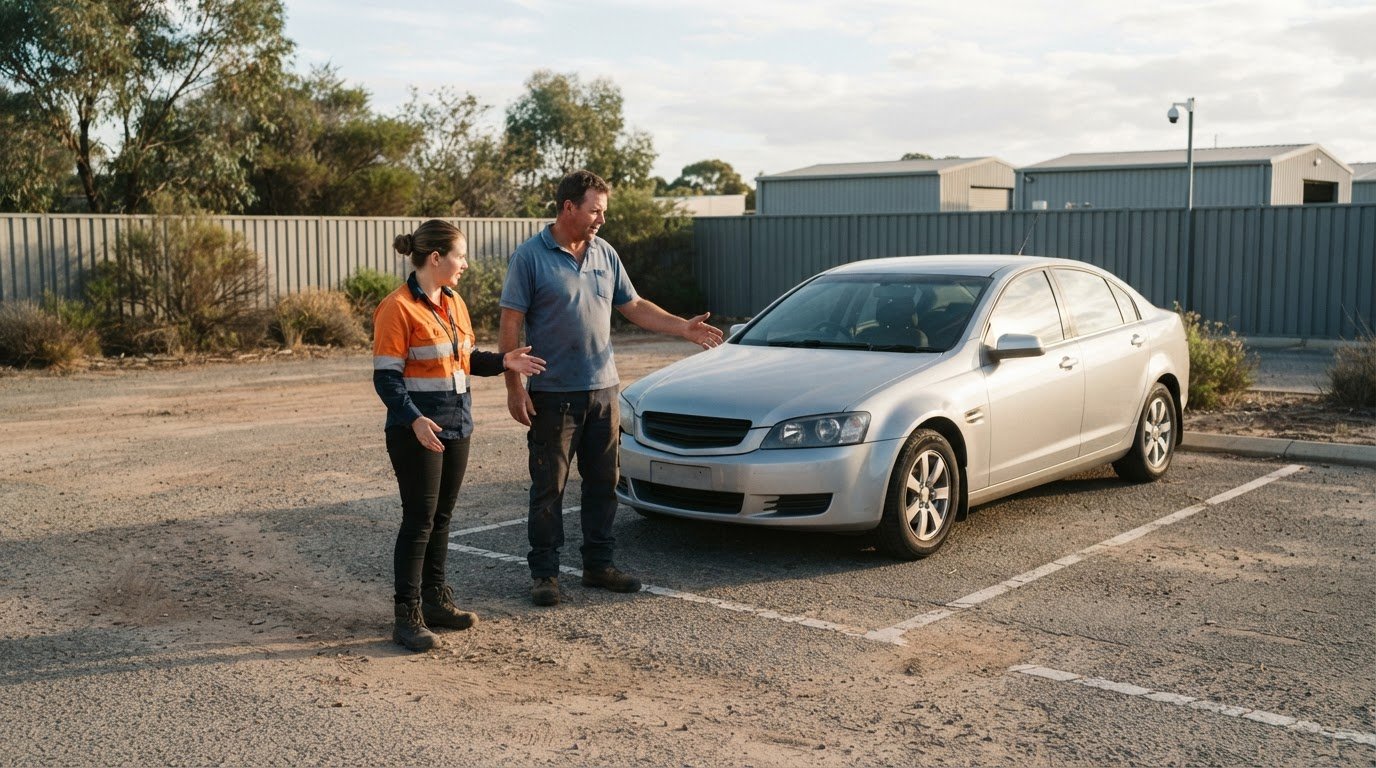
A storage space isn’t automatically a workshop. If you’re asking, “Can I work on my car in storage?”, the answer depends on the facility’s rules and the work you plan to do. Check the rental agreement before assuming maintenance or repairs are allowed.
It makes sense to want your car stored securely while keeping it accessible. But access doesn’t mean repairs are permitted, and the space must suit your vehicle and storage needs.
When choosing car storage in Perth, check the facility’s rules, access arrangements, location and the space your vehicle needs. Read the agreement and consider whether hardstand or undercover storage suits your plans. Storage is for keeping a vehicle, not a substitute for a workshop.
Key Takeaways
- Read the storage agreement for rules on vehicle maintenance, then make sure your planned work fits its terms.
- Assess whether the space, vehicle access and facility layout suit the work you intend to do.
- Keep the area clean and contain fluids carefully to reduce the risk of damage to nearby units.
- Understand that work outside the facility’s rules may lead to disputes or losing access to your storage space.
Facility access, location and dimensions
Australian storage facilities differ on whether they allow vehicle work in outdoor parking areas. An outdoor space doesn’t automatically permit repairs, so check the rental agreement and discuss your plans with the facility manager before choosing a site.
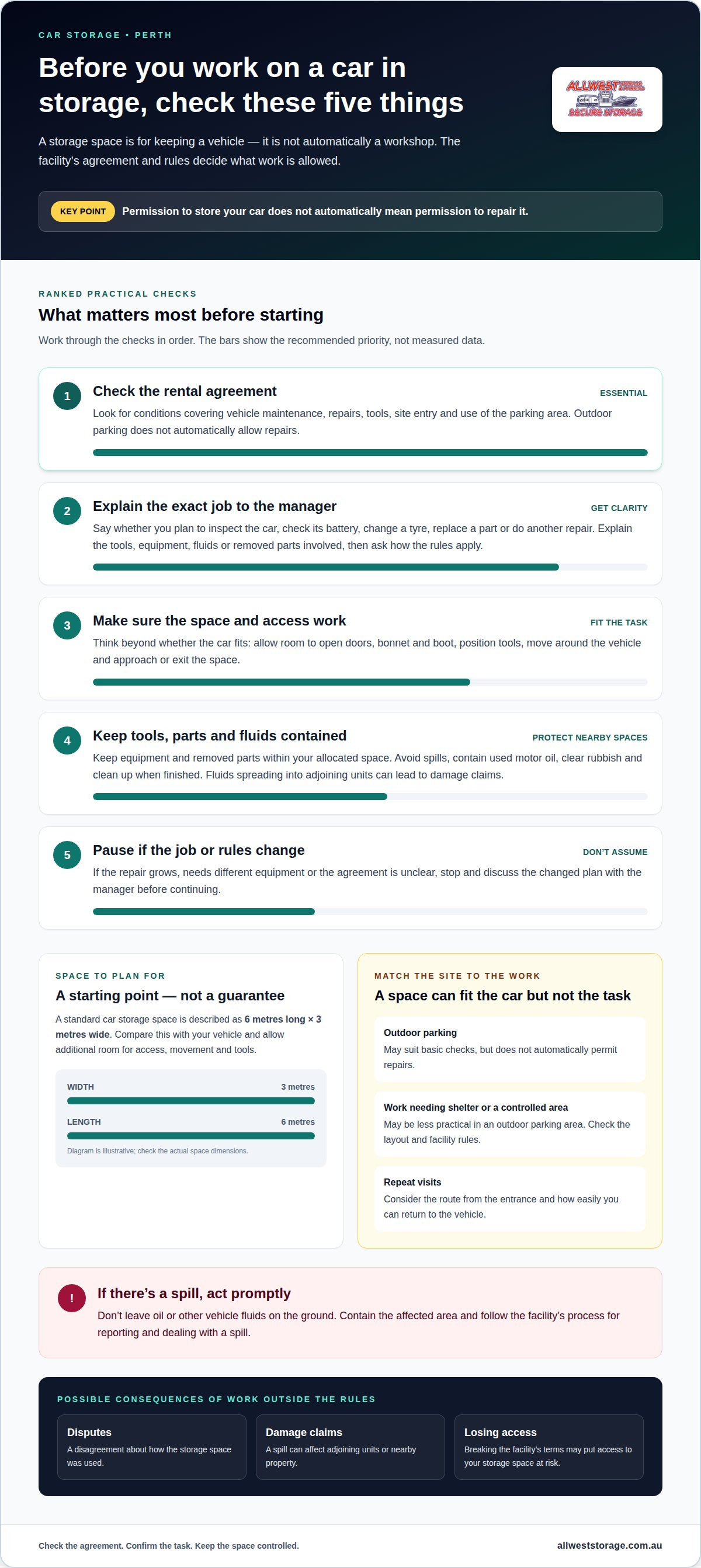
- Read the agreement for access conditions. Look for rules covering vehicle work, entry to the site, and how you may use the parking area. If you plan to do more than inspect the car, describe the task clearly, such as changing a tyre or replacing a part. The facility’s rules determine whether that work is allowed.
- Plan the approach and exit. Consider how your car will reach its space and whether you can open the doors, bonnet and boot once parked. A tight turning area can make it difficult to position the vehicle or bring tools alongside it. Think through the whole task, not just whether the car fits.
- Measure the car and compare the space. A standard car storage space is described as 6 metres long and 3 metres wide. Treat these dimensions as a starting point, then account for your vehicle’s size and the room needed around it to work safely and comfortably.
- Allow room for tools and movement. A car may fit while leaving too little working space. For example, opening a door fully or placing a trolley beside the car may require extra width. Consider where tools and removed parts will go, without blocking access or neighbouring spaces.
- Match the location to the work. An outdoor parking area may suit basic checks, but it may be less practical for tasks needing shelter or a clean, controlled workspace. Decide what you intend to do and whether the site layout supports that task under its rules.
- Choose a site that suits regular access. Consider the route from the entrance to your space and how easily you can return to the vehicle. For Perth storage, a convenient location can make repeat visits simpler, but access arrangements and permission for the planned work remain essential.
What do Australian self-storage facility rules say about vehicle maintenance and repairs?
- Read the rental agreement before planning repairs. Australian storage facilities differ on whether they allow work on stored vehicles. Look for terms about maintenance, repairs, using tools and keeping the space clear. Don’t assume that permission to store a car also includes permission to work on it. The written agreement sets the conditions for using the space.
- Describe the exact job you want to do. Tell the facility manager whether you plan to inspect the car, check its battery, replace a part or carry out another repair. These tasks can involve different tools, equipment and mess. A clear description gives the manager a practical basis for discussing whether the proposed work fits the facility’s rules.
- Discuss your plans before starting. Speak with the manager and explain where you intend to work, what tools you’ll use and whether you’ll remove any parts. Ask how the agreement applies to that specific job. For example, a brief inspection may differ from a repair that leaves components or tools around the vehicle.
- Keep the storage space clean during the work. Put tools and removed parts in an orderly place, and clear them away when you finish. Don’t let rubbish, fluids or equipment spread into shared areas or neighbouring spaces. A clean unit helps you meet the facility’s conditions and reduces the chance of a disagreement about how you used it.
- Stop if the job changes or the rules aren’t clear. A repair can grow beyond the task you first described. If you need different equipment or discover the work will take longer, pause before continuing. Revisit the agreement and discuss the changed plan with the manager. Staying upfront helps avoid breaching the rental terms or risking eviction.
Are there Australian fire-safety or environmental rules against car repairs in storage units?
- Separate facility rules from general legal requirements. Australian storage facilities differ in whether they allow vehicle work. Don’t assume that every repair is automatically prohibited, or that permission to store a car makes every repair acceptable. Read the agreement and consider the specific task before bringing tools or materials onsite.
- Describe the work before starting. Tell the facility manager what you intend to do, including whether you’ll handle fluids or remove components. A quick inspection is different from a repair that could leave waste or equipment in the unit. Clear details help identify relevant site restrictions.
- Prevent used oil from reaching shared areas. Avoid spills and keep used motor oil contained. A spill can spread into adjoining units and lead to damage claims. If a task could release oil, consider whether you can manage it without contaminating the space or nearby property.
- Keep the work area controlled. Place tools, removed parts and materials within your allocated space. Don’t leave items in access areas or allow residue to spread. A tidy work area makes it easier to spot a leak or spill and clean it before it affects another unit.
- Stop if a spill occurs. Don’t leave oil or other vehicle fluids on the ground. Contain the affected area and follow the facility’s process for reporting and dealing with a spill. Prompt action can limit the spread and reduce the chance of damage to adjoining spaces.
- Match the task to the site’s conditions. A repair involving fluids or equipment may create different concerns from a visual inspection. If the site rules don’t cover the proposed activity clearly, pause and discuss the exact job with the manager before proceeding.
- Don’t treat a storage unit as a workshop by default. Fire-safety and environmental concerns make the task, materials and site rules relevant. Use the agreement and the facility’s directions to decide whether the planned work can take place there. Choose another setting for work the facility doesn’t permit.
Risks or penalties for working on cars at storage centres?
- Stay within the rental agreement. Storage facilities set different conditions for vehicle work. If you carry out a repair that the agreement doesn’t allow, you risk a dispute with the facility. Read the terms before starting, and treat permission to store a car separately from permission to repair it.
- Understand that breaching the terms can affect your tenancy. Renters who ignore facility rules risk legal trouble or eviction. That could mean losing access to the space before planned work is complete. Don’t assume an informal practice at one facility applies at another.
- Be upfront about your intended work. Tell the facility manager what job you plan to do and what it involves. If you start with a simple inspection but move into a repair, the change may matter under the agreement. Discuss the revised task before continuing.
- Keep the work contained. Tools, parts and waste left outside your space can affect shared areas or neighbouring units. Damage to another renter’s property may lead to a claim. Keep items together, and clean the area when the job is finished.
- Consider what happens if work must stop. A dispute or direction to cease work can leave a repair unfinished. Removed components may need to be refitted or safely stored, and tools may need to be packed away. Plan the job so the vehicle isn’t left in an unusable state.
- Avoid creating damage claims. Work that affects another unit or stored property can have consequences beyond the repair itself. For example, a spill may spread beyond your space. Use suitable containment for the task, and respond promptly if anything escapes the work area.
- Pause when permission is uncertain. A facility manager can explain how the rental conditions apply to your proposed job. Don’t rely on assumptions or another renter’s experience. A clear agreement about the activity helps you avoid preventable disputes, interrupted work and possible eviction.
Allwest Storage & Parking
Allwest Storage & Parking provides vehicle storage for people who need a place to keep a car while arranging permitted work elsewhere or between projects. Its car storage options include hardstand and undercover storage, with 24/7 CCTV monitoring. These options address the storage decision, but they don’t make a facility a workshop or grant permission for repairs.
Once you’ve decided storage suits your needs, choose a space that fits your vehicle. Allwest Storage & Parking offers storage for cars, caravans and campervans, boats, trucks and trailers, with hardstand and undercover options. Storage helps keep your vehicle between uses, but it isn’t a vehicle maintenance service.
Contact Allwest Storage & Parking to discuss your vehicle storage needs.
Plan the next step for your vehicle
Decide where the work will happen before arranging storage. A storage space can keep your vehicle between projects, while repairs may need a separate setting. Keep those two needs distinct when planning your next move.
Whether you can work on your car in storage depends on the facility’s conditions and the job involved. Allwest Storage & Parking provides vehicle storage, not vehicle maintenance services. If you need repairs, arrange them separately and use storage to keep the vehicle.
For storage planning, consider your vehicle, the access it needs and how long it will remain stored. Then choose an option that suits those practical requirements. If you’re ready to discuss storage for your vehicle, contact Allwest Storage & Parking. A clear plan will help you move forward with confidence.
Arrange another place for repairs where the planned work is permitted, and use the storage facility only to keep the vehicle.
Frequently Asked Questions
Can you work on or repair a car at a self-storage facility in Australia?
Whether you can work on your car in storage depends on the facility’s terms and the work planned. Access to your vehicle does not necessarily mean repairs are allowed. Before arranging storage, read the agreement and distinguish between simply accessing your car and carrying out maintenance.
Can you change oil, batteries, or tyres in a storage unit in Australia?
Only if the facility permits that specific task. An oil change needs a suitable way to catch and remove used oil, while a battery change or tyre swap requires room for tools and parts. Don’t leave fluids, old components or waste behind. If the job could extend beyond a straightforward change, plan where the vehicle and removed parts will go if you can’t finish onsite.
Are there extra fees or insurance issues for working on a car in self-storage?
No extra fees or insurance requirements are identified. Spills or damage to another renter’s property may lead to damage claims.
Leave A Comment