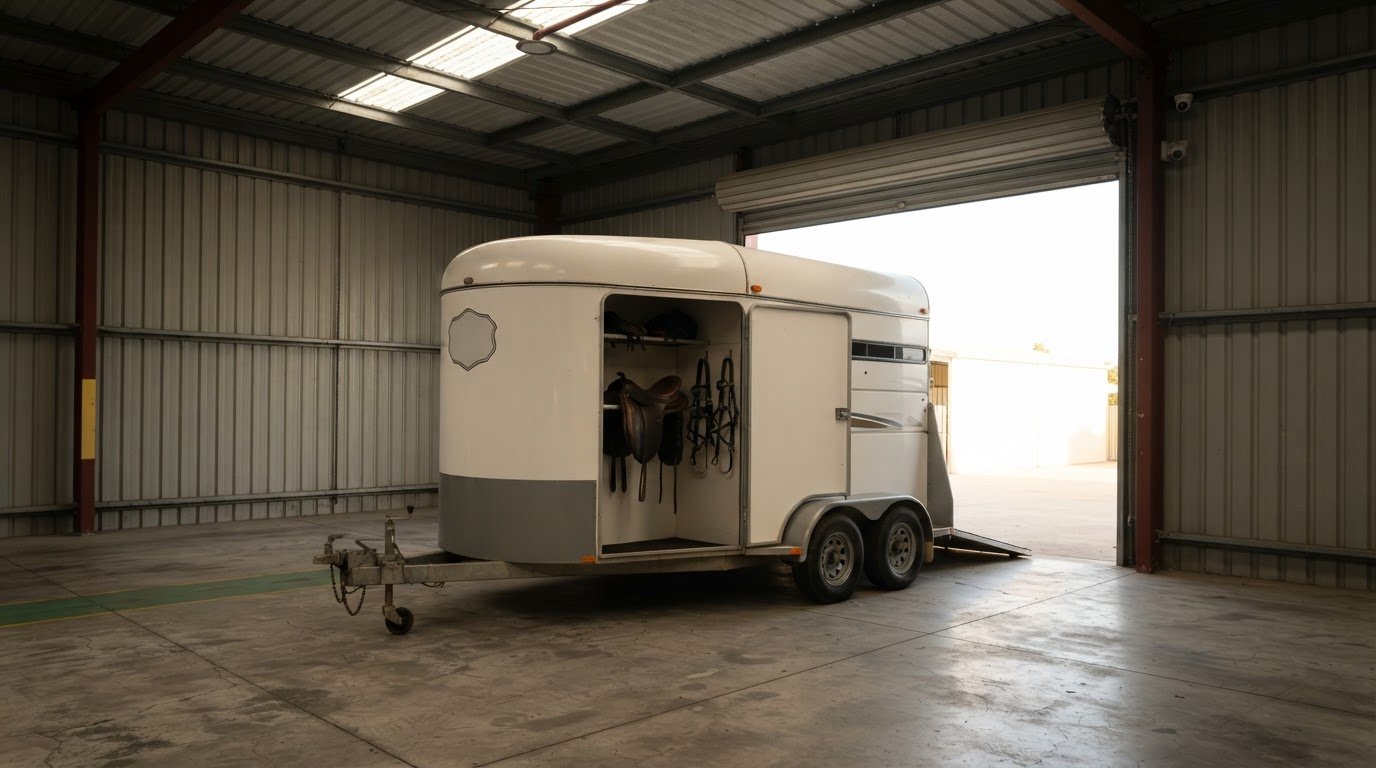
Undercover storage can help preserve a horse float, but it cannot guarantee a longer service life. For horse float storage in Perth, keeping the float out of direct sun and rain can reduce weather exposure. Regular care still matters.
That distinction is useful when deciding where to keep your float and how much clearance you need. A roof can help protect the float and stored gear from the elements, while good organisation makes equipment easier to access and put away.
This article explains what undercover storage can and cannot do, how to plan space for your float and tack, and what to consider when choosing a storage option. It also offers practical guidance on access, clearance and keeping gear organised between trips.
Key Takeaways
- Separate horse gear, personal items, feed and emergency supplies to keep stored equipment organised and easier to access.
- Measure the float’s height and width before choosing a storage space, and allow for the roller-door hardware and reversing clearance.
- Choose between hardstand and undercover parking based on the level of weather exposure and access that suits your storage needs.
- Look for practical security features, such as CCTV monitoring, when comparing horse float parking options in Perth.
Protecting stored gear from moisture and dust
Moisture and dust can affect more than the float’s exterior. Damp rugs, dusty tack and leftover feed can make equipment unpleasant to use and harder to organise. Before parking the float for an extended period, remove loose gear, clean surfaces and let wet items dry fully. A saddle cover can help keep dust off leather, while sealed containers keep small items together.
You can store a horse float at a Perth vehicle-storage facility if it offers suitable space and access. A household storage unit may not suit a float’s size or towing requirements, so choose a site designed for larger vehicles.
For longer storage in Perth’s climate, clean and dry the float before putting it away. Remove feed and damp rugs, then store equipment in closed containers where practical. Make sure items that need airflow are dry before packing them away, and avoid leaving loose gear on the floor where dust can collect. These steps help keep the float and its contents ready for the next trip.
Organise equipment into separate zones for horse gear, human gear, feed and emergency supplies. This makes misplaced items easier to spot and keeps feed apart from used tack. In a two-horse float with limited wall space, wall-mounted wire grid panels can help organise smaller tack items without taking up floor space.
Check storage fittings every three months and replace worn parts before they fail on the road. Look over straps, hooks, fasteners and containers for damage or loose attachments. Before departure, allow a five-minute walk-around to spot issues such as unsecured gear, damp equipment or a fitting that needs attention. A simple routine protects stored items and supports safer loading.
Float clearance and roller door height
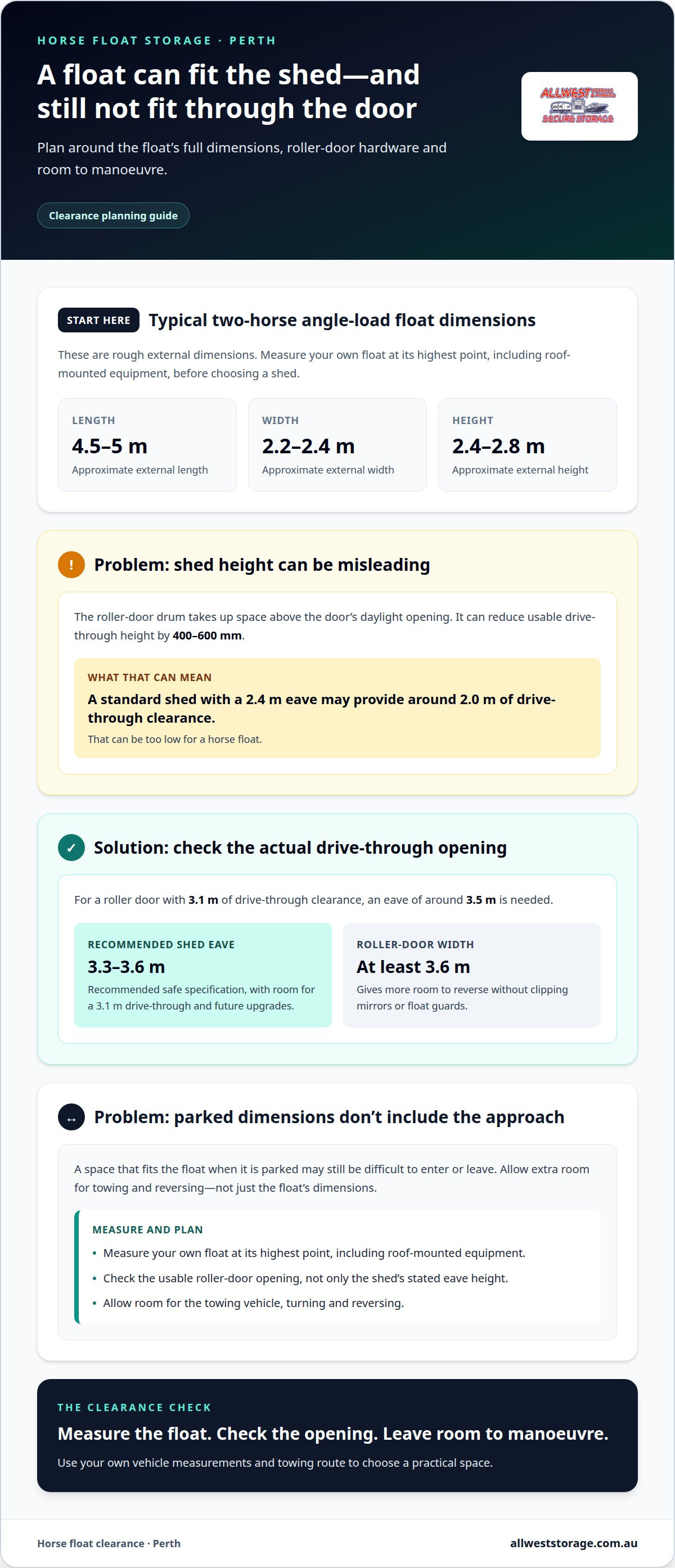
A standard two-horse angle-load float is roughly 4.5 to 5 metres long, 2.2 to 2.4 metres wide, and 2.4 to 2.8 metres high externally. Measure your own vehicle at its highest point, including roof-mounted equipment, before selecting a shed. Allow extra room for towing and reversing, not just the float’s parked dimensions.
Roller-door hardware reduces usable height. The drum can take 400 to 600 millimetres above the door’s daylight opening. A standard shed with a 2.4-metre eave may provide around 2.0 metres of drive-through clearance once the drum is installed. That can be too low for a horse float.
For a 3.1-metre roller door, an eave of around 3.5 metres is needed for true 3.1-metre drive-through clearance. A shed eave of 3.3 to 3.6 metres is a recommended safe specification for a float, with room for a 3.1-metre drive-through and future upgrades. A door at least 3.6 metres wide gives more room to reverse without clipping mirrors or float guards.
Home parking rules can depend on your local council, property and whether the float is on private land or a public street. Check the relevant local planning and parking requirements before choosing a permanent spot. Keep the float clear of vehicle accessways and do not obstruct the footpath.
No single insurance policy suits every stored float. Review your policy for cover during storage, including theft, accidental damage and weather exposure, and note any conditions about where the float is kept. Ask your insurer how storage affects your existing cover.
For security, look for monitored CCTV, managed site access and secure perimeter fencing. Check how entry is handled and whether the storage arrangement suits your float’s size and access needs. These features support security, but do not replace suitable insurance or securely locking the float itself.
Where can I store a horse float in Perth, WA?
In Perth, you can keep a horse float on suitable private property or at a vehicle-storage facility. The right choice depends on available space, towing access, weather exposure and how often you travel with horses. A float used regularly needs straightforward entry and exit, while longer-term storage may put more emphasis on protection and security.
A private driveway or paddock can be convenient, but the surface and layout matter. Choose firm, level ground that supports the float and towing vehicle. Keep the parking area clear of branches and equipment, with room to manoeuvre. If the float sits outside, consider how sun, rain and dust may affect its condition and any gear left inside.
A shed on private land provides a roof and keeps the float close to home. Plan for the float, towing vehicle and room to manoeuvre. For a combined float, tack room and feed bay, one common shed layout measures 9 by 7.5 metres, with a 3.6-metre eave. Treat this as an example, then base the design on your float and site.
Commercial vehicle storage is another option when home space is limited. Storage may be undercover or on hardstand, so consider whether weather protection or a designated parking space is your priority. Compare the access route, turning room, surface, security arrangements and storage terms. These details affect how easily you can park and retrieve the float.
- Home storage: suits owners with a suitable, accessible space.
- Private shed: adds overhead cover and can include room for tack or feed.
- Vehicle-storage facility: provides a designated parking arrangement, with options shaped by the site.
For horse float storage in Perth, start by measuring the float and planning its towing route. Then match the site to your intended storage period, access needs and preferred level of weather protection. A clear layout helps you choose a practical space without compromising everyday access.
Which Perth storage facilities offer secure outdoor or undercover horse float parking?
Perth vehicle-storage facilities may offer outdoor hardstand parking, undercover bays or both. The right option depends on your priorities. Hardstand provides a designated parking space, while undercover storage adds a roof to shield the float from the weather. Consider how long the float will be stored and how often you need access.
Security features matter for either arrangement. Look for CCTV monitoring, clear site access arrangements and a well-defined parking area. Check that the float can be manoeuvred into its space without blocking other vehicles. Make sure you understand how customers enter and leave, and what arrangements apply when retrieving a float.
Before settling on a facility, compare these practical points:
- Storage type: choose hardstand or undercover parking based on your exposure and protection priorities.
- Access: consider the turning space needed for your float and towing vehicle.
- Security: look for CCTV monitoring and organised site access.
- Storage period: check whether the arrangement suits short-term or long-term storage.
A float used for regular events may need convenient access, while one parked for an extended break may benefit from undercover protection. Neither option replaces suitable insurance or careful preparation. Keep valuable tack and feed organised separately, and do not leave damp equipment inside during storage.
Allwest Storage & Parking offers hardstand and undercover storage, with 24/7 CCTV monitoring. Both short-term and long-term storage are available, with flexible rates and no lock-in contracts. These options suit owners who need a designated place for a float and want to choose between outdoor and undercover parking.
For horse float storage in Perth, match the parking type to your storage period, access needs and preferred weather protection. Explore hardstand and undercover storage options to find an arrangement suited to your float.
Allwest Storage & Parking
Allwest Storage & Parking provides practical vehicle storage for Perth owners. If you need a secure place for a caravan, campervan or trailer, its storage options offer a useful next step after you assess your space, access and weather-protection needs.
Choose storage that fits what you have and how you plan to use it. Allwest Storage & Parking offers Caravan & Campervan Storage and Truck & Trailer Storage, alongside Boat Storage and Car Storage. These options provide dedicated space for larger vehicles and recreational equipment, rather than household belongings.
For horse float storage in Perth, consider whether a related vehicle-storage option meets your needs. Contact Allwest Storage & Parking to discuss your requirements and request a quote.
Plan your next storage move
Make storage part of planning your next trip. Once you know where the float will sit and how you will use the space, you can choose vehicle storage that fits your needs. Flexible short-term and long-term options make it easier to adapt your arrangements as plans change.
For horse float storage in Perth, Allwest Storage & Parking offers Caravan & Campervan Storage, Boat Storage and Car Storage. These options may suit owners arranging space for recreational equipment or another vehicle alongside their float.
Consider what you need to store, how often you’ll access it and which storage arrangement suits your plans. Then take the next step at a pace that works for you. Contact Allwest Storage & Parking to discuss your storage needs and move forward with a clear plan.
Frequently Asked Questions
Does keeping a float undercover extend its life?
Undercover parking can reduce direct exposure to sun and rain, which may help limit weather-related wear. It cannot prevent all deterioration, so the float’s condition still depends on upkeep and preparation. Dry rugs and remove leftover feed before storage. Keeping the float clean and checking it periodically can also help you spot changes before your next trip.
What size shed do I need to store a 2-horse angle-load float?
A single-bay float garage template measures 6 by 4 metres internally. Use this as a starting point, not a guarantee of fit: allow room for the float’s actual dimensions, towing vehicle and manoeuvring. Measure the float at its widest and highest points, including fittings. If you also want a tack room or feed bay, plan a larger layout around those separate storage needs.
Why choose Horse Float Storage?
Choose dedicated vehicle storage when a float takes up useful driveway or paddock space, or needs a suitable place between trips. If you use it with a caravan or trailer, consider which storage type best matches your plans and access needs. Allwest Storage & Parking offers Caravan & Campervan Storage and Truck & Trailer Storage for vehicle owners in Perth.
What are the dimensions and access requirements for horse float storage spaces in Perth?
Space requirements depend on your float’s dimensions and the route needed to park it. Measure its overall length, width and height, then allow for the towing vehicle, turning room and entry clearance. Check the approach for tight corners, overhead obstructions and door clearance, not just the parking bay. A layout that allows smooth entry and exit makes regular retrieval more practical.
Leave A Comment