
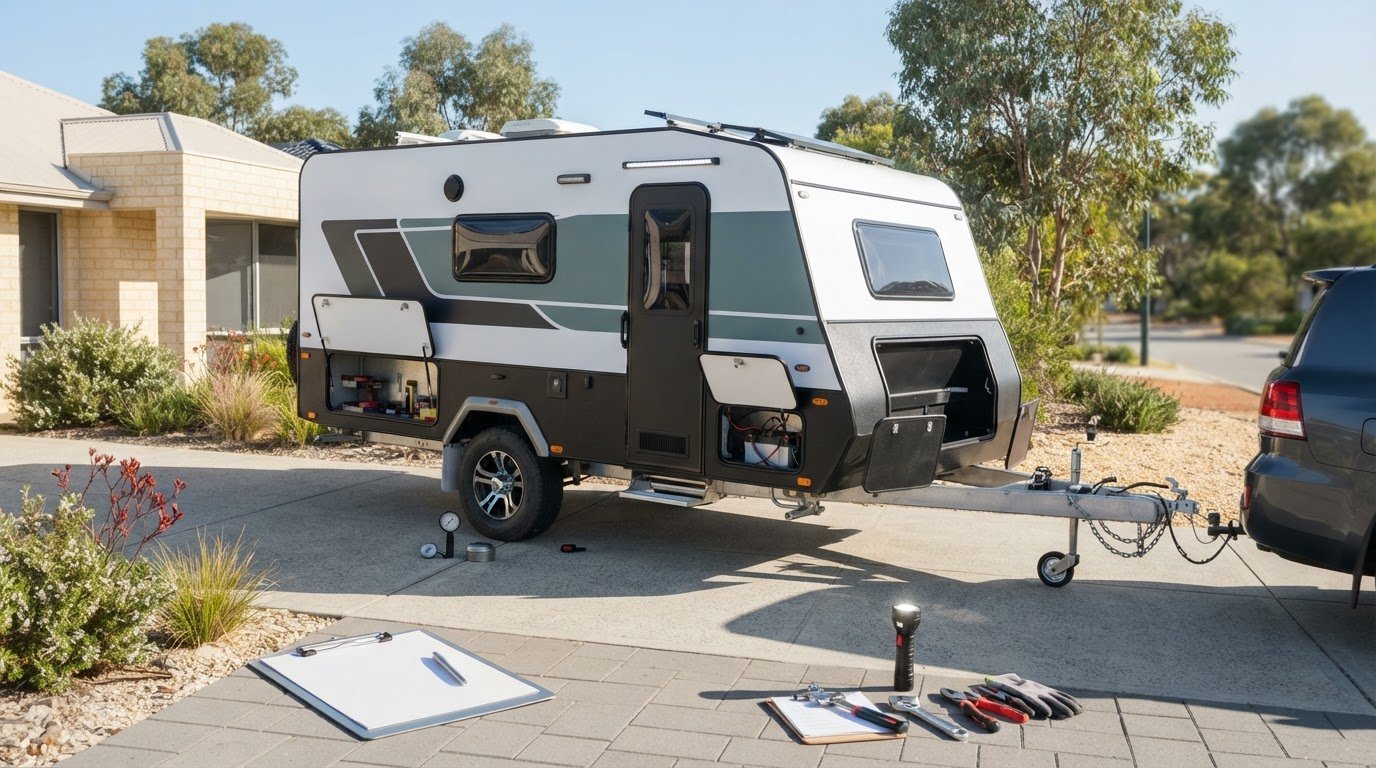
Your caravan can look ready to tow after storage and still have a fault you can’t see at a glance. Knowing how to get a caravan ready after storage means checking it methodically before the first trip, rather than relying on appearance alone. The battery may have lost charge, tyres may need attention, and fittings or water systems may need a closer look.
Start well before departure day so there’s time to deal with anything you find. A clear order helps you check the caravan without rushing, from visible damage and tyres through to lights, the hitch and onboard systems. It also helps you decide when to stop and arrange an assessment instead of taking an unresolved problem onto the road.
This checklist covers the key areas to inspect and what to do if something seems wrong. Use the caravan and equipment manuals for model-specific instructions, record any concerns and resolve safety issues before towing. A careful pre-trip check helps you understand your caravan’s condition before setting off.
Key Takeaways
- Learn how to get a caravan ready after storage with an ordered check of its condition and key systems.
- Use the manufacturer’s instructions when checking tyre pressures, battery care and appliance operation.
- Record what you can safely observe, and arrange a qualified assessment for faults that need technical attention.
- Work through a final pre-departure check of lights, connections, hatches, doors and loose belongings.
- Use your inspection notes to decide whether to travel, arrange repairs or reschedule, and keep a record for next time.
How to get a caravan ready after storage: start with a calm first inspection
A tidy exterior doesn’t confirm that a caravan is ready to tow. Begin with a visual inspection before reconnecting power, operating appliances or loading for a trip. Check both condition and function, rather than assuming everything is unchanged because the caravan has been stored.
Choose a level, well-lit spot where you can walk around the caravan and open its doors and compartments safely. Allow enough time to inspect without rushing, ideally well before departure day. Keep the owner’s manual and appliance instructions handy, as models differ and their guidance should shape how you reconnect or operate equipment. A caravan is one type of recreational vehicle, but its fittings and operating instructions are specific to the model.
What to do before reconnecting or switching anything on
Start with a visual check, leaving electrical and gas systems off. Walk around the caravan and look for dents, cracks, loose trim, disturbed fittings or signs of pests, such as droppings, nesting material or chewed items. Note unusual smells or visible damp inside. Recording these observations gives you a starting point for follow-up checks.
Open and close each door, window, hatch and external compartment. Check that each moves smoothly and latches securely, without forcing a stiff fitting. From a safe position, look beneath the caravan using a torch if needed. Fresh fluid marks, loose items or obvious damage are reasons to pause and investigate. Don’t crawl underneath a caravan that isn’t properly supported. If anything looks damaged or unsafe, leave systems switched off and arrange an appropriate assessment before use.
How storage conditions affect your first checks
Consider where the caravan was stored and what it was exposed to. An undercover space and an outdoor hardstand can present different conditions, but neither tells you by itself whether the caravan has a fault. Think about its exposure to sun, heat, wind or rain, then pay particular attention to areas that may be affected, such as seals, external fittings and interior surfaces.
In Perth, outdoor exposure is a reason to inspect carefully, not proof that damage has occurred. Check for dust build-up, signs of rain entry around openings, damp patches and musty odours. Look inside cupboards and corners as well as the main living area, where early signs can be easy to miss. Record what you find, where you found it and whether it’s new or familiar. A visual inspection is a useful first step, but it doesn’t replace servicing or repairs.
Check the caravan’s tyres, battery, water, electrical and gas systems
After the walk-around, check each system carefully and follow the caravan and equipment manuals. These checks can help you spot visible problems, but they don’t replace servicing or repairs. Address faults before towing instead of assuming they’ll resolve on the road. Tyre pressures, battery care and appliance start-up procedures vary between models, so use the instructions for your caravan and equipment rather than relying on a universal rule.
Inspect tyres, wheels and the caravan battery
Start with the tyres. Look for cuts, cracks, bulges, flat spots or signs of deflation. Inspect the sidewalls as well as the tread, and check each wheel for obvious damage. Set tyre pressure according to the caravan or tyre manufacturer’s instructions for your setup and load. The maximum pressure printed on a tyre isn’t necessarily the recommended setting. If you’re unsure what pressure applies, consult the manual or current Australian tyre safety guidance before towing.
Check the battery casing for visible damage, leaks or swelling. Before reconnecting or charging it, follow the battery manufacturer’s instructions for its type and the caravan’s system. Don’t assume a flat battery can be charged in the same way as another battery. If the casing is damaged, or you’re unsure how to proceed safely, leave it disconnected and seek qualified advice.
Test water, electrical and gas systems carefully
Follow the manual’s start-up steps for the water system. As you bring it into use, inspect accessible hoses, taps and fittings for drips, pooling or an unexpected drop in pressure. If you spot a leak, stop the test and address it before using the system. A fitting that looks intact isn’t necessarily leak-free.
Switch on electrical equipment one item at a time, following the manufacturer’s instructions. Note warning lights, tripped protection devices, unusual sounds or equipment that doesn’t work as expected. Stop using an affected circuit or appliance if you notice a fault, burning smell or damaged wiring. Electrical faults need assessment by a suitably qualified technician. Don’t open or repair wiring yourself.
For gas appliances, follow the owner checks and operating instructions in the manual. If you smell gas, see damage or suspect a leak or appliance fault, don’t test or repair it yourself. Turn off the supply if it’s safe, keep flames and ignition sources away, and arrange assessment by a qualified gas professional. If you’re unsure whether the system is safe to use, pause. That’s a firm stop point in how to get a caravan ready after storage.
Record any concerns and where you found them. If you’re planning another storage period between trips, include caravan storage in Perth in your travel planning.
Which post-storage problems can you check, and when should you stop?
A post-storage check helps you spot warning signs, but it doesn’t diagnose every fault. Separate what you can safely observe and record from anything that needs technical assessment. If you’re unsure whether the caravan can be operated safely, don’t tow it until the concern has been assessed. It’s better to delay a departure than take an unresolved fault onto the road.
| Observation | Why it matters | Sensible next action |
|---|---|---|
| Damp patches, mould or a musty smell | May indicate moisture that needs investigating | Record the location and extent. Don’t cover it up before the cause is understood. |
| Droppings, nesting material or chewed items | May point to pest activity or damaged fittings | Note affected areas and check nearby seals and materials for visible damage. |
| Cracked, bulging or visibly deflated tyre | Could make the caravan unsafe to tow | Don’t travel on it. Arrange assessment and replacement or repair as advised. |
| Uneven stance or abnormal braking | May indicate a running-gear or braking issue | Stop checks that involve moving the caravan and arrange a qualified assessment. |
| Suspected gas or electrical fault | Testing or repair can create safety risks | Stop using the affected system and arrange qualified help. |
| Persistent water leak or equipment malfunction | Could cause further damage or indicate a system fault | Stop using the system, record what you observed and arrange assessment if it continues. |
Signs of moisture, pests or deterioration
Check corners, cupboards and soft furnishings for dampness, mould or musty odours. Look for droppings, nesting material, chewed items and damaged seals. Note affected areas and take photos for your records. Don’t mask an odour, clean away evidence or cover damp before identifying its source. You can record visible marks yourself, but persistent moisture or damage may need further investigation.
When a professional assessment is the safer next step
Pause if a tyre is damaged, the caravan sits unevenly or braking feels abnormal. Suspected gas leaks, electrical faults and persistent water leaks also call for qualified attention, not trial-and-error repairs. Don’t tow if a problem affects safe operation or you can’t confidently rule that out. Use this triage as part of how to get a caravan ready after storage, not as a substitute for scheduled servicing. A visual check can flag concerns, but it can’t confirm that brakes, bearings or other hidden components are serviceable.
Keep a short written record of each issue: where it is, what you noticed and whether it changes when a system is used. These details help you explain the concern when arranging an assessment and provide a practical list to revisit before deciding whether the caravan is ready for its first trip.
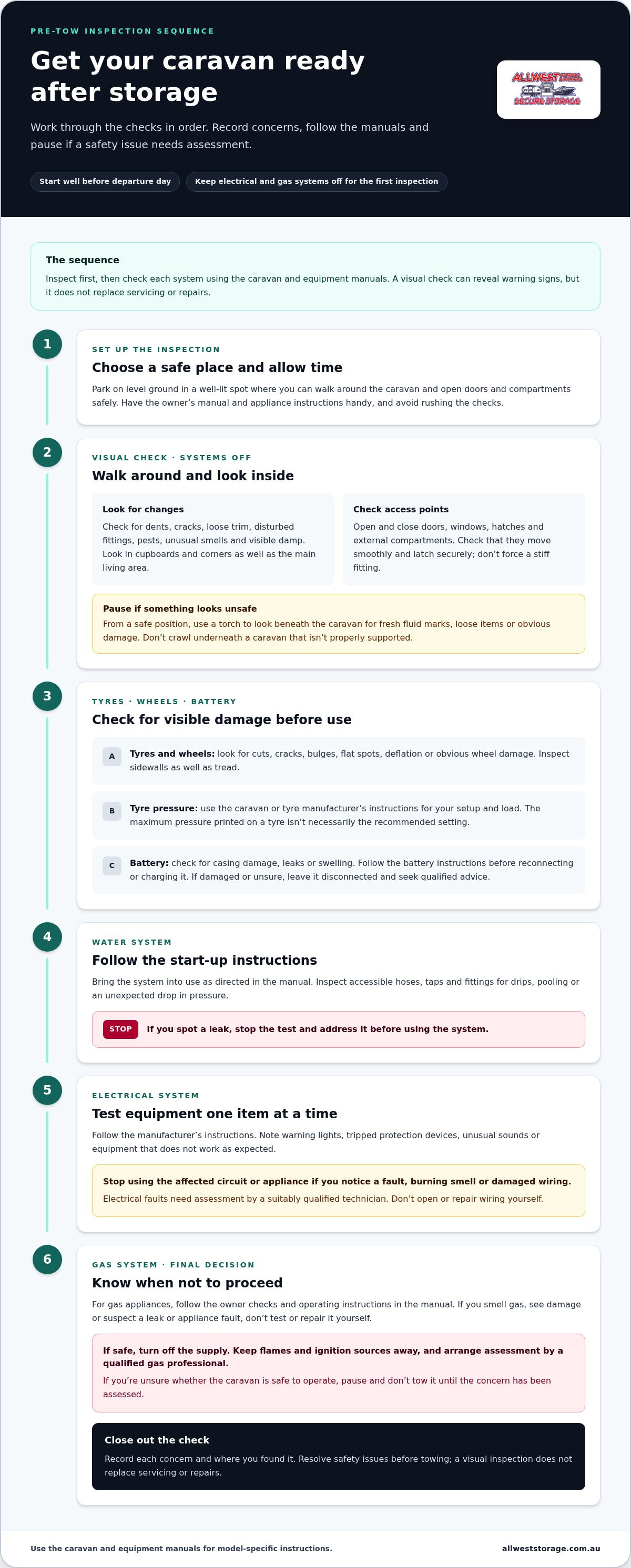
Follow this pre-trip checklist before towing your caravan
Work through the checks in order, and don’t move on if you find a fault that could affect safe towing. The caravan, tow vehicle and coupling must be suitable for each other. Use both vehicles’ manuals to verify compatibility and follow the manufacturer’s instructions for your towing setup. This sequence makes how to get a caravan ready after storage a practical process rather than a last-minute guess.
A practical sequence from inspection to departure
- Walk around the exterior. Check bodywork, seals, windows and fittings for fresh damage, looseness or deterioration. Look for signs of water entry and note anything that needs follow-up.
- Inspect the tyres and wheels. Look for cracks, bulges, cuts or signs of deflation. Check pressures against the caravan or tyre manufacturer’s instructions. Don’t tow if a tyre looks damaged or its condition is uncertain.
- Check the battery and systems. Follow the battery maker’s guidance before reconnecting or charging. Test water, electrical equipment and appliances only as directed by their manuals. Stop if you notice a leak, warning, unusual operation or suspected gas or electrical fault.
- Check the road lights. Connect the caravan to the tow vehicle and test indicators, brake lights and tail lights. Ask someone to confirm they work, or use a reflection where practical. Investigate any light that doesn’t operate as expected.
- Connect and inspect the towing gear. Follow the coupling and tow vehicle instructions to attach the caravan. Check the hitch is secured and the safety connections, including the breakaway cable if fitted, are correctly arranged for your setup.
- Confirm the caravan is ready to move. Raise the jockey wheel and corner steadies as instructed. Secure external connections and stow anything that could drag, swing or come loose.
- Do a final door-to-door sweep. Close and latch doors, windows, hatches and storage compartments. Secure loose belongings inside and check that nothing has been left outside or on the roof.
- Write a brief check record. Note issues found, actions completed and anything still needing follow-up. If a safety-critical concern remains, don’t depart until it’s assessed.
What to check during the first cautious tow
Once safety-critical checks are satisfactory, consider a short, low-risk initial drive on a familiar route. Pay attention to the caravan’s movement and listen for unexpected noise. Notice unusual sway, vibration, braking behaviour or warning indicators. Don’t use this drive to test a setup you already suspect is faulty.
If the caravan behaves unexpectedly, slow down and stop somewhere safe. Don’t continue until the cause has been assessed and the setup is safe to use. For your next break between trips, arrange caravan storage in Perth with Allwest Storage & Parking.
After the checks: plan your first trip and future caravan storage
Let the inspection results guide your next step. If the checks are satisfactory and there are no unresolved safety concerns, plan a straightforward first outing. If you find a fault that could affect towing or safe operation, arrange assessment or repairs before travelling. If it can’t be resolved in time, reschedule. A checklist helps you decide what to do, but it doesn’t certify the caravan as roadworthy.
Make the first outing manageable
Choose a familiar, uncomplicated trip that leaves time to respond if a concern appears. Avoid making the first journey a tight-schedule run. Take the caravan and appliance manuals, along with relevant service records and your inspection notes. These can help you follow model-specific instructions and explain previous issues clearly.
After the outing, check the caravan again. Note any new noise, movement, leak or equipment concern and add it to your records. If something seems unusual, have it assessed before the next trip rather than waiting until it becomes more disruptive.
Prepare for the next time your caravan is stored
Before the next storage period, record the caravan’s condition and any maintenance completed. Note outstanding work too, so you can pick up where you left off when you return to the road. Photos of existing marks or known issues can help distinguish them from changes noticed after storage.
Consider how long the caravan will be stored when planning the next period. You can weigh up long-term and short-term vehicle storage alongside your expected travel dates. For practical points to consider before putting your caravan away, see this secure caravan storage guide.
A useful record makes the next round of how to get a caravan ready after storage easier to organise. Keep inspection notes, service documents and follow-up items together, then refer to them before your next departure. Allwest Storage & Parking offers caravan storage in Perth, with hardstand and undercover options. You can explore caravan storage with Allwest Storage & Parking.
Make your next trip easier to plan
Let your inspection notes guide your timing. If anything still needs assessment, make space for that before committing to a departure date. Once the caravan is ready to travel, keep the notes and service records together so they’re easy to refer to before future trips. A simple record of what changed, what was addressed and what to revisit makes the next round of how to get a caravan ready after storage more straightforward.
For the next break between journeys, choose storage that suits your plans and preferred setup. Allwest Storage & Parking offers hardstand and undercover caravan storage at its Perth facility, with 24/7 CCTV monitoring and short- or long-term stays without lock-in contracts.
Explore caravan storage options with Allwest Storage & Parking when planning where to keep your caravan between trips. With a clear record and a considered storage plan, you can look ahead to your next outing with confidence.
Frequently Asked Questions
How long should a caravan sit after storage before its first trip?
There’s no standard waiting period after storage. Consider the caravan for a trip once you’ve completed the checks, resolved any safety concerns and confirmed that its systems operate as instructed. The key question in how to get a caravan ready after storage is whether it’s ready to use, not how long it has been sitting. If the battery needs charging or a fault needs assessment, allow time to address it before departure.
Do I need to service my caravan after it has been stored?
Not necessarily because it has been stored, but storage doesn’t replace scheduled servicing. Check the service record for the last inspection and next due date, then compare it with the maintenance schedule in the caravan manual. If that date has passed, or you’ve noticed a fault, arrange appropriate servicing before travelling. A basic pre-trip check won’t establish the condition of components that require a service inspection.
How do I know if there is mould or damp in my caravan?
Look beyond obvious patches. Mould may appear as discoloured spots on walls, upholstery or stored items, while damp can show as soft surfaces, water marks or a persistent musty smell. Check behind cushions and inside cupboards, especially near windows and external seams. A brief stale smell may clear with ventilation, but recurring odour or visible moisture warrants further investigation. Record where you find it and whether the area feels wet or damaged.
Can I tow my caravan if one tyre has lost pressure while it was stored?
Don’t tow until you’ve worked out why the pressure dropped and confirmed the tyre is safe to use. Check for visible damage and compare its pressure with the manufacturer’s specified setting. If it’s cracked, bulging, cut, visibly deformed or won’t hold pressure, leave the caravan parked and arrange assessment. Simply adding air doesn’t establish that a tyre is sound, particularly if it has been sitting under load while underinflated.
Should I turn on the caravan gas system myself after storage?
Only operate the system as described in the caravan and appliance manuals, and don’t try to test or repair suspected faults yourself. If you notice a gas smell, damaged fitting or appliance behaving unusually, stop and arrange assessment by a qualified gas professional. Keep flames and other ignition sources away from a suspected leak. If there’s no sign of a problem, follow the maker’s start-up instructions rather than improvising a test.
Do I need a roadworthiness inspection after storing my caravan?
Don’t assume storage alone either creates or removes a formal inspection requirement. Requirements can depend on the caravan’s registration status and circumstances, so Perth owners should check current guidance from the Western Australian Department of Transport if unsure. Separately, you’re responsible for deciding whether the caravan is safe to use. A visual check can highlight concerns, but it can’t confirm the condition of every component or replace scheduled servicing.
What should I do if the caravan’s battery is flat after storage?
Check the battery maker’s instructions before charging or reconnecting it. Use only a charging method suitable for that battery type and caravan setup. Don’t attempt a jump-start unless the manuals specifically allow it. If the casing is swollen, cracked, leaking or unusually hot, don’t charge or use the battery; arrange qualified assessment. If it charges but won’t hold charge, have the battery and charging system checked before relying on it during a trip.
Leave A Comment