
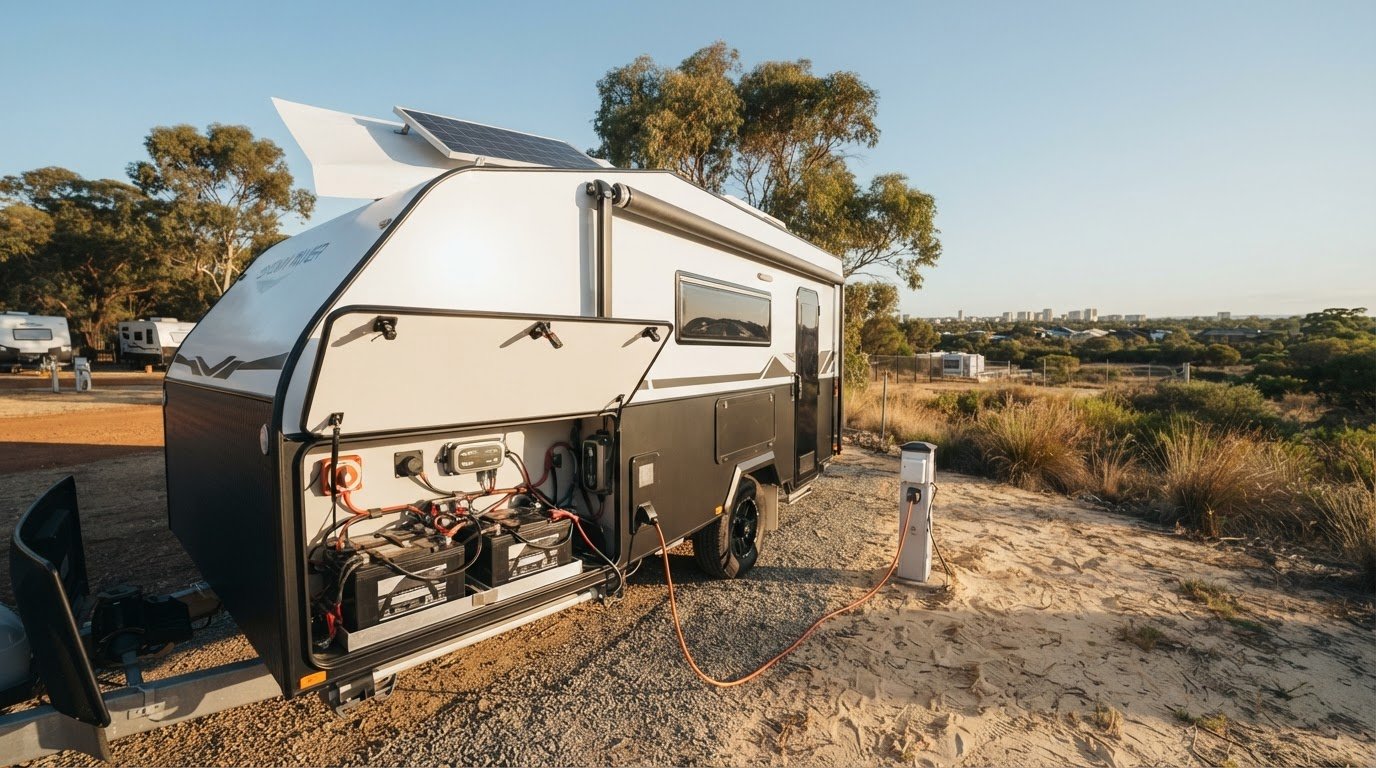
Disconnecting the battery isn’t always enough to protect it during storage. Standby equipment can continue drawing power, and the right charging approach depends on the battery chemistry. A reliable caravan battery maintenance long term storage plan accounts for both.
It’s understandable to be unsure whether to charge, disconnect or periodically check your battery. Advice for lead-acid batteries doesn’t always apply to LiFePO4 batteries, and Perth’s hot conditions add another consideration. The right steps can help reduce avoidable discharge and battery wear.
This guide explains how to prepare and store different battery types, manage power drains from equipment, and check charge levels in line with the manufacturer’s guidance. You’ll also learn why storage conditions matter in Perth and what to confirm about access and power at your chosen caravan storage location. Don’t assume charging is available.
Key Takeaways
- Understand how self-discharge and small electrical loads can affect a caravan battery while it’s parked.
- See why Perth’s heat makes it important to check your battery manufacturer’s temperature and storage guidance.
- Compare a compatible maintainer, battery isolation and solar maintenance, and learn what to check before choosing an approach.
- Use a practical checklist to prepare and inspect your battery, with charge levels and check intervals guided by its chemistry and manufacturer instructions.
- Learn which warning signs call for professional assessment, and how to plan caravan storage without assuming battery charging or access is available. Apply these steps to caravan battery maintenance long term storage.
Why caravan batteries lose charge during long-term storage
Long-term battery maintenance means preparing the battery for a period when the caravan won’t be used, then following suitable checks and care until it returns to service. Preparation matters because a parked caravan can still use power. A battery’s charge can fall through natural self-discharge, ongoing electrical loads, or both.
Parasitic battery drain is power drawn by electrical devices while the caravan is parked and not in active use. A small load may seem insignificant, but over an extended period it can contribute to a low battery. A flat battery isn’t automatically damaged. However, leaving one at an unsuitable charge level for too long can cause lasting harm, depending on its chemistry and the manufacturer’s instructions. That’s why caravan battery maintenance long term storage starts with identifying the battery type and what remains connected.
What keeps drawing power when a caravan is parked?
Standby loads can include alarms, monitoring or charging controllers, and appliances that retain settings or time in memory. Some equipment may continue drawing power even when it appears to be switched off.
Check the caravan manual for circuits and devices that can be safely isolated. Switch off non-essential loads using their designated controls or isolation switches. Don’t disconnect built-in systems until you’ve checked the manual, as some may need a continuous supply or a specific shutdown procedure. If you can’t identify a circuit or aren’t sure how to isolate it, ask a qualified caravan electrical professional.
Why battery chemistry changes the storage routine
Caravans commonly use deep-cycle batteries, designed to provide sustained power to onboard equipment. Read more about how deep-cycle batteries are built and used. The label or manual should identify whether your battery is lead-acid, AGM or lithium iron phosphate (LiFePO4).
Lead-acid batteries store energy through a chemical reaction involving lead and electrolyte. AGM is a type of sealed lead-acid battery, with electrolyte held in a fibreglass mat. LiFePO4 batteries use lithium-based cells and typically have a battery management system to monitor and protect operation. Their storage charge requirements aren’t interchangeable. Follow the battery manufacturer’s guidance for charge level, isolation method and check schedule. If the label is unclear, confirm the battery type before selecting a maintainer or changing the caravan’s electrical setup.
How Perth heat and storage conditions affect caravan batteries
Battery condition depends on more than whether the caravan is being used. Temperature, charge level and time in storage all matter, and their effects vary between battery types. In Perth, hot conditions make it especially important to follow the battery maker’s temperature and storage instructions rather than rely on a general rule.
A technical report from the U.S. Department of Energy discusses the effects of temperature on battery life. It provides useful background, but your battery manufacturer’s guidance should determine how to care for your specific battery. Heat can affect battery condition, while a long storage period gives more time for charge levels and environmental conditions to have an impact. Don’t assume one temperature threshold or storage duration suits every chemistry.
Does hot weather change caravan battery maintenance?
Yes. Follow the instructions for your battery’s permitted operating and storage temperatures, including any ventilation requirements. Don’t leave a battery near an obvious heat source or in a poorly ventilated space. Check the manual for the exact temperature limits, which can differ by battery type and model. If the battery is in a compartment, consider whether its position or surrounding equipment could restrict airflow.
Hardstand or undercover storage: what battery owners should check
Undercover storage may reduce direct sun exposure, but it isn’t climate-controlled and doesn’t guarantee a cool battery compartment. Hardstand storage also doesn’t remove the need to prepare and monitor the battery. Before choosing a location, consider whether the caravan’s battery area is likely to be exposed to direct sun or trapped heat. Storage choice is one part of the plan, not a substitute for battery care.
Good battery care matches the battery chemistry, charge level and storage conditions. As you plan caravan battery maintenance long term storage, check the manufacturer’s guidance for suitable charge levels and check intervals. If you plan to inspect the battery during storage, confirm access arrangements with the provider. Don’t assume power outlets or charging access are available; check directly.
When choosing a storage setup, compare hardstand and undercover options and consider what suits your caravan and its likely exposure. Allwest Storage & Parking offers caravan storage in Perth, with hardstand and undercover options. Storage is separate from battery maintenance, so plan both as part of your caravan care routine.
Battery maintainer, disconnection or solar: compare storage options
There’s no single storage method that suits every caravan battery. A compatible maintainer, battery isolation or solar charging may help manage charge, but the right choice depends on battery chemistry, the caravan’s electrical systems and the manufacturers’ instructions. Use the comparison below as a starting point, then check those details for your setup.
| Option | Potential benefit | Limitation | Checks required |
|---|---|---|---|
| Compatible battery maintainer | Can provide ongoing charge support suited to storage. | An unsuitable charger or setting may harm the battery. | Confirm chemistry compatibility, settings and manufacturer approval. |
| Battery isolation | Can reduce drain from connected caravan equipment. | Some built-in systems may stop working or need a particular shutdown process. | Check the caravan manual and identify which circuits are affected. |
| Solar charging | Can supply charge when the panel and controller are set up appropriately. | Output depends on sunlight and system compatibility; solar alone doesn’t guarantee correct charging. | Check the panel, controller and battery instructions, including any storage requirements. |
When is a battery maintainer suitable?
A standard charger is generally used to recharge a battery, while a maintainer is designed to support its charge over time. Features and operation vary, so check that the device is approved for your battery chemistry and has the correct settings. A battery manufacturer’s guide to long-term battery storage can offer useful general context, but follow your own battery and charger instructions. Don’t leave equipment connected unattended unless the manufacturers’ instructions and the equipment specifically support that use.
Should you disconnect the battery or rely on solar charging?
Isolation can reduce drain from standby equipment, but disconnecting the battery may affect alarms, controllers or other installed systems. Check the caravan manual before isolating anything. Solar charging is also system-dependent: a panel needs suitable sunlight, a correctly matched controller and compatibility with the battery. It doesn’t guarantee safe or sufficient charging in every setup.
If you’re unsure about wiring, isolation points or installed charging equipment, ask a qualified technician before making changes. Good caravan battery maintenance long term storage means choosing a method that suits the battery and caravan, then following the relevant instructions. Don’t assume charging access is available at a storage location; confirm this directly with the provider.

Prepare and check a caravan battery before and during storage
A short preparation routine makes it easier to store the battery in line with its needs and spot changes later. Use the battery and caravan manuals as your reference, especially if you’re unsure whether a system can be disconnected.
What to do before leaving the caravan in storage
- Identify the chemistry. Check the battery label and manual for its type, model and storage instructions.
- Inspect its condition. Look for cracks, swelling, corrosion, loose connections or signs of leakage. Don’t touch leaking material or attempt to open a sealed battery. If you see damage, stop and seek professional advice.
- Charge as directed. Follow the manufacturer’s recommended storage charge and use only compatible charging equipment.
- Isolate non-essential loads. Switch off suitable equipment and check the caravan manual before disconnecting the battery or built-in systems.
- Record the date and details. Note the charge reading, any action taken and the date, using a measurement method approved for your battery.
Keep the battery clean and secure, with ventilation and positioning as specified in its manual. During visual checks, look for new corrosion, damaged casing, loose-looking connections or leakage. Don’t dismantle connections or clean a damaged battery yourself. Arrange professional assessment if you’re uncertain about its condition or safe handling.
How often should you inspect a stored caravan battery?
There’s no universal check interval. Frequency depends on the battery’s chemistry and age, connected equipment, storage conditions and the manufacturer’s advice. Follow the battery and charger instructions for how often to inspect it and check its charge. Record each reading and any charging or isolation action. A log makes it easier to notice changes over time without relying on memory.
Before planning checks at a storage location, confirm access arrangements directly. Don’t assume you’ll have access to the caravan, power or charging facilities, and don’t expect a storage provider to monitor or maintain the battery. Include battery preparation in your wider caravan storage plan, alongside the caravan’s other pre-storage checks.
For caravan battery maintenance long term storage, use a routine suited to the specific battery rather than a generic timetable. If you’re planning where to keep your caravan, explore caravan storage options in Perth and confirm any practical access or power details directly with the provider.
Bring the battery back into service and plan secure caravan storage
Before reconnecting a stored battery or putting it on charge, check its condition and follow the battery and caravan manufacturers’ instructions. A visual check and a suitable charge test can help identify problems before you rely on the battery for a trip. Don’t use a battery that appears damaged or behaves unusually.
How to check the battery before your next trip
- Inspect the case and terminals. Look for swelling, cracks, corrosion, loose connections or signs of leakage. Don’t charge or reconnect a battery that’s swollen, leaking or otherwise damaged.
- Check its charge. Use the method and limits recommended by the battery maker. If it remains low after charging as directed, or won’t hold charge, arrange professional assessment.
- Reconnect carefully. Follow the caravan manual’s procedure and check that essential equipment operates normally. If you’re unsure about the connections or installed systems, ask a qualified technician.
Unusual heat is another warning sign. Stop using or charging the battery and seek professional advice rather than attempting to diagnose or repair it yourself. These checks are a practical final step in caravan battery maintenance long term storage, but they don’t replace manufacturer guidance.
What to confirm when choosing caravan storage in Perth
Compare hardstand and undercover storage based on your caravan, likely exposure to direct sun and your storage priorities. Undercover storage may reduce direct sun exposure, but it isn’t climate-controlled. Whichever option you choose, battery preparation and monitoring remain the owner’s responsibility.
Ask the provider about access arrangements if you plan to inspect the caravan during storage. Confirm power availability directly, too. Don’t assume a power outlet or battery charging is included. If a check requires access to the battery or charging equipment, plan how and when you’ll carry it out in line with the manufacturer’s instructions.
Allwest Storage & Parking provides short- and long-term caravan storage in Perth, with hardstand and undercover options and 24/7 CCTV monitoring. These storage options are separate from battery maintenance, charging or electrical work. Explore Allwest’s caravan storage options as part of your wider storage plan, and confirm any access or power details directly with the business.
Set your caravan up for storage with confidence
Good caravan battery maintenance long term storage starts with knowing your battery chemistry, following its manufacturer’s charge and storage instructions, and checking its condition. Perth’s heat and any standby electrical loads can affect your storage plan, so choose a suitable approach and record checks at the interval recommended for your battery.
Storage is a separate part of caravan care. Allwest Storage & Parking is a Perth-based local provider with hardstand and undercover caravan storage options, flexible short- and long-term storage and no lock-in contracts. The facility has 24/7 CCTV monitoring. Confirm access arrangements and any power availability directly, as battery charging and maintenance aren’t provided.
Ready to plan where your caravan will stay? Explore caravan storage options with Allwest Storage & Parking. With a clear battery-care routine and a storage option that suits your needs, you can prepare for your next trip with greater confidence.
Frequently Asked Questions
Should I disconnect my caravan battery during long-term storage?
Often, isolating or disconnecting the battery can reduce drain from alarms, controllers and other standby equipment, but check your caravan and battery manuals first. Some built-in systems may need continuous power or a specific shutdown process. If disconnection is appropriate, follow the recommended procedure and note which systems may need resetting. If you’re unsure about wiring or isolation points, ask a qualified caravan electrical professional before making changes.
How often should I charge a caravan battery in storage?
There’s no universal charging interval. It depends on battery chemistry, condition, connected equipment and storage conditions. Follow the battery maker’s guidance for checking charge and recharging, and record readings and actions so you can track changes. Don’t wait for a battery to become flat before checking it. If you can’t access the caravan during storage, plan your charging and checks before choosing a storage arrangement.
Can I leave a battery maintainer connected to my caravan battery?
Only if the maintainer is compatible with your battery and its manufacturer’s instructions allow it. A maintainer is designed to support charge over time, unlike a standard charger that’s generally used to recharge a battery. Confirm the chemistry setting, connection method and any ventilation or monitoring requirements. Don’t leave a charger or maintainer connected unattended unless both the equipment instructions and battery guidance support that use.
Should a caravan battery be fully charged before storage?
It depends on the battery type and its manufacturer’s storage instructions. Lead-acid batteries are generally prepared at a full charge, while LiFePO4 batteries may have a different recommended storage charge. Don’t apply one chemistry’s advice to another. Check the battery label and manual for the correct charge level, then use compatible charging equipment. If the battery is damaged or its type is unclear, seek professional advice before charging.
Can a solar panel maintain a caravan battery while it is stored?
It can, if the solar system is correctly set up for the battery. Charging depends on sunlight, panel and controller operation, and compatibility with the battery’s chemistry and charging requirements. A solar panel alone doesn’t guarantee the battery will receive the right charge. Check the instructions for the battery, controller and panel, and confirm that the caravan’s storage position allows the panel to operate as intended.
Does Perth heat affect a caravan battery in storage?
Yes. Heat can affect battery condition, so Perth’s hot weather makes it important to follow the manufacturer’s temperature and storage guidance. Check the battery’s specified temperature limits and ventilation requirements rather than relying on a general threshold. Consider whether the battery compartment may be exposed to direct sun or trapped heat. Undercover storage may reduce direct sun exposure, but it isn’t climate-controlled and doesn’t replace battery checks.
What should I do if my caravan battery is flat after storage?
First, inspect the battery for swelling, cracks, leakage, corrosion or unusual heat. Don’t charge or reconnect it if it appears damaged. If it looks sound, check its charge using the battery maker’s recommended method and recharge only with compatible equipment, following its instructions. A flat battery isn’t always permanently damaged, but if it won’t hold charge or remains low after charging as directed, arrange professional assessment before relying on it for a trip.
Leave A Comment