A year in storage takes more planning than finding a parking space. When storing a car for a year in Perth, consider security, shelter, insurance and registration dates, and prepare the vehicle before handover. RAC WA recommends a full service and a full fuel tank for long-term storage in Western Australia.
Plan for battery care, tyre support and the terms of your insurance while the car is stored. These details affect how ready the vehicle is when you return and whether the storage arrangement suits its condition and your plans.
This guide covers what to organise before handover, what to clarify with your insurer and what to look for in a storage facility, including security monitoring. It also explains how Perth car storage options can suit a year away, helping you make a practical plan for your vehicle.
Key Takeaways
- Plan servicing, fuel, battery care and tyre support before handing over your car for long-term storage.
- Review your insurance terms and arrange any required authority if someone else may drive the vehicle.
- Consider how location, access and 24/7 CCTV monitoring fit your security needs.
- Weigh the weather exposure of outdoor storage against the added shelter of an undercover space.
What should I arrange before storing a car long-term with a storage provider?
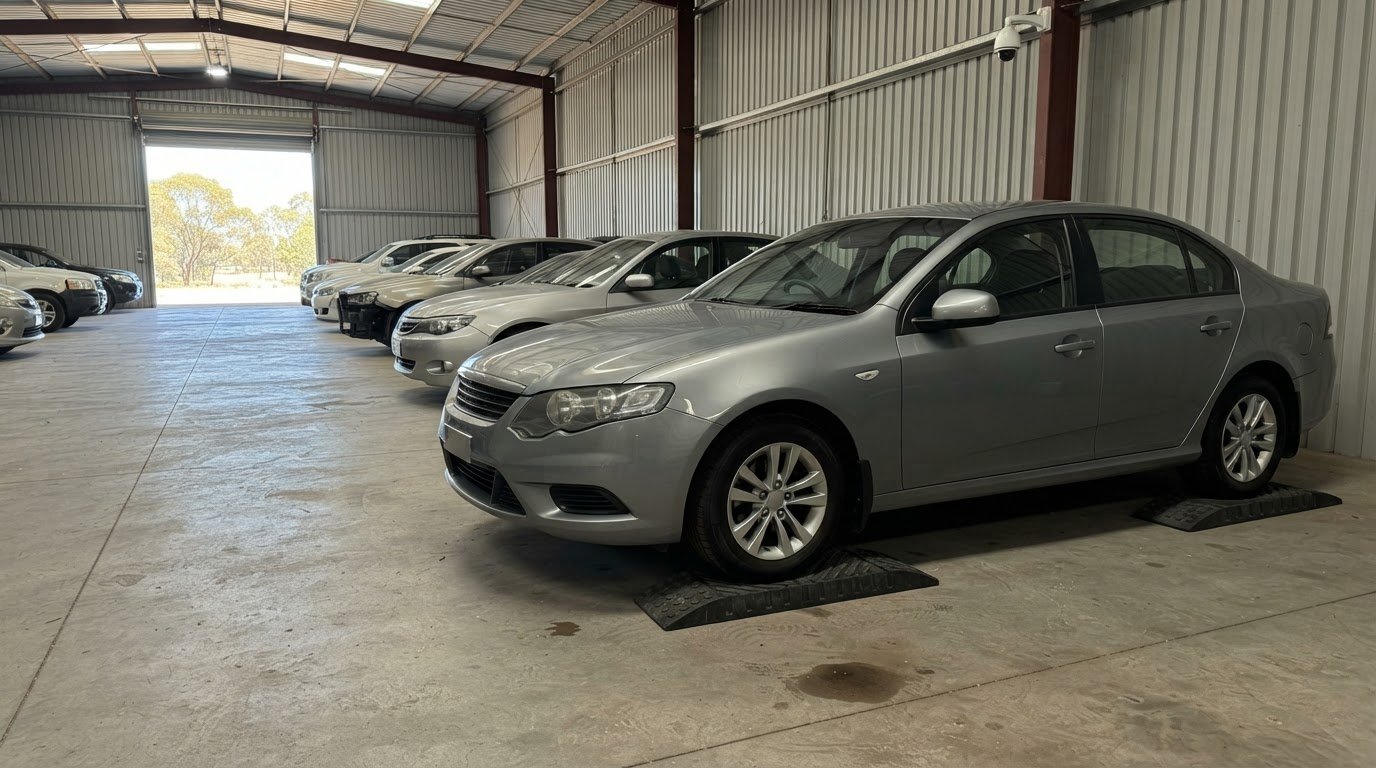
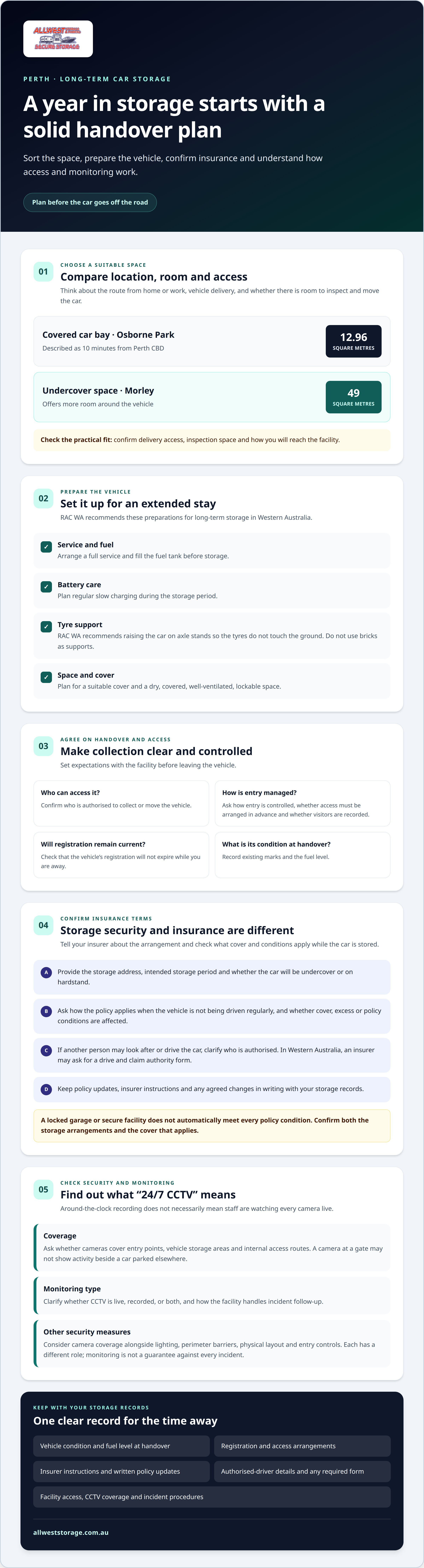
Start with the location and the type of space your vehicle needs. A covered car bay in Osborne Park measures 12.96 square metres and is described as 10 minutes from Perth CBD. A 49-square-metre undercover space in Morley offers more room around the vehicle. Compare the route from home or work, access for vehicle delivery, and whether the space allows room for inspection and movement.
For long-term storage, RAC WA recommends fully servicing the car and filling its fuel tank before it is stored. Plan battery care as well: RAC WA recommends arranging regular slow charging during long-term storage. These steps help prepare the vehicle for an extended period off the road.
Give the tyres attention during a long stay. RAC WA recommends raising the car on axle stands so the tyres do not touch the ground, and warns against using bricks as supports. Include this in your preparation plan, alongside a suitable cover and a dry, covered, well-ventilated, lockable space.
Before handover, agree on how access will work. Confirm who is authorised to collect the vehicle, how entry is controlled and whether access needs to be arranged in advance. Ask how CCTV monitoring covers the storage areas and how entry is managed. Clear arrangements make collection easier while limiting access to authorised visitors.
- Check that the vehicle’s registration will not expire while you are away.
- Agree how and when you can access the stored vehicle.
- Record the vehicle’s condition at handover, including existing marks and the fuel level.
These details matter when storing a car for a year in Perth. A suitable location, clear access arrangements and planned vehicle preparation make the storage period easier to manage and your return to driving more predictable.
Insurance cover while a car is stored
Tell your insurer the car will be stored long-term rather than used for regular driving. Ask how your policy treats a vehicle kept in a storage facility instead of your home garage. Cover depends on the policy terms, so clarify what remains active during storage and what you need to do before leaving the car there.
Discuss the storage arrangement with your insurer before handover. Explain whether the car will be undercover or on hardstand, and provide the storage address and expected period. Ask whether this affects your cover, excess or policy conditions. Record the insurer’s instructions and any agreed changes in writing, so you can refer to them during storage.
Be clear about who may access or drive the vehicle. In Western Australia, an insurer may ask for a drive and claim authority form if someone else will look after and drive your stored car. This matters if you have arranged for another person to move or use it while you’re away. Clarify who is authorised and what the form requires before handing over the keys.
- Give your insurer the storage location and intended storage period.
- Ask how the policy applies while the vehicle is not being driven regularly.
- Disclose any planned driving by another person and arrange the required authority form.
- Keep policy updates and written instructions with your storage records.
Don’t assume that a locked garage or secure facility automatically meets every policy condition. Storage security and insurance cover address different risks. Access controls can help protect the vehicle, while your insurer explains the cover that applies to your policy. Arrange both before storage begins.
For a clear handover plan, keep your insurance documents alongside the storage details and authorised-driver arrangements. You can also review vehicle storage arrangements as part of organising the car’s time off the road.
24/7 Security and monitoring
For a vehicle left in storage for an extended period, ask what “24/7 monitoring” means in practice. CCTV operating around the clock records activity, but it doesn’t automatically mean staff are watching every camera live. Distinguish continuous recording from active supervision and find out how each fits the facility’s security arrangements.
Look at what the cameras cover, not just whether CCTV is present. Entry points, vehicle storage areas and internal access routes are useful areas to consider. A camera aimed at a gate, for example, may record arrivals without showing activity beside a car parked elsewhere. Wider coverage gives a clearer view of movement around stored vehicles.
Clarify access controls as well as CCTV. Ask how authorised entry is managed, whether visitors are recorded and what happens when someone needs to collect or move a vehicle. This matters if a family member or another authorised person may need access while you’re away. Keep the agreed access process with your storage records.
Monitoring is one part of security, not a guarantee against every incident. Consider it alongside the physical layout, lighting, perimeter barriers and entry controls. Cameras can help document activity, while a locked access point can restrict entry. Each measure has a different role, so consider how they work together rather than relying on one feature.
Before committing, use these points to assess whether the arrangements suit a year-long stay:
- Confirm CCTV operates 24/7 and identify the areas it covers.
- Understand whether monitoring is live, recorded, or both.
- Clarify how entry and authorised vehicle access are managed.
- Ask how an incident is recorded and who handles follow-up.
Clear answers help set realistic expectations. CCTV monitoring can record activity, while access controls and site design provide other layers of security. Consider how these measures work together for your vehicle, and keep the facility’s access and incident procedures with your insurance and storage documents.
What are the risks of storing a car outdoors in Perth’s climate?
Outdoor storage exposes a vehicle to changing weather and airborne debris. During a long stay in Perth, direct sunlight can fade paint and affect rubber seals, while dust can settle on the bodywork and enter exposed openings. Rain can leave water on horizontal surfaces, and damp areas may encourage corrosion where paint is chipped or scratched.
Paintwork and interior trim can also be affected. Sunlight through the windscreen can heat the cabin and fade dashboard materials, while leaves and bird droppings can mark the exterior if left in place. A cover may reduce direct exposure, but a loose cover can rub against the paint in the wind. Choose a clean, well-fitted cover rather than loose material.
Before choosing an outdoor space, consider the vehicle’s condition and how long it will stay there. Existing paint damage, cracked seals or a soft-top roof may increase exposure concerns. Check for overhead cover, nearby trees and open sides. A spot beneath a tree, for example, may provide shade but also collect leaves and debris.
Outdoor storage may mean the car needs more attention after collection. Build a condition review into your return: look for new marks, residue, dampness inside the cabin and signs of corrosion. These checks can help identify issues to address before regular driving resumes.
- Choose a position away from overhanging branches and falling debris.
- Consider how sunlight and rain reach the vehicle throughout its storage period.
- Use a suitable cover that fits securely without rubbing against the paint.
- Record the car’s condition before storage and inspect it again at collection.
If reducing weather exposure is a priority, consider undercover storage options for the vehicle. Shelter can limit direct contact with sun, rain and debris, while the site’s layout and access arrangements remain important parts of the storage decision.
Allwest Storage & Parking
Allwest Storage & Parking provides car storage for Perth drivers who need a place for a vehicle during an extended absence. Choose between hardstand and undercover options, with 24/7 CCTV monitoring. Long-term and short-term storage are available, with flexible rates and no lock-in contracts.
Choose a storage arrangement that suits your vehicle and plans. Undercover storage provides shelter from direct weather exposure, while hardstand is an outdoor option. Consider your preferred level of shelter, access needs and vehicle preparation before arranging storage.
Allwest Storage & Parking also stores caravans and campervans, boats, trucks and trailers. Request a quote to discuss the storage option that suits your vehicle.
Make a clear plan for your time away
Before setting a handover date, decide what matters most for your vehicle: shelter, access arrangements or a particular storage location. That priority can guide the final choice and help you organise insurance and collection details without leaving decisions until the last minute.
When storing a car for a year in Perth, a written plan helps keep practical arrangements together. Note the storage period, who may access the vehicle and what needs to happen before it returns to regular use. Keep the plan with your policy documents so the details are easy to find while you’re away.
If you’re ready to discuss your storage needs, contact Allwest Storage & Parking. A considered plan gives you a practical starting point and helps you leave with greater peace of mind.
Frequently Asked Questions
How long can I store my vehicle?
You can arrange either short-term or long-term vehicle storage in Perth. Allwest Storage & Parking has no lock-in contracts, so storage isn’t limited to a fixed commitment. The right duration depends on your plans and the space required. For example, someone travelling for an extended period can arrange storage for that absence, while another vehicle owner may need a shorter stay.
How much does car storage cost?
Rates depend on the vehicle’s size, the storage type and the length of stay. Hardstand and undercover options may have different rates, and the space needed for the vehicle also matters. Request a quote for the applicable cost. Include your preferred shelter and intended storage period so the quote reflects the arrangement you have in mind.
What insurance should I get to cover a car in storage?
Ask your insurer what existing cover applies while the car is stored and whether any changes are needed. Suitable cover depends on your policy, the vehicle and how it will be used during storage. If another person might drive it, explain that to your insurer and ask about any required authority. Keep written policy updates with your vehicle records.
What security do you provide for cars in storage?
Allwest Storage & Parking provides 24/7 CCTV monitoring at its Perth facility. CCTV monitoring is a security measure, not a statement that the site offers physical access at all hours. If you expect to collect the car during storage, arrange access according to the facility’s process. Keep authorised-driver and collection details organised with your storage paperwork.
What size storage unit do I need for a car?
Choose a space that accommodates the car’s full dimensions and allows practical access. Check its length and width, including mirrors, then consider whether you’ll need room to open doors or move around it. A compact car and a large four-wheel drive need different amounts of space. The space required also depends on whether you choose undercover or hardstand storage.
What does it cost to store a car for 12 months in Perth?
The cost for a 12-month stay depends on the car’s size and whether you choose hardstand or undercover storage. The quote reflects the vehicle’s space requirements and storage duration. Request a quote for the arrangement you have in mind, including your preferred storage type. This gives you a cost for your specific vehicle and planned stay without relying on a general estimate.
Leave A Comment