
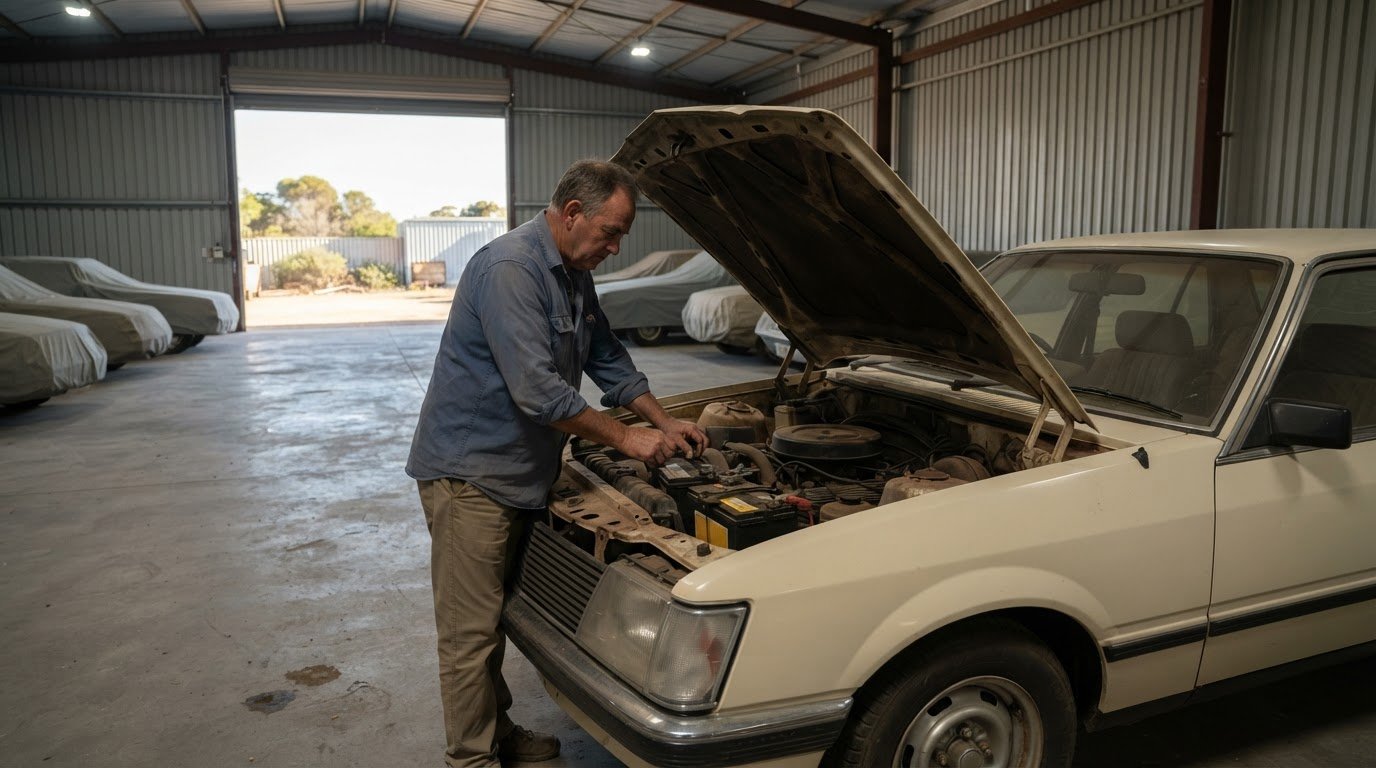
A vehicle isn’t ready for the road just because it’s out of storage. The process of getting a vehicle out of storage safely starts with planning the move, checking its condition and records, and assessing the fuel before starting it. Inspect it at collection and arrival, and don’t drive it if you find a problem that could affect safety.
It’s easy to focus on collection and overlook what may have changed while the vehicle was stored. A flat battery, low tyre pressure, signs of pests or damage, or outdated paperwork can affect the steps involved in getting a vehicle out of storage.
This guide explains how to organise the move, review the vehicle and its records, assess the fuel, and carry out checks before and after transport. You’ll have a clear sequence to follow, whether the vehicle is returning to the road or moving to another storage location in Perth.
Key Takeaways
- Plan the move around the vehicle type, route, pickup and delivery access, timing and any special handling needs.
- For car storage lasting more than 30 days, filling the tank and adding fuel stabiliser can help reduce moisture and fuel deterioration.
- Before driving, inspect for pests or damage, then test the lights, indicators, wipers and brakes.
- Prepare the battery according to the vehicle’s age and electronics, and choose a suitable way to maintain its charge during storage.
Vehicle condition records and move-out planning
Whether a stored vehicle needs a roadworthy inspection or safety certificate depends on your state or territory and its registration circumstances. If it’s deregistered, arrange re-registration and check whether an inspection is required before driving.
- Set the move plan. Record the vehicle type, pickup and delivery locations, route, timing, access restrictions, volume and any special handling needs. For example, a low-clearance entrance or a vehicle that cannot start affects how it can be moved.
- Gather the records. Bring together registration details, storage paperwork, keys and any service or repair records. Note whether the vehicle’s registration is current, cancelled or due for renewal. This helps clarify which steps must happen before it returns to the road.
- Record its condition before release. Photograph each side, the roof, wheels, glass and interior. Capture existing scratches, dents, stains or missing items. Compare these images with the original storage condition record, then keep both sets with the vehicle documents.
- Check tyres and supports. Look for low pressure, visible damage or flat spots after extended storage. If the vehicle has been raised on stands, confirm they can be removed safely before moving it. Don’t assume the tyres are ready for driving because they appear inflated.
- Decide how it will leave. A vehicle that starts and passes basic safety checks may be driven; one with damage, flat spots or uncertain braking needs further assessment before use. Build this decision into the move plan rather than discovering an issue at pickup.
- Plan for re-storing if needed. If the vehicle is moving to another storage location, include the next address, access details and handling needs in the same plan. Keep condition photos and paperwork together, so the record remains useful through each storage term.
Fuel and fuel stabiliser
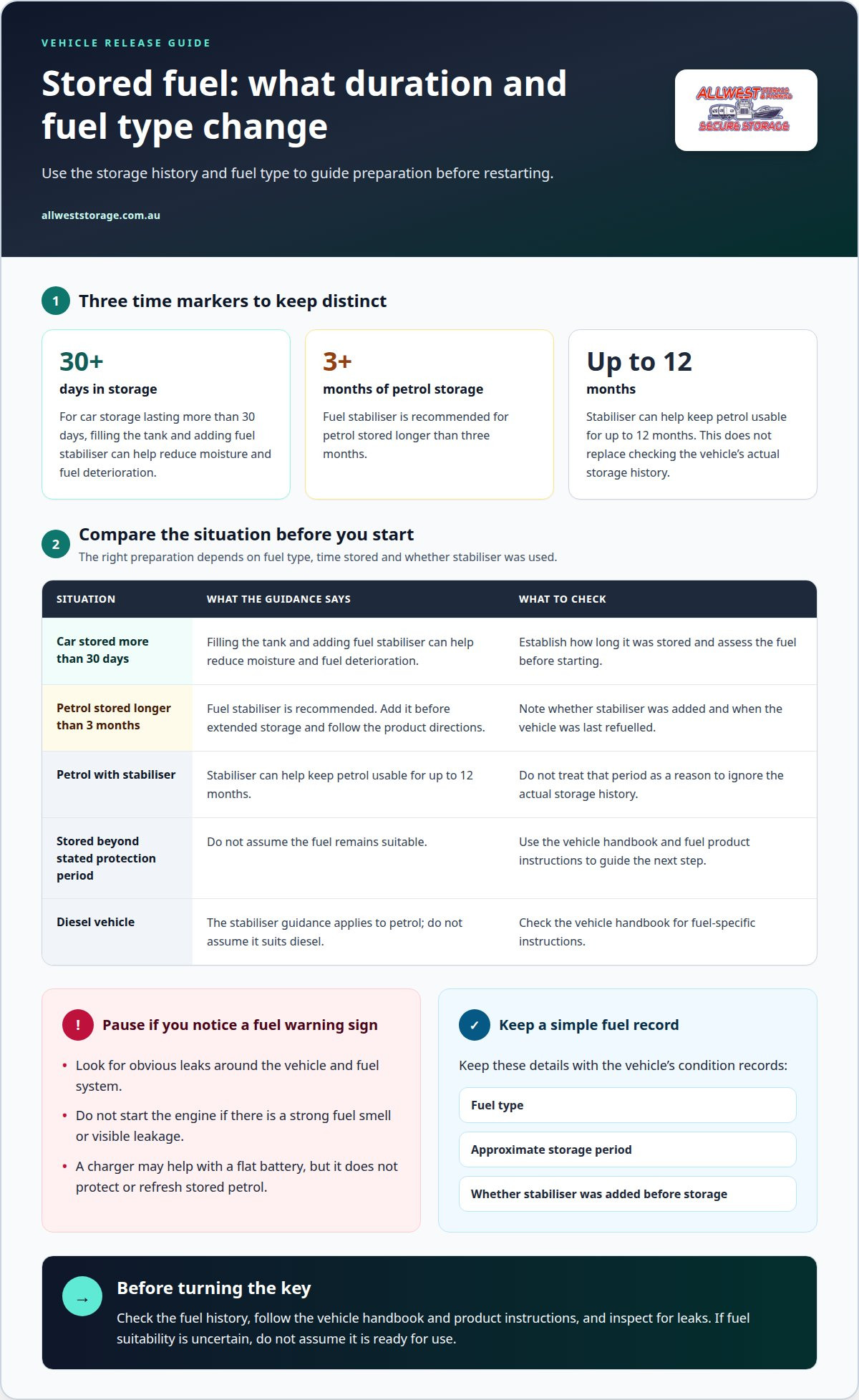
- Establish how long the vehicle was stored. For car storage lasting more than 30 days, filling the fuel tank and adding a fuel stabiliser can help reduce moisture and fuel deterioration. The storage period helps determine whether the fuel needs closer assessment before the engine is started.
- Consider the fuel type. The stabiliser guidance applies to petrol, so don’t assume the same advice suits a diesel vehicle. Check the vehicle handbook for fuel-specific instructions. The fuel system and engine requirements can differ, making the right preparation important before driving.
- Understand when stabiliser is used. Add it as part of preparation before extended storage, following the product directions. For petrol storage longer than three months, stabiliser is recommended. It can help keep petrol usable for up to 12 months, but that period isn’t a reason to ignore the vehicle’s actual storage history.
- Assess the stored fuel before restarting. Note the last known refuelling date and the time in storage. If the vehicle has been stored beyond the stabiliser’s stated protection period, don’t assume the fuel remains suitable. Use the vehicle handbook and fuel product instructions to guide the next step.
- Check before turning the key. Look for obvious leaks around the vehicle and fuel system. Don’t start the engine if you notice a strong fuel smell or visible leakage. A charger may help with a separate flat-battery issue, but it doesn’t protect or refresh stored petrol.
- Record the fuel details. Write down the fuel type, approximate storage period, and whether stabiliser was added before storage. For example, a petrol car stored for four months with stabiliser has different preparation history from one stored longer without it. Keep these details with the vehicle’s condition records.
Vehicle release and arrival
- Remove covers carefully. Fold them away from the vehicle’s paintwork, then inspect the body, cabin and engine bay for damage, moisture or pests. Look for nesting material near wiring, hoses and other components. Photograph anything new before moving the vehicle, so you can compare its condition at arrival.
- Check for leaks before starting. Look underneath for fresh fluid and inspect visible hoses and connections. A strong fuel smell or signs of escaping brake fluid need attention before driving. Don’t start the engine if you see a leak; arrange a suitable assessment first.
- Confirm the vehicle can legally be driven. If it was deregistered, arrange re-registration and check whether an inspection is required before driving. Registration cancellation requirements vary between Australian states. Also contact your insurer about available options before cancelling car insurance during storage, and ensure cover suits the vehicle’s return to use.
- Test key controls at release. Check the headlights, brake lights, indicators and wipers before setting off. Press the brake pedal firmly; it should stay firm rather than slowly sinking towards the floor. If the brakes feel abnormal, or warning signs appear, don’t drive the vehicle.
- Start the engine cautiously. Once the visible checks are satisfactory, start it in a well-ventilated area, such as outdoors rather than inside a closed garage. Let it idle for a few minutes after long-term storage. Listen for unusual noises and watch for warning lights before moving.
- Repeat the inspection on arrival. Compare the vehicle’s condition with the release photographs and records. Check the exterior, interior, tyres and controls for changes during the move. Remove any transport covers, look for damage or pests, and record new marks before parking or preparing the vehicle for use.
How do I check and prepare a car battery after long-term storage?
- Inspect before reconnecting. Check the battery case for cracks, swelling or leakage, and look for corrosion around the terminals. Don’t connect a visibly damaged battery. Note whether it was disconnected or maintained during storage, because that history helps explain a flat battery or difficulty starting.
- Check the vehicle’s electronics first. Before disconnecting a newer car battery, consider whether doing so could affect the vehicle’s electronics. Cars with an engine computer require a battery, so don’t treat removal as a universal storage method. Use the vehicle handbook to understand its battery requirements.
- Choose a suitable maintenance method. For long-term car storage, disconnecting the battery can help prevent it draining. For shorter storage, a battery tender or smart trickle charger can help maintain its charge. Follow the device instructions and use a charger suitable for the battery and vehicle.
- Store a removed battery properly. Keep it in a dry, cool place, away from moisture and direct heat. Protect the terminals from contact with metal objects. Before refitting, inspect the battery and its connections again, then secure the battery as directed by the vehicle handbook.
- Reconnect with care. Use the vehicle handbook’s instructions for the correct connection sequence. Check that the terminals are secure and that cables aren’t strained or touching moving parts. If the engine doesn’t start, avoid repeated attempts that could further drain the battery.
- Plan for very long storage. Cars stored for more than 12 months need more thorough preparation and periodic checks. Record whether the battery was removed, disconnected or connected to a charger, and note any starting problems. These details help identify whether the battery or another vehicle system needs attention.
Allwest Storage & Parking
Allwest Storage & Parking provides vehicle storage for times when a car, caravan, campervan, boat, truck or trailer needs a secure place between trips or before its next use. Choose from hardstand or undercover storage, with 24/7 CCTV monitoring. Short-term and long-term options suit different storage periods, while flexible rates and no lock-in contracts support changing plans.
If your vehicle needs to return to storage after a move, or you’re planning where it will stay next, storage can be part of the wider move-out plan. Keep its condition records, keys and relevant paperwork organised for a smoother handover.
Contact Allwest Storage & Parking to discuss your vehicle storage needs.
Make the next move with a clear plan
Think beyond the day the vehicle leaves storage. If it may return later, keep its records and handover notes together so the next transition is easier to organise. A consistent process for getting a vehicle out of storage helps you plan each move around what happens next, whether that means regular use or another period off the road.
Before arranging storage again, consider how soon you expect to use the vehicle and what type of storage will suit your plans. Allwest Storage & Parking offers car, caravan, campervan and boat storage in Perth, with hardstand and undercover options. Matching the arrangement to the vehicle and your intended use can help keep future moves manageable.
Contact Allwest Storage & Parking to discuss your vehicle storage needs. A considered plan puts you in a better position to make the next move with confidence.
Frequently Asked Questions
What steps should I take to get a vehicle out of long-term storage in Australia?
The process of getting a vehicle out of storage starts with confirming how it will leave and whether it’s ready for road use. Gather its keys, registration details and service history, then check the vehicle handbook for model-specific restart instructions. Review the storage period and maintenance completed before storage. If it was deregistered, arrange re-registration and check whether an inspection is required before driving.
How do I safely inspect a stored vehicle before starting it?
Inspect around and underneath the vehicle before turning the key. Look for leaks, damaged wiring, nesting material and anything obstructing the wheels or exhaust. Check that the tyres appear intact and the battery connections are secure. If you find a fuel smell, fluid leak or visible damage, don’t start the engine until the issue has been assessed.
Should I change the engine oil, coolant, brake fluid or other fluids before driving a stored car?
Not every stored car needs every fluid changed before driving. Use the service history and vehicle handbook to decide whether maintenance is due. For car storage lasting more than 30 days, changing the oil before storage is recommended. Before restarting, check fluid levels and look for leaks. Don’t drive if a warning light or leak points to a fluid problem.
What are the risks of starting or driving a car that has been stored for months or years?
A car that has sat unused may have a flat battery, seized brakes or tyre flat spots. Fuel can also deteriorate during extended storage, while pests or leaks may cause problems that aren’t obvious from outside. Starting the engine without checking first can worsen an existing issue. Treat unusual noises, warning lights or weak braking as reasons to stop.
What checks should I do on the first test drive after taking a vehicle out of storage?
During the process of getting a vehicle out of storage, make the first drive short and choose a quiet route close to where it’s parked. Check steering response, braking, acceleration and dashboard warnings at low speed. Listen for new noises and note any vibration or pulling. Test the lights and indicators before setting off. Stop somewhere safe if the vehicle behaves differently than expected.
Leave A Comment