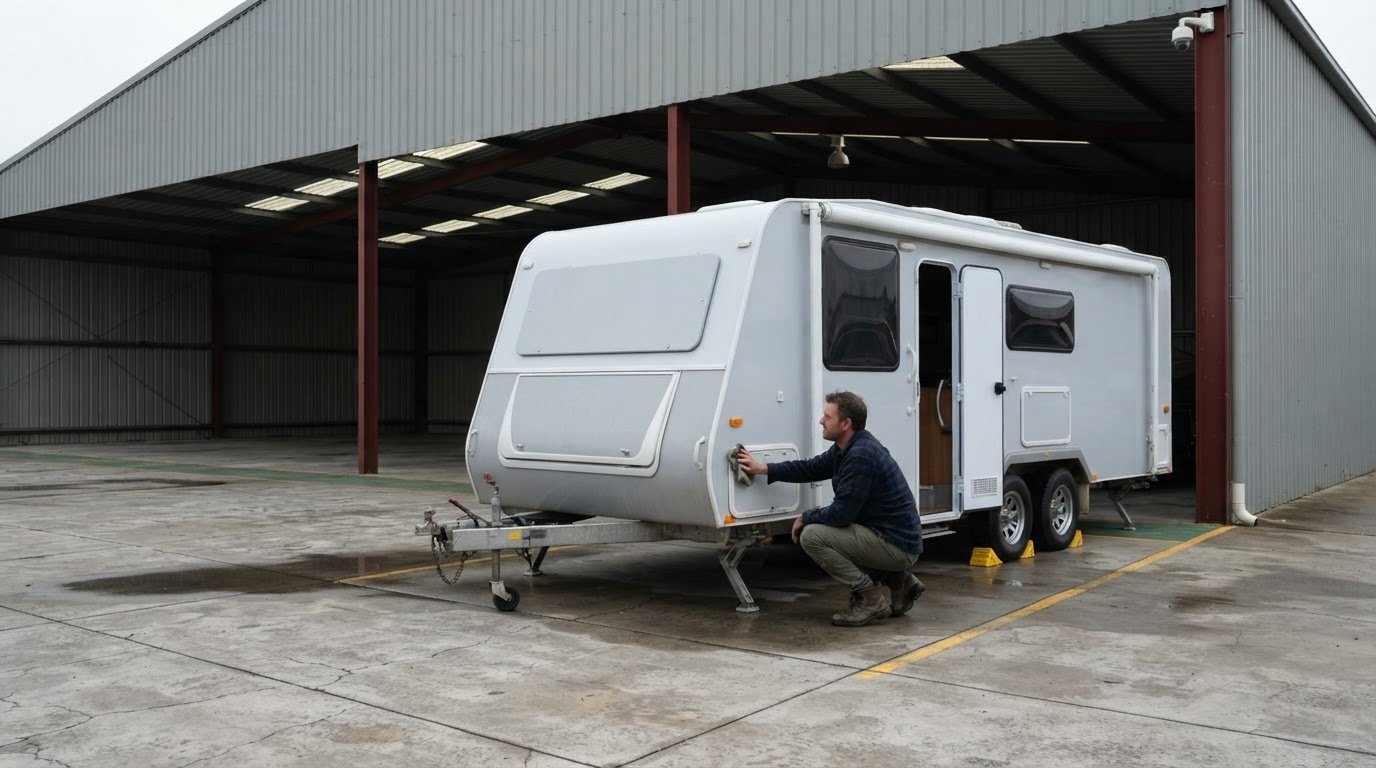
A low advertised rate doesn’t always mean the lowest overall cost. The hidden costs of cheap vehicle storage can include extra fees, restricted access, insurance requirements and limited weather protection. Compare what the rate includes, not just the starting price.
Affordable storage matters, especially when a car, caravan or boat will be parked for an extended period. The right option also depends on how often you need access and how much security and weather protection your vehicle needs.
This article explains what to compare in Australia, including possible extra charges, access conditions, insurance, security and moisture protection. It also looks at the differences between hardstand, undercover and indoor storage, so you can weigh the trade-offs and choose an option that fits your needs.
Key Takeaways
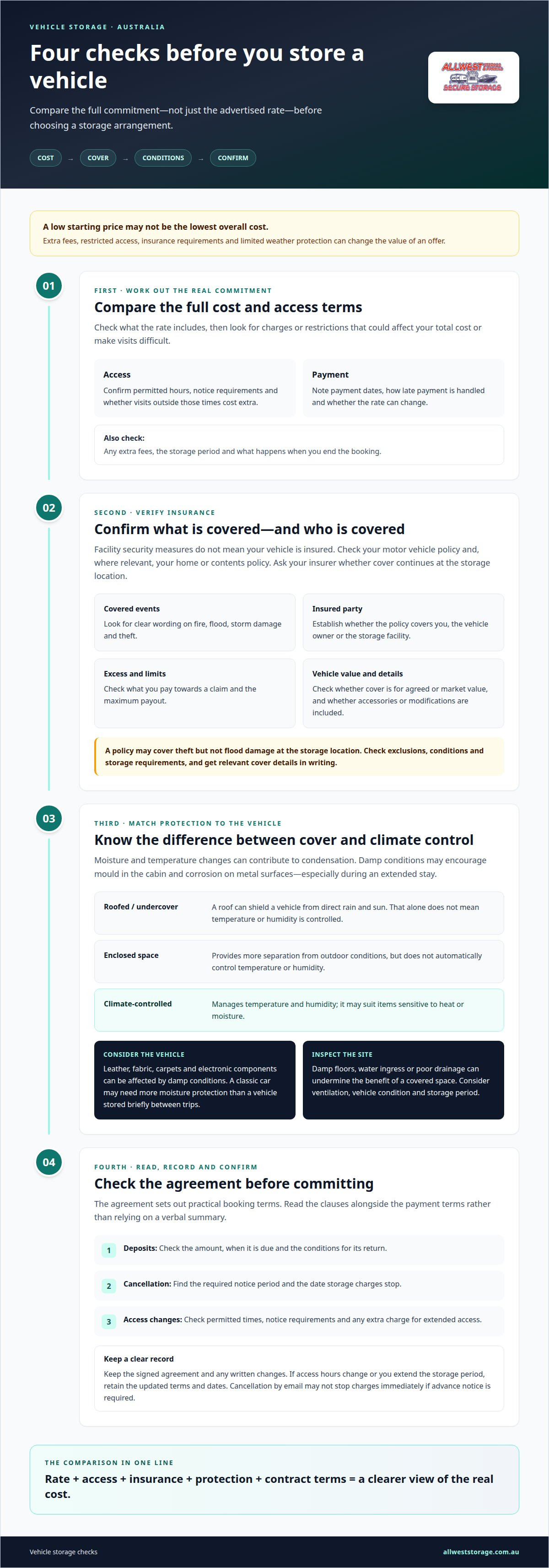
- Compare the full storage cost, including possible insurance requirements, extra fees and access restrictions.
- Match the storage environment to your vehicle’s exposure to moisture, temperature changes and weather.
- Understand the agreement’s terms for access, deposits and cancellation before committing to storage.
- Explore Allwest Storage & Parking’s hardstand and undercover options for cars, caravans, boats, trucks and trailers.
Insurance against fire and flooding
Before storing a vehicle, clarify which insurance covers it if fire or flooding causes damage. A facility’s surveillance and security measures may reduce some risks, but they don’t mean your vehicle is insured. Check whether your policy requires storage insurance, what it covers and whether it applies to vehicles rather than stored belongings.
Review your existing motor vehicle policy and, where relevant, your home or contents policy. Ask your insurer whether cover continues while the vehicle is stored and whether fire, flood, storm damage or theft are included. A policy may treat a vehicle kept away from home differently from one parked at your usual address, so don’t assume your cover applies unchanged.
Check the policy wording for exclusions, excesses and conditions. Flood cover may depend on how the policy defines flood damage, while fire cover may have specific limits or exclusions. Confirm whether the policy covers the vehicle’s agreed or market value and includes accessories or modifications. These details can affect how much you recover after a claim.
- Insured party: Establish whether the policy covers you, the vehicle owner, or the storage facility.
- Covered events: Look for clear wording on fire, flood, storm damage and theft.
- Excess and limits: Compare the amount you must pay towards a claim and the maximum payout.
- Storage conditions: Note any requirements about the vehicle’s location, security or condition.
For example, a car may be covered for theft but not flood damage at its storage location. That gap can leave you responsible for repairs, even if the facility has gated entry or camera surveillance. Get the relevant cover details in writing before signing an agreement. If policy wording is unclear, ask your insurer how it applies to your vehicle and storage period.
Climate control and moisture protection
Moisture can affect a vehicle even when it’s out of direct rain. Damp air may encourage mould inside the cabin and corrosion on metal surfaces. Temperature changes can also contribute to condensation, particularly when a vehicle is unused for an extended period. Moisture damage that requires cleaning or repairs can add to the hidden costs of cheap vehicle storage.
Climate-controlled storage manages temperature and humidity. It may suit items sensitive to heat or moisture, but it’s different from undercover protection. A roof can shield a vehicle from direct rain and sun, while an enclosed space provides more separation from outdoor conditions. Neither option alone means temperature or humidity is controlled.
Consider the vehicle’s materials and how long it will be stored. Leather, fabric, carpets and electronic components can be affected by damp conditions. For example, moisture trapped in a closed cabin may leave a musty smell or visible mould. Without considering ventilation and dampness, you could face additional cleaning or repair costs.
- Ask what the space protects against. Distinguish a roofed area from an enclosed space and climate-controlled conditions.
- Consider the vehicle’s exposure. A classic car, for example, may need more protection from moisture than a vehicle stored briefly between trips.
- Look at the site itself. Damp floors, water ingress or poor drainage can undermine the benefit of a covered space.
- Factor in the storage period. Longer stays mean more time for moisture and temperature changes to affect surfaces and interiors.
For peace of mind, compare the protection offered with the vehicle’s condition, materials and expected time in storage. Explore vehicle storage options with those practical needs in mind.
What Australian rules or contract terms apply to vehicle storage, access, deposits and cancellation?
For vehicle storage in Australia, the agreement sets out the practical terms of your booking. Read it before committing, especially if you plan to store a car for a fixed period. It should explain the storage period, payment schedule, access arrangements and what happens when you end the booking. These details can affect the total cost, even when the advertised rate looks affordable.
Pay close attention to access. Some budget facilities restrict access hours or charge extra for extended access. If you may need your vehicle outside standard hours, restrictions can mean extra expense or inconvenience. Check the permitted access times, any notice requirements and whether an additional charge applies to visits outside those times.
- Deposits: Check the amount, when it’s due and the conditions for its return.
- Payment dates: Note when recurring charges are due and how the facility handles late payment.
- Cancellation: Find the required notice period and the date storage charges stop.
- Rate changes: Look for terms explaining whether and when the storage rate can change.
For example, cancelling by email may not end charges immediately if the agreement requires advance notice. A deposit may also be retained if the contract gives a specific reason, such as unpaid charges or failure to provide notice. Read these clauses alongside the payment terms rather than relying on a verbal summary.
Keep a copy of the signed agreement and any written changes. If access hours change or you extend the storage period, retain the updated terms and dates. That record helps establish what was agreed if an invoice includes unexpected charges. Compare the full commitment, including access limits, deposit conditions and cancellation timing, before choosing a storage arrangement. A low initial rate may be less suitable if routine access is difficult or costly.
How can weather, flooding, bushfires or coastal conditions damage vehicles in Australian storage facilities?
Outdoor exposure can affect a vehicle’s paint, interior, chassis, tyres, fluids and electronics. Strong sun can fade paint and heat the cabin. Hail can dent body panels, while rain and temperature changes can let moisture into vulnerable areas. A low-cost space with little weather protection may lead to repair or cleaning costs later.
Floodwater presents a different risk. If water reaches a vehicle’s interior or electrical components, the damage may require assessment and repairs. A site’s position, ground level and drainage all matter. For example, a vehicle parked in a low-lying area may face different exposure from one kept on higher, covered ground. Insurance terms also affect how flood damage is handled.
Bushfire conditions can expose vehicles to radiant heat, smoke and ash. Heat may damage paint or interior materials, while ash and residue can settle on exterior surfaces and require careful cleaning. Coastal conditions bring another consideration: salt in sea air can settle on exposed surfaces and contribute to corrosion over time. The risks depend on the vehicle’s location and the protection the space provides.
- Sun and hail: Consider whether a roof shields the vehicle from direct exposure.
- Flooding: Look at the site’s drainage and whether the parking area sits low.
- Bushfire exposure: Consider the surrounding location and how enclosed or exposed the space is.
- Coastal air: Account for prolonged exposure to salt-laden conditions.
Match the storage environment to the vehicle and its location. A boat, caravan or car stored outdoors may face different exposure from one under cover. Review the site’s layout and the protection offered, alongside insurance terms. The cheapest option may not suit a vehicle that needs greater protection from local conditions. Choose vehicle storage suited to your needs.
Allwest Storage & Parking
Allwest Storage & Parking offers vehicle storage options for people weighing cost, access and protection. Hardstand and undercover spaces provide different levels of cover, while 24/7 CCTV monitoring is part of the storage setup. The right fit depends on your vehicle, how long it will be stored and whether you prefer covered or open-air parking.
Allwest Storage & Parking offers storage in Perth for cars, caravans and campervans, boats, trucks and trailers. Choose short-term or long-term storage, with flexible rates and no lock-in contracts. Consider the storage period alongside the agreement terms, rather than focusing only on the advertised rate.
If you’re comparing options for a vehicle, contact Allwest Storage & Parking to discuss your storage needs.
Choose storage that fits your next move
The hidden costs of cheap vehicle storage are easier to assess when you start with how you’ll use the vehicle next. A car needed for a planned trip has different practical priorities from a caravan kept off the road for an extended break. Let your intended use guide the trade-offs you’re comfortable making.
Think beyond the first booking. Consider whether your plans could change, how long you expect to store the vehicle and what would make access straightforward. A suitable option should fit both the vehicle and your circumstances, not just offer the lowest advertised rate. This helps you make a decision with fewer surprises and more confidence.
For a storage option that suits your vehicle and plans, discuss your needs with Allwest Storage & Parking. A clear decision now can make your next journey easier to plan.
Frequently Asked Questions
What extra fees do cheap vehicle storage facilities in Australia charge?
Possible extra charges at some facilities include administration, mandatory insurance, lock and move-in fees. You may also encounter fees for extended access or a rate increase after the first month. A low introductory rate, for example, may not reflect the ongoing amount due. Compare the full payment schedule and any one-off charges, then calculate the expected total for your planned storage period.
Does cheap vehicle storage include insurance, and what cover is needed in Australia?
Don’t assume vehicle insurance is included in a storage rate. Establish whether the facility requires separate storage insurance, then check whether your motor policy covers the vehicle at its storage location. For example, a policy may cover theft but treat fire or flood damage differently. Review exclusions, excesses and payout limits, and ensure the cover reflects the vehicle’s value and circumstances.
What security features should I check before choosing a low-cost vehicle storage facility?
Look for controlled entry, surveillance cameras, suitable lighting and well-maintained grounds. During a site visit, check whether gates, doors and fencing appear to be in working order, and whether the parking area is clean and orderly. A camera system is more useful when entrances and vehicle areas are visible. Security features help you assess the site, but they don’t replace insurance.
Can long-term vehicle storage cause battery, tyre, fuel or mechanical damage, and what does prevention cost?
Yes. An idle vehicle can develop battery and fluid problems, and fuel can degrade over time. Oil, coolant and brake fluid can also break down during storage. Preparation and repair costs depend on the vehicle’s condition, storage duration and work required. For longer car storage, some owners disconnect the battery. Plan suitable preparation with a vehicle professional and include possible maintenance in your overall storage budget.
What are the risks of storing a vehicle on private land or in an unregulated facility in Australia?
Risks include unclear insurance coverage or storage terms, restricted access, unexpected charges and inadequate security or weather protection. Moisture, flooding, sun, hail, bushfire exposure or coastal air can damage a vehicle and lead to repair or cleaning costs.
Leave A Comment