
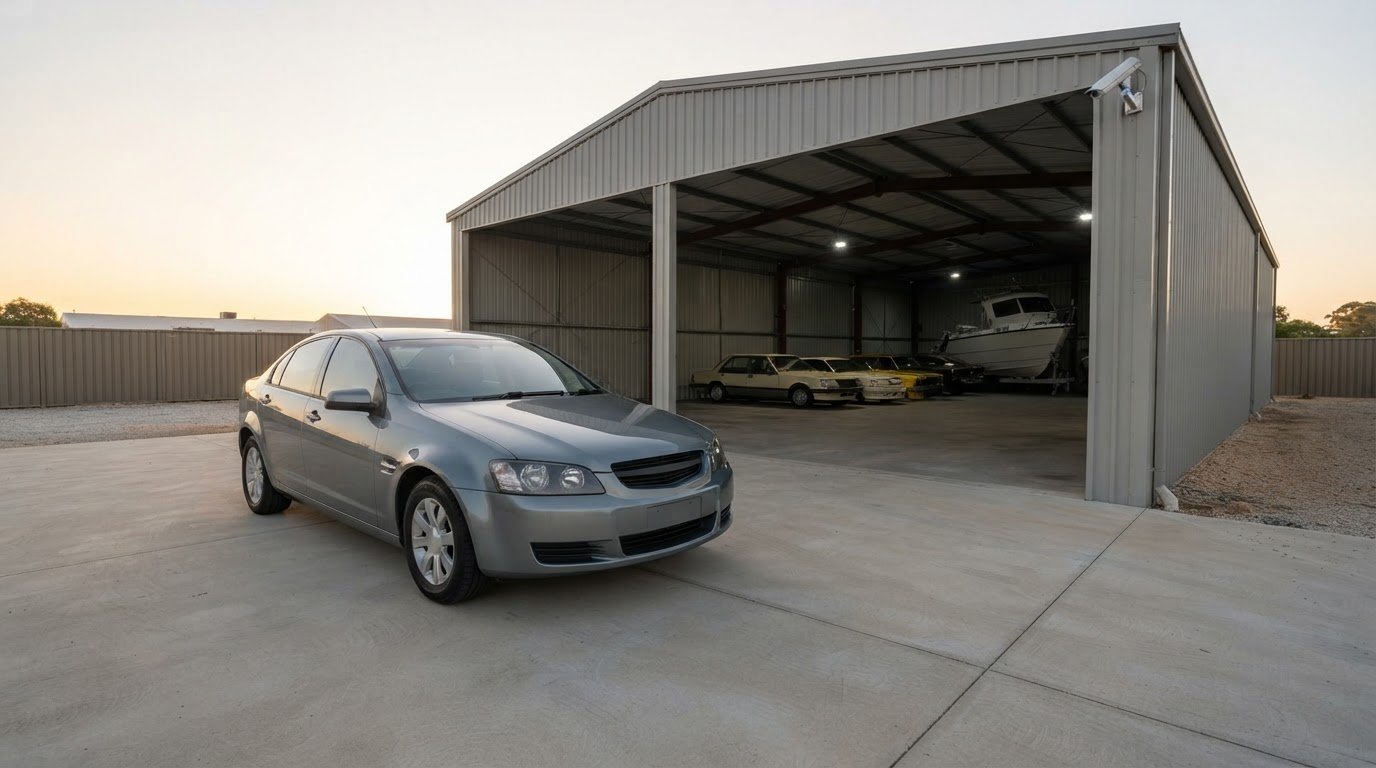
Indoor storage isn’t automatically the best choice. For car storage near Roe Highway, choose an undercover space if shelter from the elements is a priority; hardstand storage may suit a car that’s built for outdoor parking and when practical access matters more. The right option depends on your vehicle, how long it’ll be stored and how you plan to use it.
Weigh protection, security and convenience before choosing a space. Measure your car, including any accessories, and review your insurance policy with your insurer so you understand how storage affects your cover.
This guide explains how to compare indoor and outdoor options, facility security and access, insurance considerations, costs and possible extra charges. You’ll also find practical points to weigh when choosing a storage location, so you can match the space to your car and your plans without focusing on price alone.
Key Takeaways
- Weigh the extra shelter of indoor storage against the practicality of an outdoor space, based on your car and how long it will be stored.
- Compare facility location, security features and access arrangements to find an option that suits your routine.
- Use online research and personal recommendations to build a shortlist, then compare the details that matter to your vehicle.
- Look beyond the headline cost and account for possible extra charges when comparing storage options.
1. How does insurance work whilst my vehicle is in storage?
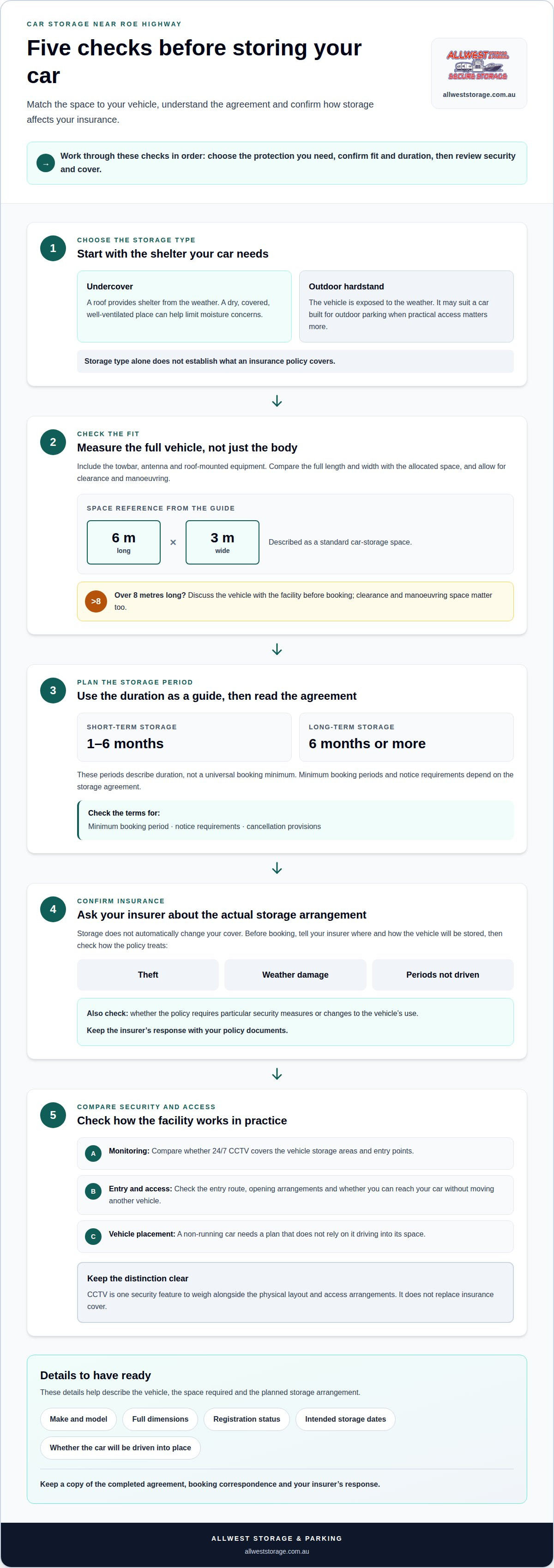
Storage doesn’t automatically change your insurance cover. Before booking, tell your insurer where and how the vehicle will be stored, then ask how the policy treats theft, weather damage and periods when the car isn’t being driven. Check whether the policy requires particular security measures or changes to the vehicle’s use. Keep the insurer’s response with your policy documents.
Undercover and outdoor hardstand storage offer different levels of shelter. An undercover space provides a roof over the vehicle; hardstand leaves it exposed to the weather. A dry, covered, well-ventilated place can help limit moisture concerns, but storage type alone doesn’t establish what an insurance policy covers. Review the policy wording for the vehicle’s actual storage arrangement.
Measure the car before booking. Include its towbar, antenna and roof-mounted equipment, then compare the full length and width with the allocated space. A standard car-storage space is described as 6 metres long and 3 metres wide. Vehicles over 8 metres long should be discussed with the facility before booking, as clearance and manoeuvring space matter too.
Short-term vehicle storage is described as lasting 1–6 months; long-term storage is 6 months or more. Those periods describe storage duration, not a universal booking minimum. Minimum booking periods and notice requirements depend on the storage agreement, so read its term and cancellation provisions before committing.
For secure storage, consider how monitoring works alongside the physical space. 24/7 CCTV monitoring is one security feature to compare, but it doesn’t replace insurance cover. Registration status alone doesn’t show whether a vehicle fits a space: the practical issue is whether it can be positioned safely. A non-running car needs a placement plan that doesn’t rely on it driving in.
2. Choosing a facility by location, security, storage type and accessibility
Start with the route you’ll use to reach the facility. A location near your regular trip can make drop-off and collection simpler, while a detour adds time each visit. Consider your vehicle’s size and turning space too, especially if you’re towing or driving a larger vehicle.
Match the storage type to the protection your vehicle needs. Indoor or undercover storage provides shelter from weather; outdoor hardstand storage leaves the vehicle exposed. A covered space can help protect its condition, while a well-maintained outdoor area may suit vehicles designed for outdoor parking.
For security, compare whether the facility has 24/7 CCTV monitoring across the site. Ask how surveillance covers vehicle storage areas and entry points, and consider what the cameras can monitor. CCTV is one feature to weigh alongside the physical layout and the access arrangements.
A home garage offers a nearby place to store a car, but its suitability depends on the space and security. Check that the doors close securely, the vehicle fits without blocking access, and stored items don’t obstruct the car. For example, a narrow garage may make it difficult to move around a parked vehicle.
Accessibility affects daily use. Check the entry route, opening arrangements and whether you can reach your vehicle without moving another one. If you’ll need the car at short notice, convenient access may matter more than extra shelter. If it will remain parked, protection from the weather may carry greater weight.
Compare each storage facility against the same practical points: location, storage type, monitoring, entry and vehicle access. These details help you judge which storage solutions fit your routine and the vehicle’s needs in Australia.
Use these points to compare vehicle storage security and access before choosing a facility.
3. Finding facilities through online research and recommendations
For car storage near Roe Highway, search Perth map listings and storage facility websites, then compare the locations shown against your usual route. Facilities near a highway exit may still involve local roads, so check the complete drive to the entrance, not just the map pin.
Online searches can surface undercover and outdoor options, along with storage providers that accommodate vehicles. Use specific terms such as “car storage Perth” or “vehicle storage Roe Highway”. Check each result for clear details about vehicle types, storage arrangements, access and security.
Which facilities are near Roe Highway in Perth, Western Australia? Search current Perth listings and map results for vehicle storage, then compare each facility’s location and stated options. This avoids relying on a name or distance that may not reflect your route or storage needs.
Recommendations add useful context. Ask a neighbour, colleague or car club member about their experience storing a similar vehicle. A recommendation involving a caravan, for example, may be less relevant to a small car if the facility’s access or storage layout differs.
Shortlist facilities using the same criteria. Note the drive from Roe Highway, whether the space is undercover or outdoor, how access works, and whether the facility stores your vehicle type. Then compare your planned storage duration with the agreement’s terms. Save the facility’s written details so you can review options side by side.
Before booking, prepare the vehicle’s make, model, dimensions, registration status and intended storage dates. These details help describe the vehicle and space required. Read the booking terms to understand the agreement and any paperwork needed before confirming. Keep a copy of the completed agreement and booking correspondence.
If the vehicle won’t be driven into its space, include that practical detail in your booking information. It affects how the facility can plan placement and access. Comparing location, vehicle fit, storage type and duration makes online searching more useful than choosing the nearest map result alone.
4. Car storage costs and additional charges
A useful comparison starts with the full cost, not just the advertised storage rate. For each option, note the billing period, storage type, vehicle dimensions and access arrangements. A larger vehicle may need a different space from a compact car, while undercover storage offers shelter that hardstand doesn’t. These differences affect how facilities set their rates.
The price depends on the vehicle, storage type, location, storage duration and access requirements, and is given after a quote request. Compare like with like: an outdoor space with limited access isn’t equivalent to undercover storage with 24-hour access. Access at any hour can affect storage costs, so include it only if it suits your routine.
Read the agreement for charges beyond the base rate. Look for how billing periods are calculated, what happens when storage continues beyond the planned duration, and whether access or moving the vehicle affects charges. Record each item in a comparison table. A written breakdown makes it easier to compare the total commitment rather than relying on one headline figure.
Ask how the chosen space fits your vehicle before comparing quotes. Dimensions and any towbar or roof equipment can affect the space required. Storage type matters too: shelter from the elements may be a priority for one car, while a vehicle designed for outdoor parking may suit hardstand storage. Match the option to the car’s condition and expected storage period.
Include preparation in your budget and plan. A car stored for more than 30 days may need an oil change considered, and longer storage can call for battery planning. If nobody can start the car periodically, disconnecting the negative battery cable is one option; a battery maintainer is another way to help keep the battery charged.
Compare your requirements against vehicle storage options and request a quote to understand the costs for your circumstances.
Allwest Storage & Parking: Caravan & Campervan Storage
Allwest Storage & Parking provides Car Storage for drivers who need a place for a vehicle between trips, during a move or for longer-term parking. Choose between undercover and hardstand storage to suit your preference for shelter or an outdoor space. Both short-term and long-term storage are available, with flexible rates and no lock-in contracts.
If you’re comparing options near Roe Highway, match the storage type to your vehicle and intended duration. Undercover storage offers shelter, while hardstand storage provides an outdoor option. Allwest also provides Caravan & Campervan Storage, Boat Storage, and Truck & Trailer Storage.
Contact Allwest Storage & Parking to discuss vehicle storage, or visit allweststorage.com.au.
Make your next storage decision with confidence
Turn your research into a clear preference before booking. Decide what matters most for your situation: greater shelter, a practical location, straightforward access or a balance of these priorities. This gives you a useful basis for choosing car storage near Roe Highway, rather than relying on one feature in isolation.
Next, use that preference to review options for your vehicle and planned use. If your needs change, revisit your priorities before choosing a storage arrangement. A considered choice can make storing your car simpler and help you feel prepared for the time it spends off the road.
For a practical next step, contact Allwest Storage & Parking to discuss your vehicle storage needs. A suitable arrangement starts with knowing what you need.
Frequently Asked Questions
Should I store my car indoors or outdoors?
Choose undercover storage if shelter from sun, rain and debris matters; choose outdoor hardstand if open-air parking suits your vehicle and priorities. For example, a restored car may benefit from a roof overhead, while a regularly used car may be easier to access in an outdoor space. Compare the shelter offered with your car’s condition and how you’ll use it later.
How Much Does It Cost To Keep A Car In Storage?
Storage costs depend on factors such as vehicle size, storage type and duration. Allwest Storage & Parking bases rates on the vehicle’s size and length of stay, with discounted rates for extended stays. Request a quote for pricing. When comparing options, review the full agreement, including billing frequency and any charges tied to access or changes to your planned storage period.
How does insurance work whilst my vehicle is in storage?
Your existing policy determines what cover applies while the car is stored, so tell your insurer about the storage arrangement and planned period. Ask specifically how the policy treats theft, weather damage and a vehicle that isn’t being driven. For example, moving from regular road use to long-term parking may affect the information your insurer needs to assess your cover.
How long can I store a car without driving it?
A properly prepared passenger vehicle can generally remain stored for 6–12 months without significant issues. For longer storage, plan more thorough preparation and periodic checks. Before leaving the car, clean it, remove personal belongings and consider battery care. The right preparation depends on the vehicle and storage duration, so use its owner’s manual for model-specific maintenance instructions.
Is it safe to store a car long-term in a storage facility?
Long-term storage can be a practical option when the facility’s security, storage conditions and access arrangements suit your needs. Look for monitored areas and a storage type appropriate for the vehicle. Prepare the car before parking it, then arrange periodic checks during an extended absence. Keep your insurance details and storage agreement accessible so you can refer to them if needed.
Which car storage sites near Roe Highway offer indoor, undercover, or outdoor parking?
Allwest Storage & Parking offers undercover and hardstand vehicle storage in Perth, near major roads. Undercover provides shelter, while hardstand is an outdoor option; these are distinct from enclosed indoor storage. If you’re comparing car storage near Roe Highway, consider the route to the facility as well as the type of space that suits your car and storage plans.
Leave A Comment