
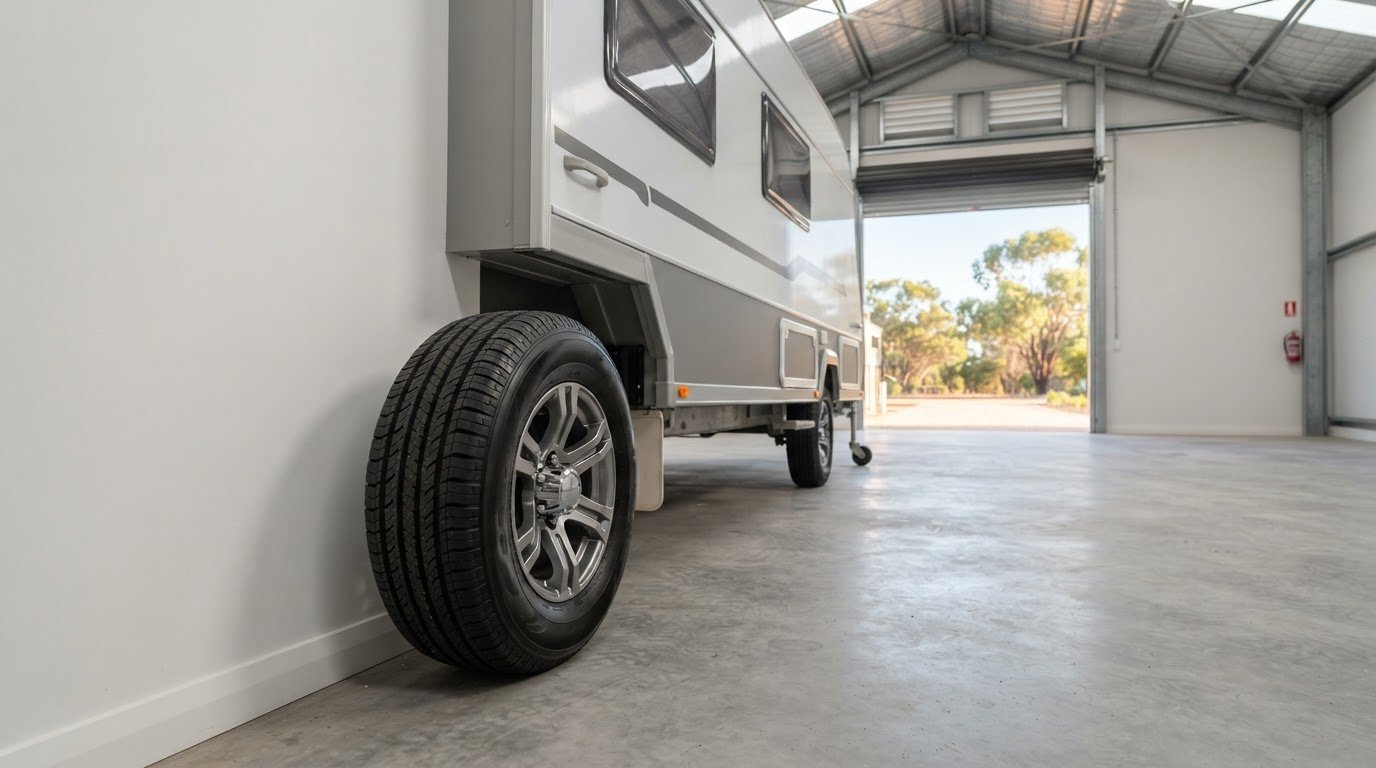
A caravan’s storage spot matters as much as how long it sits unused. For caravan tyre care in long-term storage, prepare the tyres before parking the caravan and choose a clean, cool, dry, dark, well-ventilated area away from sunlight, heat and chemicals. Tyres left unused outdoors for a month or more may develop dry surfaces and cracks.
It’s easy to focus on the caravan and overlook its tyres. The right storage setup and a few practical checks can help reduce the risk of deterioration and flat spots.
This guide explains when to prepare tyres for storage, how to care for tyres on rims and ways to reduce flat spots while a caravan is parked. It also covers what to look for in a storage location, including protection from moisture and environmental exposure.
Key Takeaways
- Prepare tyres before a long period of storage by cleaning them, removing debris and letting them dry completely.
- Store tyres on rims in a position that helps limit distortion, and keep their pressure within the tyre and vehicle maker’s recommendations.
- Reduce flat-spotting by taking weight off the tyres where practical, or moving the caravan during extended parking.
- Choose a clean, cool, dry, dark and ventilated storage area away from direct sunlight, heat and chemicals.
When should you store your tyres?
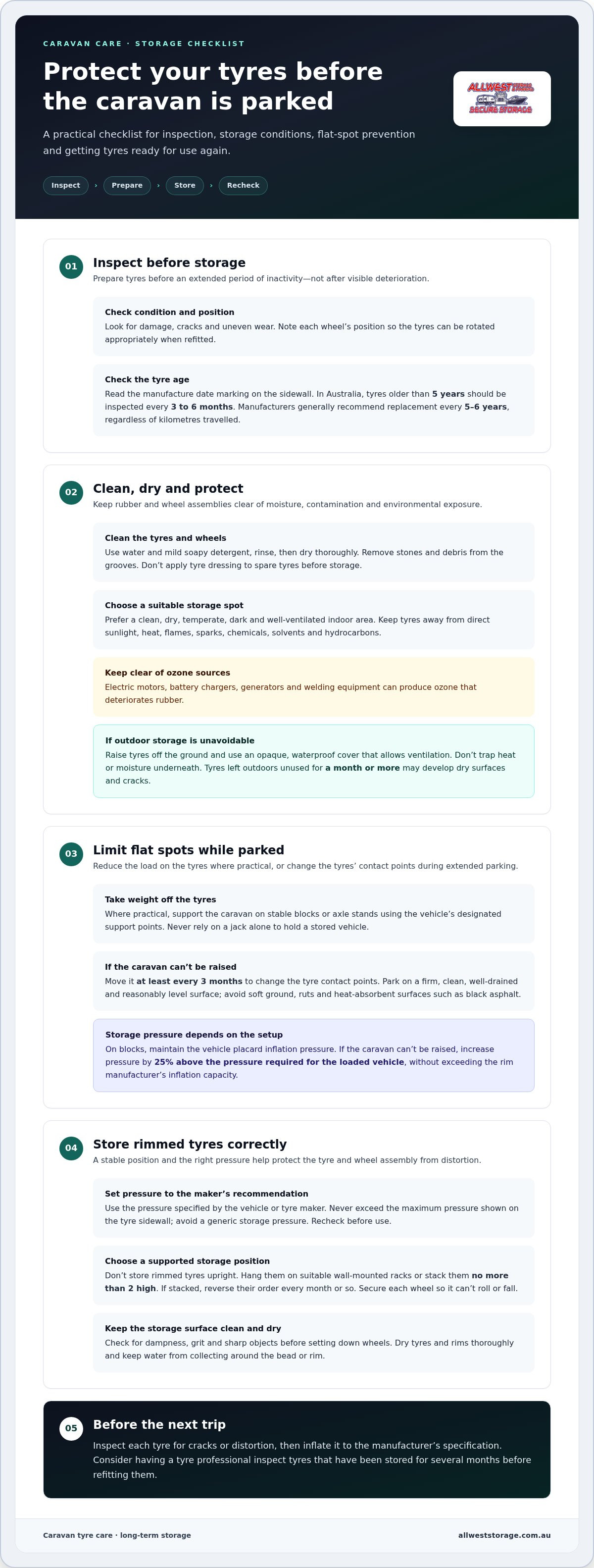
- Prepare tyres whenever the caravan will be unused for an extended period, rather than waiting for visible deterioration. Caravan tyre care in long-term storage starts with a pre-storage inspection: look for damage, cracks and uneven wear. Note each wheel’s position so you can rotate the tyres appropriately when refitting them.
- Check each tyre’s age using the manufacture date marking on its sidewall. In Australia, tyres older than five years should be inspected every 3 to 6 months. Tyre manufacturers generally recommend replacing tyres every 5-6 years, regardless of kilometres travelled, so include age in your storage decision.
- Clean the wheels and tyres with water and mild soapy detergent, then rinse and dry them thoroughly. Remove stones and debris from the grooves. Don’t apply tyre dressing to spare tyres before storage, and ensure no moisture remains on the rubber or wheel.
- Choose an indoor location that is clean, dry, temperate and well ventilated. Keep tyres away from direct sunlight, heat, flames, sparks, chemicals, solvents and hydrocarbons. Electric motors, battery chargers, generators and welding equipment can also produce ozone that deteriorates rubber.
- If outdoor storage is unavoidable, raise the tyres off the ground and cover them with an opaque, waterproof cover that allows ventilation. Avoid trapping heat or moisture underneath. Tyres left outside and unused for a month or more may develop dry surfaces and cracks.
- Where practical, reduce the weight resting on the caravan’s tyres. Where practical, supporting the caravan on axle stands can help take weight off its tyres. Use stable blocks and the vehicle’s designated support points; never rely on a jack alone to hold a stored vehicle.
- If you can’t raise the caravan, move it at least every three months to change the tyres’ contact points. Inspect stored tyres every few months for ageing or environmental damage. If tyres are stored on a shelf, rotate them every few months to help limit flat spots.
- Before reuse, check each tyre for cracks or distortion and inflate it to the manufacturer’s specification. For caravan tyre care in long-term storage, consider having a tyre professional inspect tyres stored for several months before they are refitted.
Storing tyres mounted on rims
Mounted tyres need support that limits distortion and protects the wheel assembly. Follow these steps to choose a storage position, manage pressure and avoid damaging conditions.
-
Shield tyres from chemicals, heat and damage
Place mounted tyres away from fuels, oils, solvents, paint, acids and disinfectants, which can affect rubber. Keep them clear of work areas where spills or fumes may reach them. Avoid heat, flames, sparks and electric discharges. Keep the assemblies away from electric motors, battery chargers, generators and welding equipment, which can produce ozone that deteriorates rubber.
-
Keep moisture and contamination away
Store the assemblies in a clean, dry place with moderate ventilation. Check the surface for dampness, grit and sharp objects before setting down the wheels. Dry the tyres and rims thoroughly after cleaning, and keep them clear of water that could collect around the bead or rim. A clean, dark area also limits exposure to sunlight and environmental contamination.
-
Set inflation pressure for storage
Inflate caravan tyres mounted on rims to the manufacturer’s recommended pressure before storage. Use the value specified by the vehicle or tyre maker, and never exceed the maximum pressure shown on the tyre sidewall. Avoid using a generic storage pressure: the right figure depends on the tyre and vehicle requirements. Recheck the pressure before use and restore the recommended operating pressure if it has changed.
- Choose a stable position that avoids placing weight on one spot of the tread. Don’t store rimmed tyres upright, as this may distort them. Hang them on suitable wall-mounted racks or stack them no more than two high. If stacked, reverse their order every month or so to help limit distortion. Secure each wheel so it can’t roll or fall.
- For motorcycle tyres, follow Continental’s temperature advice: store them no higher than 35°C, preferably below 25°C. Continental advises against storing conventional motorcycle tyres below -20°C and race tyres below 0°C. These limits apply to motorcycle tyres, not caravan tyres. Check the storage area’s conditions before placing motorcycle wheels there.
Reducing flat-spotting during long-term vehicle parking
To help prevent flat spots and sidewall cracking, reduce the weight on the tyres or move the caravan during storage. If it can’t be raised on blocks, move it at least every three months.
-
Reduce the stored vehicle’s tyre load
If practical, remove the wheels for long-term storage, or raise the caravan on suitable blocks to take weight off the tyres. Use stable supports under the axle and let the suspension rest. Protect the tyres from environmental exposure. If the wheels remain fitted, never rely on a jack alone to support the vehicle.
- Park the caravan on a firm, clean, well-drained and reasonably level surface. Avoid black asphalt and other heat-absorbent ground, which can expose tyres to extra heat where they touch the surface. Before extended storage, check the parking area for standing moisture, direct sunlight and nearby solvents.
- If the caravan can’t be raised, move it at least every three months. This changes the tyre contact point and helps limit flat spots and ozone cracking where the sidewall flexes. Choose a new position with a firm, level surface, rather than a rut or soft ground that concentrates the load.
-
Check pressure before returning to service
Before storage on blocks, maintain the vehicle placard inflation pressure. If the caravan can’t be raised, increase pressure by 25% above the pressure required for the loaded vehicle, without exceeding the rim manufacturer’s inflation capacity. Before driving after storage, return the tyres to the recommended operating pressure. Don’t use the storage pressure for travel.
- Inspect the tread and sidewalls before returning the caravan to service. Look for cracks, distortion and uneven wear, especially around the contact area. Check the pressure and confirm the tyres are suitable for the caravan’s load. If you removed the wheels, refit them in their noted positions so they can be rotated appropriately.
Choosing a cool, dry and dark storage location
In Australia, the core storage principles are the same: limit exposure to heat, moisture and sunlight. Choose a site based on its actual conditions, including ventilation, dampness and nearby heat sources.
- Choose an indoor area that is clean, cool, dry, dark and well ventilated. A sheltered garage or suitable storage space is preferable to an exposed yard. Check for leaks, damp patches and direct sunlight before storing tyres, as moisture and UV exposure can affect rubber over time.
- Check how hot the space gets during the day. Keep tyres away from heaters, hot pipes, flames, sparks and electric discharges. Avoid placing them beside electric motors, battery chargers, generators or welding equipment, which can produce ozone that deteriorates rubber.
- Keep the storage area clear of chemicals that can affect tyre rubber. Move nearby fuels, oils, solvents, paint, acids and disinfectants away. Don’t store tyres beside equipment or containers that could leak or release fumes; choose a separate, clean spot instead.
- For longer-term storage, place tyres in airtight plastic bags and expel as much air as possible before sealing. This helps limit exposure to environmental conditions. Keep the bags off damp floors and inspect the area periodically for moisture or damage.
- If indoor storage isn’t practical, raise tyres off the ground and cover them with an opaque, waterproof cover. Allow ventilation underneath rather than wrapping the tyres so tightly that heat or moisture becomes trapped. After wet weather, check the cover and adjust it if water is pooling.
- For a caravan stored outdoors, cover the tyres to reduce exposure to direct sunlight and weather, while allowing ventilation. Tyres left exposed and unused outside for a month or more may develop dry surfaces and cracks. Inspect them every few months for environmental damage.
- Use the same checks in hot or coastal climates: keep tyres cool, dry, shaded and away from contaminants. Focus on the site’s actual exposure to heat and moisture, rather than assuming every location needs a different storage approach.
Allwest Storage & Parking: Caravan & Campervan Storage
If your caravan needs a secure place between trips, Allwest Storage & Parking offers Caravan & Campervan Storage with undercover and hardstand options. Both options have 24/7 CCTV monitoring, giving you a practical choice for keeping the vehicle stored while you’re not using it. Select a setup that suits your caravan and the conditions you want to protect it from.
Undercover storage can shelter a caravan from direct weather exposure, while hardstand provides an outdoor storage option. These are vehicle storage choices, not tyre maintenance services, so prepare and inspect your tyres as outlined above. Allwest also offers storage for boats, cars, trucks and trailers.
For caravan storage, contact Allwest Storage & Parking to discuss your requirements.
Make your next storage period easier to manage
Set a simple routine whenever your caravan goes into storage. Record the tyre condition and wheel positions, then keep those notes with your vehicle records. They’ll be a useful reference when preparing the caravan for its next trip. Good caravan tyre care in long-term storage also means choosing a location suited to the vehicle and planned storage period.
If you need a place to keep your vehicle between trips, Allwest Storage & Parking offers Caravan & Campervan Storage, Boat Storage and Car Storage. Choose the option that suits the vehicle you need to store, and make tyre checks part of your own preparation and return-to-use routine.
Take the next step when you’re ready. Contact Allwest Storage & Parking to discuss storing your vehicle. A clear storage plan can help you get ready for your next journey with confidence.
Frequently Asked Questions
What tyre pressure should caravan tyres have during storage in Australia?
Use the pressure guidance that matches how the caravan is stored. If it can’t be raised, increase pressure by 25% above the pressure required for the loaded vehicle, without exceeding the rim manufacturer’s inflation capacity. If it’s raised on blocks, maintain the vehicle placard pressure. Before towing, return the tyres to the recommended operating pressure and account for the caravan’s actual load.
Should caravan tyres be removed or lifted off the ground for long-term storage?
Removing the wheels can help avoid flat spots and uneven wear, but raising or unloading the caravan is another option. Support the vehicle correctly with axle stands under the axle, never with a jack alone. If neither approach suits, move the caravan at least every three months to shift each tyre’s contact patch. Inspect the sidewalls before travelling.
How can caravan tyres be protected from UV light, heat, moisture and chemicals?
Before parking, check the storage spot for direct sunlight, damp floors, heat sources and nearby chemicals. Keep tyres away from workshop products and ozone-producing electrical equipment such as battery chargers. If outdoor storage is necessary, raise the tyres off the ground and use an opaque, waterproof cover that allows ventilation. After wet weather, check the cover for trapped moisture.
When should caravan tyres be replaced after long-term storage, even if tread looks good?
Good tread alone doesn’t show whether an ageing tyre remains suitable for use. Tyre manufacturers generally recommend replacing tyres every 5-6 years, regardless of kilometres travelled. In Australia, tyres older than five years should be inspected every 3 to 6 months. Before refitting, look for cracks, distortion or damage, and consider professional inspection after extended storage.
Leave A Comment