An undercover bay isn’t automatically the best fit for every vehicle. The right choice depends on what you’re storing, how long it will stay and how much shelter you want. Knowing what to look for in a vehicle storage facility means weighing security alongside practical details such as bay dimensions, manoeuvring room and access for collection.
Look for clear information about security and storage options, then consider how well the site suits your vehicle and routine. CCTV is one factor, not the whole picture. You’ll also want to compare hardstand and undercover storage, and think through whether your vehicle can enter, park and leave comfortably.
This checklist covers security, vehicle fit, storage conditions, Perth access and rental terms. Allwest Storage & Parking provides hardstand and undercover options, 24/7 CCTV monitoring, and short- or long-term storage with no lock-in contracts. Use these practical criteria to decide which features matter most for your vehicle.
Key Takeaways
- Use what to look for in a vehicle storage facility as a checklist: match the space and storage type to your vehicle, stay and access needs.
- Look beyond CCTV by considering site organisation, entry arrangements and how the facility is managed.
- Compare hardstand and undercover parking by weighing exposure, shelter and practical use, rather than assuming one option suits every vehicle.
- Map your Perth journey and consider how often you’ll retrieve the vehicle, particularly if you’re storing a larger vehicle or trailer.
- Review rental terms alongside vehicle fit. Flexible arrangements can help if your storage period changes.
What to look for in a vehicle storage facility: start with your needs
Compare facilities against four practical factors: your vehicle’s size, how long you plan to store it, the protection you want and how often you’ll need access. A car kept away between seasons has different requirements from a work truck or trailer that needs regular retrieval. Start with your routine, not just the available bay.
Separate occasional-use vehicles from those you expect to move frequently. If you’ll collect a caravan before trips or retrieve a boat at intervals, consider how the journey and parking setup will work each time. For a vehicle used regularly for work, location and straightforward manoeuvring may matter more. Also decide whether your storage period is fixed or could change.
A good vehicle storage facility fits both the vehicle and the way you plan to use it.
Which vehicle and storage period are you planning for?
Write down what you’re storing: a car, boat, caravan, truck or trailer. Each has different dimensions and access needs. A bay that works for a car may not suit a longer vehicle or a trailer combination. Then estimate the storage period. A short stay may call for a different arrangement from a longer one, particularly if your plans or retrieval needs could change.
For a closer look at how duration shapes your decision, compare long-term and short-term vehicle storage in Perth. Flexible rental terms can be useful when you’re not certain exactly when you’ll need the vehicle again.
What should you measure before comparing facilities?
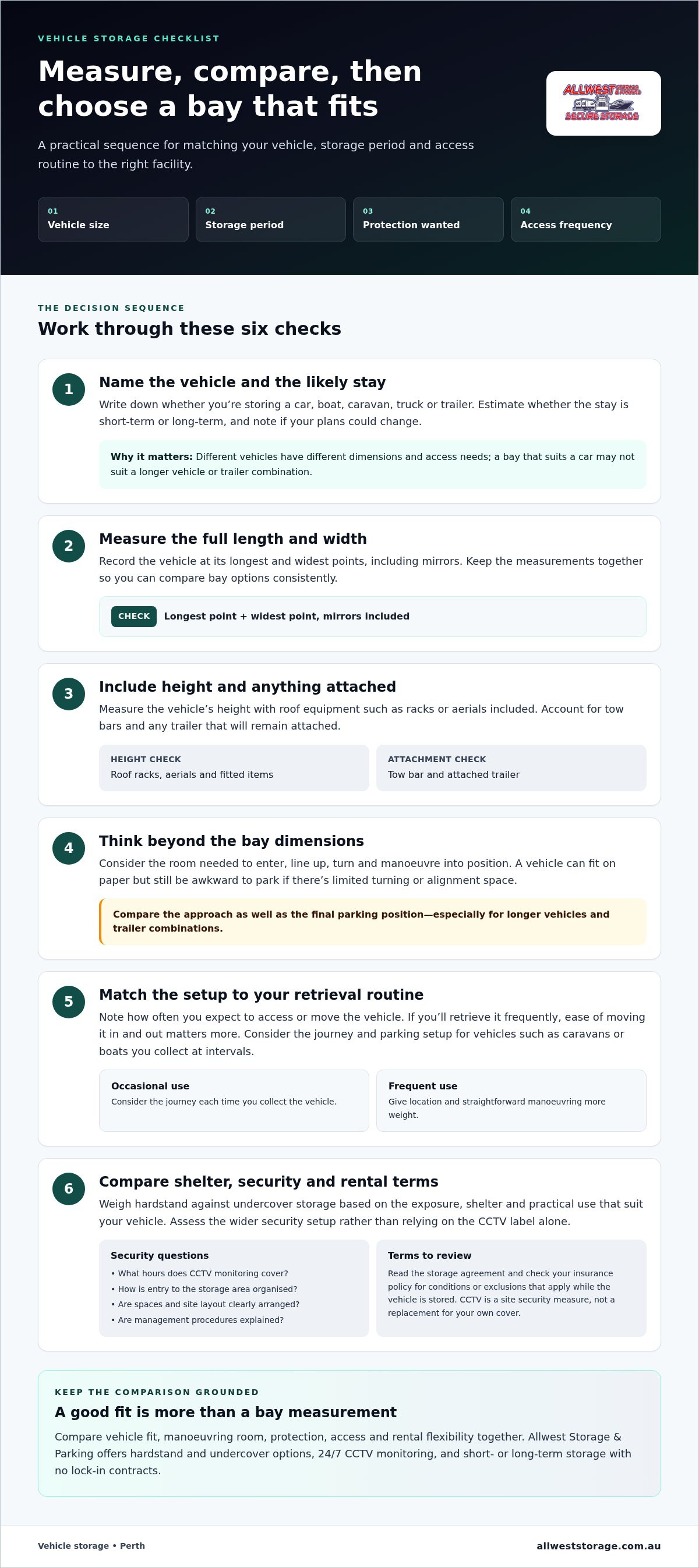
Record the vehicle’s full dimensions, including anything that affects its footprint or clearance. Use this checklist before comparing bay options:
- Length and width: Measure the vehicle at its longest and widest points, including mirrors.
- Height: Include roof equipment such as racks, aerials or other fitted items.
- Attachments: Account for tow bars and any trailer that will remain attached.
- Turning space: Consider how much room you need to enter, line up and manoeuvre into position.
- Retrieval routine: Note how often you expect to access or move the vehicle.
Bay dimensions don’t tell the whole story. A vehicle may fit on paper but be awkward to park if there’s limited room to turn or align it. Consider the approach as well as the final parking position, especially for longer vehicles and trailer combinations. If you’ll retrieve it often, ease of moving it in and out should carry more weight in your comparison.
Keep your measurements and usage notes together. They give you a consistent basis for comparing vehicle storage options and help narrow the choice to a facility that suits your vehicle, storage period and access routine.
How to assess vehicle storage security beyond the CCTV label
Security is more than a feature name on a website. CCTV monitoring can help observe activity around a facility, but it doesn’t describe every access arrangement or how the site is managed. When considering what to look for in a vehicle storage facility, assess the overall setup and keep in mind the responsibilities that remain yours as the vehicle owner.
What does 24/7 CCTV monitoring tell you?
24/7 CCTV monitoring means cameras monitor activity around the facility around the clock. It’s one useful part of a security picture, but it doesn’t guarantee that loss or damage will be prevented. CCTV coverage alone also doesn’t explain how entry is managed or how the site is kept organised.
Allwest Storage & Parking has 24/7 CCTV monitoring at its Perth facility. Consider these factors together when assessing security:
- Monitoring: Is CCTV monitoring in place, and what hours does it cover?
- Entry arrangements: How is access to the storage area organised?
- Site organisation: Is the layout orderly, with vehicle spaces clearly arranged?
- Management: Are the facility’s procedures and responsibilities explained clearly?
These points help you look beyond a single label. A well-organised layout can make it easier to understand where vehicles are stored and how the area is used. Clear entry arrangements and management information also help set expectations. Assess the information provided and what’s visible, rather than assuming one feature covers every security consideration.
How should you think about insurance and storage responsibility?
Facility monitoring and vehicle insurance serve different purposes. CCTV is a site security measure, not a replacement for cover under your own policy. Before storing a vehicle, review your policy for conditions that apply while it’s in storage, including any exclusions or changes to cover during the storage period.
Read the storage agreement before committing, too. Pay attention to the responsibilities it sets out for you and the facility. Understanding these terms alongside your insurance arrangements helps avoid assuming that a site feature covers risks your policy or agreement treats separately.
For a practical comparison, keep notes on CCTV monitoring, entry arrangements, site organisation, management information and agreement terms. Use the same checklist for each option, and consider insurance separately from the security assessment. This gives you a clearer basis for weighing what’s included without treating monitoring as a promise of protection.
Allwest’s vehicle storage options include CCTV monitoring alongside hardstand and undercover storage. View Allwest vehicle storage as part of your Perth facility comparison.
Hardstand or undercover vehicle storage: compare protection and practicality
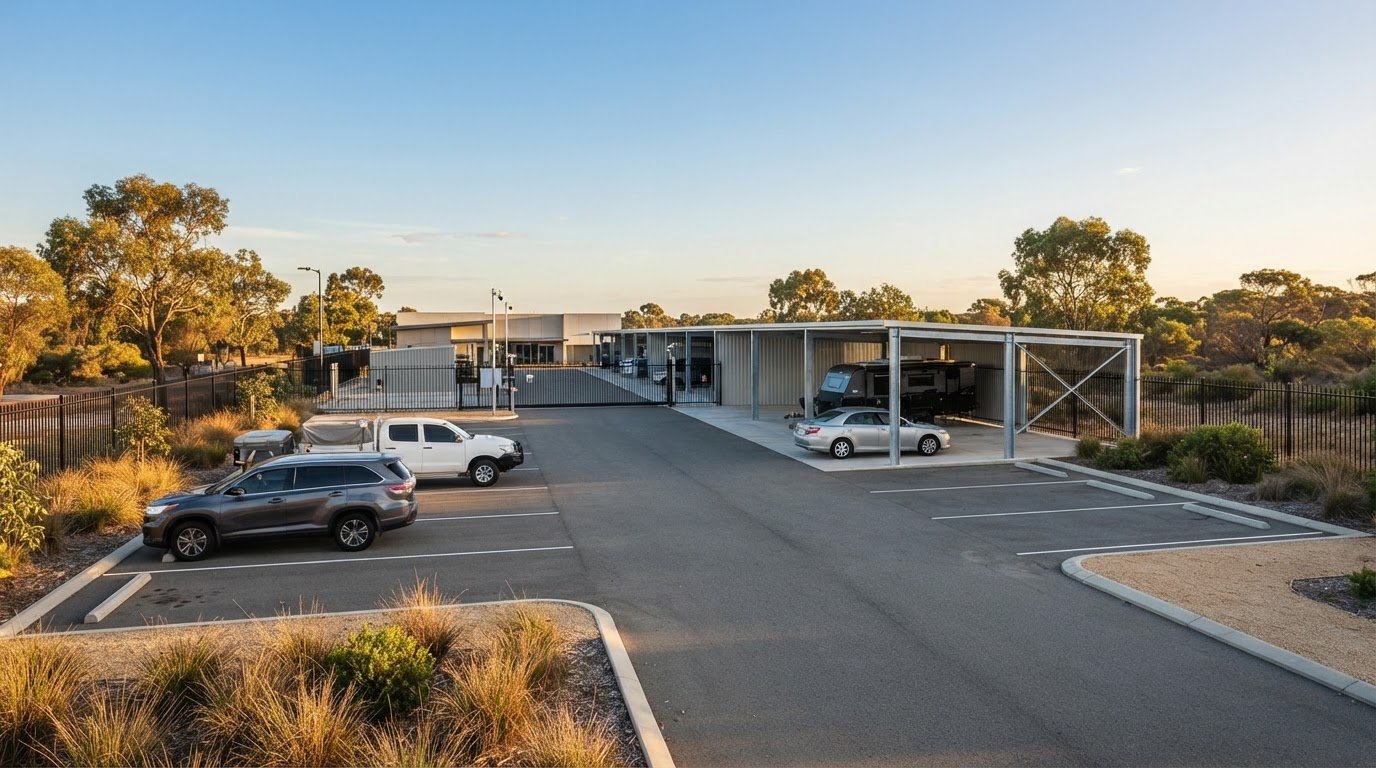
Hardstand and undercover storage offer different levels of shelter. Hardstand is open-air parking. Undercover storage adds a roof, but remains open-sided. Neither option is fully enclosed or protects against every outdoor condition. The practical choice depends on your vehicle, how long it will be stored and the balance you want between shelter and practicality.
Perth’s sun and seasonal weather are worth considering alongside your planned storage period. A vehicle stored for a short time may have different priorities from one parked for an extended stay. Think about how much exposure you’re comfortable with, how you’ll use the vehicle and whether a roof would be a worthwhile benefit. This is a comparison of storage formats, not a prediction of damage.
Hardstand
Exposure: Open to outdoor conditions, including sun and rain.
Shelter: No roof overhead.
Use case: An allocated open-air parking space for a vehicle.
Trade-off: Direct exposure in exchange for an open-air parking option.
Undercover
Exposure: Open-sided, so some outdoor conditions can still reach the vehicle.
Shelter: A roof provides shelter from some direct weather exposure.
Use case: A vehicle owner who values overhead shelter.
Trade-off: Added shelter, but not a fully enclosed space.
When might hardstand storage suit your priorities?
Hardstand can suit a vehicle that needs an allocated parking space and for which open-air storage meets your priorities. Consider the length of stay and how the vehicle will be used, rather than assuming uncovered parking is automatically the right or wrong choice. For a caravan, compare the practicalities of hardstand caravan storage in Perth with your space and access needs.
What does undercover storage change?
A roof provides shelter from some direct weather exposure, while open sides mean the space is not enclosed. Weigh that distinction against the vehicle and your intended use. For example, a caravan owner planning a longer stay may value overhead shelter, while another owner may prioritise open-air parking. The right balance depends on your priorities. Read this guide to undercover caravan storage in Perth for caravan-specific considerations.
Use the same criteria to compare both options: exposure, shelter, intended use and practical trade-offs. That’s a more useful way to decide what to look for in a vehicle storage facility than choosing based on the storage label alone. Keep preparation and weather-protection planning separate from this decision. First, select the storage type that fits your vehicle and priorities.
Compare vehicle storage access, location and rental terms in Perth
A storage option needs to work beyond the day you move your vehicle in. Consider the route, how often you’ll retrieve it, the rental terms and whether the site suits the vehicle’s size. A quick, consistent comparison can help you judge what to look for in a vehicle storage facility without focusing on one feature in isolation.
Use these four steps to compare your options:
- Map the trip. Check the route from home, work or your regular travel routes. Think about how the journey fits into trips you already make.
- Assess retrieval needs. Note how often you’ll collect or move the vehicle. Occasional use calls for different access priorities from a boat or trailer you expect to retrieve regularly.
- Compare terms. Read the rental conditions, including minimum stay, payment frequency, notice requirements and any lock-in conditions.
- Check vehicle fit. Make sure the parking space and approach suit the vehicle, including any attached trailer. A suitable bay needs to work in practice, not just on paper.
How does location affect everyday access?
Distance is only part of convenience. Consider the actual route from places you regularly travel, and whether you’ll make a special trip each time you need the vehicle. That can matter when retrieving a boat or manoeuvring a larger vehicle and trailer. Allwest Storage & Parking is near major Perth roads, which is a practical location factor for local owners planning regular or occasional access.
Think through a typical retrieval before deciding. Where will you be travelling from? How often will you make the trip? Does the route work for the vehicle you’re moving? These questions help you weigh location against your storage period and expected routine.
Which rental terms deserve a close read?
Look beyond the headline rental period. Check whether there’s a minimum stay, how often payment is due, what notice is required to end the arrangement and whether a contract locks you in. These details matter if travel plans change or you’re unsure how long the vehicle will remain in storage. Allwest offers short- and long-term vehicle storage with no lock-in contracts.
If you’re still weighing up the length of your stay, use this guide to long-term and short-term vehicle storage in Perth to inform your planning. Compare the terms with your likely timeline rather than assuming it will stay fixed.
Allwest provides vehicle storage in Perth for cars, boats, caravans, trucks and trailers. Compare the options at Allwest vehicle storage.
Choose a vehicle storage facility that fits, then plan your next step
Bring the comparison together before deciding. The right option isn’t necessarily the one with the most appealing single feature. It’s the facility that suits your vehicle, storage period, protection priorities and access routine as a whole. Use the same decision order for each option, then compare the results against what matters most to you.
Use a final facility comparison checklist
Work through these points in order. Keep your measurements and notes together so you can assess each facility on the same basis:
- Confirm vehicle fit. Check the vehicle’s length, width and height, including mirrors, tow bars, roof equipment and any attached trailer. Consider the space needed to turn, enter and park, not just the bay dimensions.
- Choose the storage type. Decide whether open-air hardstand parking or a roofed undercover bay better suits your vehicle, intended stay and preference for shelter.
- Assess security. Consider CCTV monitoring alongside entry arrangements, site organisation and how the facility is managed. Don’t judge security on one feature alone.
- Review the terms. Read the agreement for minimum stay, payment frequency, notice requirements and lock-in conditions. Check that the terms suit your likely storage period and retrieval routine.
Then factor in location. A facility that works for occasional collection may be less convenient if you expect to retrieve a vehicle regularly. For a larger vehicle or trailer, consider whether the route and approach make each trip practical. Compare the whole arrangement rather than ranking facilities by one point, such as shelter or CCTV, in isolation.
How does Allwest Storage & Parking meet these criteria?
Allwest Storage & Parking provides vehicle storage in Perth for cars, boats, caravans, trucks and trailers. You can choose between open-air hardstand and undercover bays, with 24/7 CCTV monitoring at the facility. Its location near major roads is a practical consideration for Perth vehicle owners planning trips to and from storage.
Storage is available for short or long periods, with flexible rates and no lock-in contracts. That can suit plans where the expected duration may change. Match these features to your checklist: consider vehicle fit and access, weigh the storage options, and read the rental terms. The right choice should work for both the vehicle and how you’ll use the storage.
Ready to compare options for your vehicle? Explore vehicle storage options at Allwest Storage & Parking.
Make your next storage decision with confidence
Your storage needs may change as travel plans, work routines or vehicle use shift. Treat your choice as a practical fit for this stage, rather than trying to predict every future requirement. Keep a short note of your priorities and the reasons behind your decision. It can make it easier to reassess the arrangement if your plans change later.
Use your checklist to make a clear decision, then take the next step at a pace that suits you. You’ve considered what to look for in a vehicle storage facility; now focus on an option that aligns with your vehicle and intended use, without getting sidetracked by features that don’t matter to you.
Explore vehicle storage options at Allwest Storage & Parking and take a practical next step towards finding a suitable place for your vehicle. With your priorities clear, you’re ready to make an informed choice.
Frequently Asked Questions
Is vehicle storage suitable for a car I still use regularly?
Yes, it can suit a regularly used car if the facility’s access arrangements fit your routine. Compare the drive from home or work with how often you expect to collect the car. A vehicle used most days has different needs from one parked for an extended period. Review the access terms and consider whether each retrieval would be practical. This is an important part of what to look for in a vehicle storage facility.
Can I leave personal belongings inside a vehicle in storage?
It’s generally sensible to remove valuables before storing a vehicle. Check the storage agreement for rules about belongings, then review your insurance policy for exclusions or limits. Items left inside may not receive the same cover as the vehicle itself, and cover can depend on your policy. Keeping the vehicle clear of personal possessions can also make it easier to see what’s being stored and avoid uncertainty about responsibility.
Does vehicle storage include insurance for my vehicle?
Don’t assume that storage includes insurance for your vehicle. Facility security measures and your insurance policy are separate matters. Review your policy to understand how it applies while the vehicle is stored, particularly during an extended stay. Note any storage-related conditions, exclusions or changes you need to make to maintain cover. CCTV monitoring doesn’t replace insurance, and the terms of your policy determine what is covered.
How much does a vehicle storage facility cost in Perth?
Vehicle storage fees can depend on the vehicle’s size, how long it stays and whether you choose hardstand or undercover parking. Allwest’s flexible rates are based on vehicle size and storage duration, so the right arrangement depends on your needs. For current options and the next step in planning, visit Allwest Storage & Parking’s vehicle storage page.
Can I store a caravan at a vehicle storage facility?
Yes, vehicle storage facilities can cater for caravans, but the space must suit the full setup. Measure the caravan from the rear to the hitch, include roof height and fitted equipment, and consider the room needed to turn while towing. A bay that suits the caravan alone may not suit it with an attached vehicle. Allwest provides caravan storage in Perth. Keep preparation separate from choosing the right space.
What should I check in a vehicle storage agreement?
Read the agreement for the rental duration, payment frequency, notice period and access conditions. Check what responsibilities apply to you and whether the terms restrict particular vehicles or belongings. Agreements can differ, so don’t assume a familiar arrangement uses the same conditions elsewhere. Make sure the written terms match your intended stay and routine, and resolve anything you don’t understand before storage begins.
Leave A Comment