Could your vehicle still be insured while it’s parked in storage? Your current policy may apply, but cover depends on its terms and your circumstances. When checking vehicle storage insurance requirements Australia owners should start with their insurer, rather than assume a secure facility automatically means the vehicle is insured.
Storage security and insurance cover address different risks. Before storing your vehicle in Perth, ask your insurer whether your policy covers it at the storage address, whether registration status matters, and what exclusions, excesses or value limits apply. Check whether accessories and vehicle parts are recorded too.
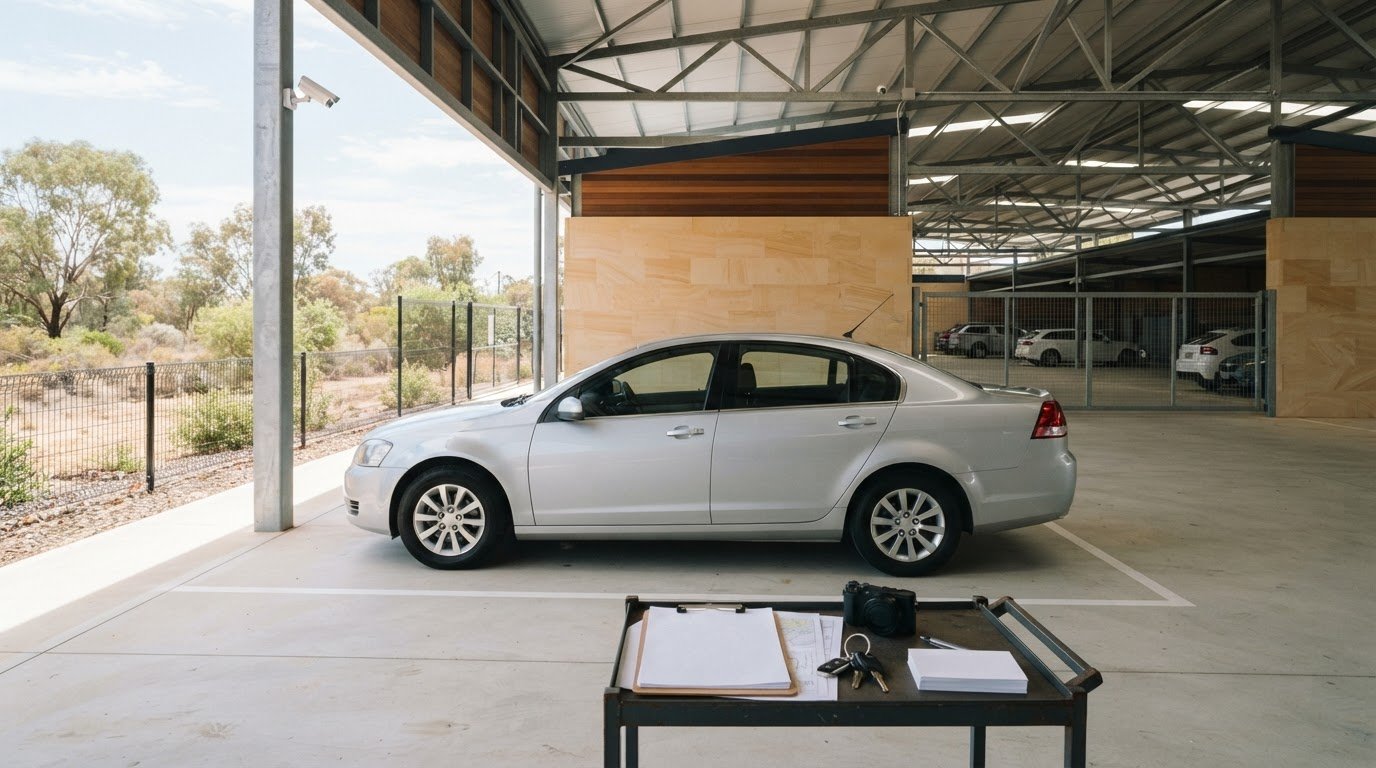
This guide covers the policy questions to ask, what to document about your vehicle, and how to record your storage arrangement. It also explains the difference between hardstand and undercover storage. Allwest Storage & Parking provides both options in Perth, with 24/7 CCTV monitoring. These security measures don’t replace insurance, so check your cover before storage begins.
Key Takeaways
- There’s no single rule for every stored vehicle. The vehicle storage insurance requirements Australia owners need to understand depend on their policy wording, conditions and exclusions.
- Review your policy documents, then ask your insurer about permitted use, storage duration, location and any notification requirements.
- Hardstand and undercover describe different storage arrangements, but neither determines whether your vehicle is insured.
- Before storage, record the vehicle’s condition, accessories and odometer reading with dated photos. Keep a clear note of the storage location and arrangement.
- Compare your policy conditions with your planned storage arrangement. Allwest Storage & Parking offers hardstand and undercover vehicle storage in Perth for cars, boats, caravans, trucks and trailers.
Vehicle storage insurance: Australian requirements
There is no single insurance rule for every stored vehicle. The vehicle storage insurance requirements Australia owners need to understand depend on the policy wording, the vehicle’s circumstances and how it will be used. A policy sets out what events may be covered, along with conditions, exclusions, limits and excesses. Keeping a vehicle in storage doesn’t confirm whether a particular claim would be covered.
Insurance and facility security address different concerns. CCTV monitoring, access controls and undercover space relate to the physical storage arrangement. They don’t amend an insurance policy or guarantee cover for loss or damage. If a vehicle is damaged while stored, the insurer will assess the claim against the policy terms and the circumstances, not simply the facility’s security features.
Does a vehicle need separate insurance while in storage?
There isn’t one answer for every owner. Whether to retain existing cover, change it or consider another policy depends on the vehicle, its registration and its policy. Don’t assume a vehicle is automatically covered because it’s parked, or that storage means insurance can safely be cancelled. Check the wording and discuss your actual storage plans with your insurer.
Keep registration and insurance questions separate. In Western Australia, Compulsory Third Party (CTP) insurance is included in the vehicle registration fee. CTP relates to liability for injury or death caused by a vehicle. It doesn’t cover damage to property or other vehicles, or theft or damage to the stored vehicle. If an unregistered vehicle needs to travel on a public road, a permit is required and includes a CTP component. Check current WA requirements for your circumstances before arranging road use.
What does laid-up or storage cover usually refer to?
Some insurers offer laid-up or storage cover for vehicles that won’t be used for a period. Depending on the policy, it may cover events such as fire, theft or accidental damage while the vehicle is stored. These examples don’t guarantee cover: each insurer sets its own terms, limits, conditions and exclusions.
Cover may depend on where the vehicle is kept, whether it remains unused and how long the storage period lasts. A change of location or plans to drive the vehicle could affect the policy, so check the exact wording rather than relying on the label “laid-up”. Ask your insurer how the policy treats the vehicle during the proposed period and what cover, if any, continues.
Specialist policies may suit enthusiast vehicles, including classic or high-value cars, but they aren’t a universal requirement. The key is whether the cover fits the vehicle and storage arrangement. A clear record of where the vehicle will be kept and whether it will be driven helps make the discussion specific.
How to check your vehicle insurance policy before storage
Before the vehicle leaves your care, check what your policy says about the planned storage arrangement. “Comprehensive cover” alone doesn’t answer every question. The insurer’s current policy wording, not the storage booking, defines applicable cover. Use these steps to review your documents and prepare focused questions.
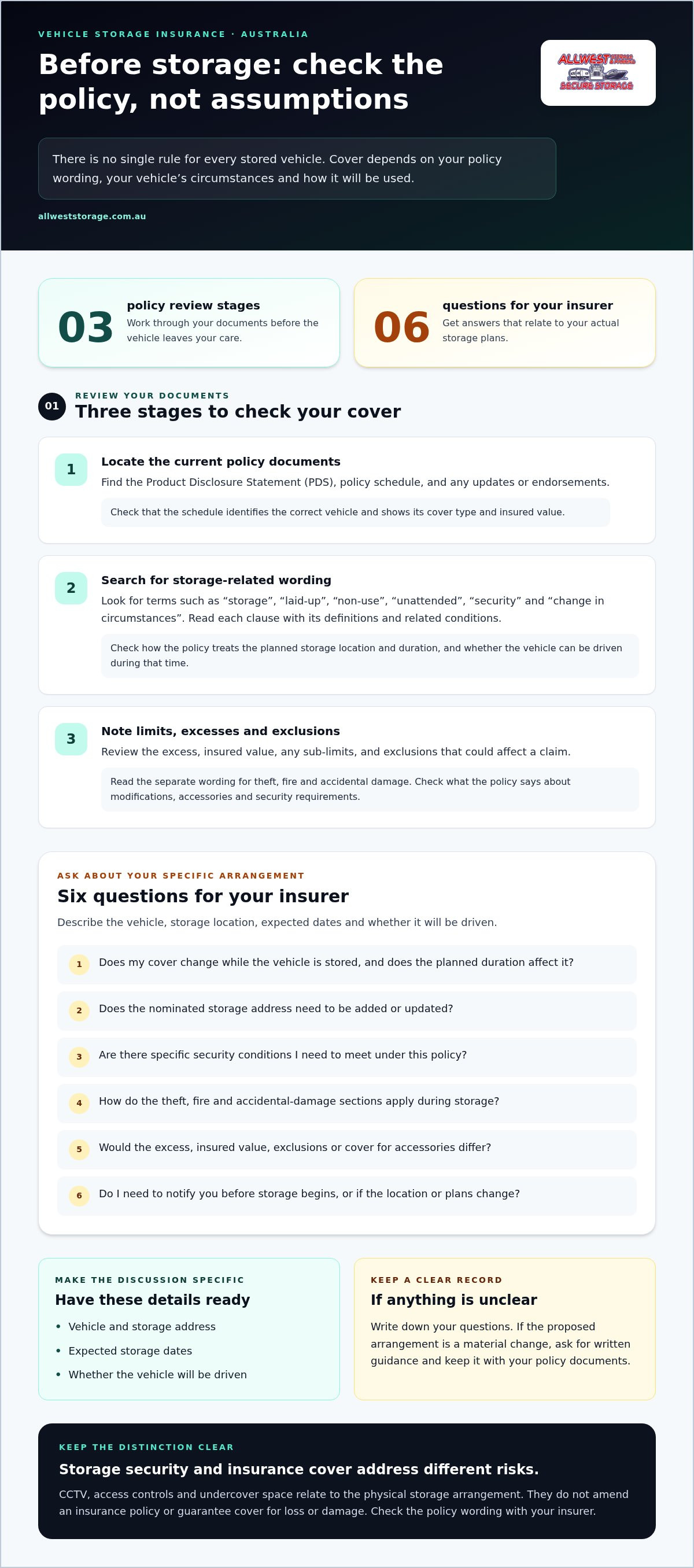
- Locate the current documents. Find the Product Disclosure Statement (PDS), policy schedule and any updates or endorsements. Confirm the schedule identifies the correct vehicle and shows its cover type and insured value. If you have multiple vehicles, check the documents for the one going into storage.
- Search for relevant wording. Look for terms such as “storage”, “laid-up”, “non-use”, “unattended”, “security” and “change in circumstances”. Read each clause in context, including its definitions and related conditions. Check whether it addresses the planned storage duration and location, and whether the vehicle can be driven during that time.
- Note financial limits and exclusions. Review the excess, insured value, any sub-limits and exclusions that could affect a claim. Read the separate wording for theft, fire and accidental damage rather than assuming all events are treated alike. Check how the policy describes modifications, accessories and security requirements, including whether unlisted items or features could affect a claim.
Write down anything that isn’t clear. If the policy names a home address, ask whether a Perth storage address needs to be recorded. If the vehicle will be stored for several months, ask whether the period affects cover or creates a notification requirement. Don’t rely on assumptions based on another vehicle or an earlier policy.
When you speak with the insurer, describe the vehicle, storage location, expected dates and whether it will be driven. Ask focused questions:
- Does my cover change while the vehicle is stored, and does the planned duration affect it?
- Does the nominated storage address need to be added or updated?
- Are there specific security conditions I need to meet under this policy?
- How do the theft, fire and accidental-damage sections apply during storage?
- Would the excess, insured value, exclusions or cover for accessories differ?
- Do I need to notify you before storage begins or if the location or plans change?
Ask for written guidance if the proposed arrangement is a material change, and keep it with your policy documents. Insurers can set different conditions, so an answer about one policy isn’t a rule for another. A written record also makes it easier to compare the policy conditions with the storage arrangement.
Record the facility type and address accurately once you know what conditions your policy requires. For vehicle storage in Perth, keep these details with your insurer’s guidance so the arrangement is easy to review.
Hardstand or undercover storage: what changes for insurance checks?
Hardstand and undercover describe different storage conditions, not different insurance policies. Neither option establishes whether a vehicle is covered. Describe the arrangement accurately and ask your insurer whether it affects your policy. Don’t assume a roof, open-air bay or facility security feature changes the terms of cover.
Facility security and insurance policy scope are separate: one describes the storage setting, the other defines cover. Allwest Storage & Parking has 24/7 CCTV monitoring. This is a facility feature, not an insurance benefit or a promise that a vehicle will be covered against loss or damage.
| Storage option | What to record for your insurer |
|---|---|
| Hardstand | The facility address and that the vehicle will be stored outdoors on hardstand. |
| Undercover | The facility address and that the vehicle will be kept in an undercover bay. |
Use the same plain description when reviewing your policy and discussing the arrangement with your insurer. Don’t describe an undercover bay as fully enclosed unless that’s accurate. Clear details let the insurer consider the actual storage conditions, rather than an assumption about what a storage label means.
How storage conditions can shape the questions you ask
For hardstand, explain that the vehicle will be outdoors. For undercover storage, say it will be in a roofed bay without implying that the bay is enclosed or offers complete protection. Then ask whether those conditions affect your policy. The insurer’s answer depends on its wording and your circumstances, so don’t presume either option will be treated in a particular way.
Keep a note of the bay type, facility address and planned storage dates alongside any insurer response. If you move from hardstand to undercover, check whether the change needs to be reported under your policy. This gives you a consistent record of the arrangement you discussed and the one you use.
What to compare when choosing a Perth storage arrangement
Consider the vehicle type, storage period and practical requirements when comparing options. A car, boat, caravan or work vehicle may have different space and access needs. Decide whether hardstand or a roofed undercover bay suits your plans, then describe that choice to your insurer. The storage option supports your risk planning; it doesn’t replace confirmation of your policy cover.
Storage duration is another practical detail to settle. If you’re weighing up how long the vehicle will be stored, this guide to long-term versus short-term vehicle storage in Perth can help you plan. Record the selected option and address, then check they match what you’ve told your insurer.
A pre-storage insurance checklist for cars, caravans, boats and work vehicles
A clear pre-storage record makes it easier to describe the vehicle and arrangement when discussing cover with your insurer. Use this checklist before storing a car, caravan, boat, truck or trailer. The vehicle storage insurance requirements Australia owners need to check can vary by policy, so keep the insurer’s response with your records.
- Review the policy. Keep the current policy schedule and Product Disclosure Statement together. Note the insured vehicle, cover type, value, excess and relevant storage conditions or exclusions.
- Ask about the planned arrangement. Record the storage address, bay type and expected period. Keep any written insurer response, especially if you need to update details or follow a particular condition.
- Document the vehicle. Note its registration, VIN, current condition and modifications. List relevant accessories separately rather than assuming they’re covered as part of the vehicle.
- Keep the storage record. Save the storage agreement or booking details with the policy documents and vehicle notes. This helps you refer back to the agreed location and arrangement.
What vehicle details and condition records should you keep?
Take clear, dated photos before storage begins. Capture each side of the vehicle, the interior, tyres, odometer and any existing marks or damage. Photograph fitted accessories or items stored with it, and make a written note of modifications. Ensure the images show the condition clearly rather than relying on a general overview.
For a caravan, include relevant fittings and visible condition details. Planning storage alongside the vehicle’s documentation can also help; see this guide to secure caravan storage in Perth.
What should businesses and truck owners document?
For a business vehicle, record who owns it, who is authorised to use it and who manages the relevant business insurance policy. Note the vehicle’s registration and VIN, along with the storage location and intended period. This gives the business a consistent record for discussions with its insurer.
List attached equipment and valuable contents separately. Don’t assume tools, removable equipment or goods carried in a truck are included under the vehicle policy. Check how each item is treated under the relevant cover and keep records identifying what is stored with the vehicle. For planning a commercial parking arrangement, see long-term truck parking in Perth.
Before storage, bring these records together: policy documents, insurer responses, vehicle details, dated condition photos, accessory and equipment records, and the storage agreement. The vehicle storage in Perth information is available alongside these details for planning your arrangement.
Choosing vehicle storage in Perth after checking your insurance
Once you’ve reviewed your policy and recorded the insurer’s guidance, use those details to assess the storage arrangement. Match the documented conditions with the facility address, bay type and planned duration. The vehicle storage insurance requirements Australia owners need to follow depend on their own policy, so base your storage choice on what you’ve discussed with your insurer, not assumptions about what a facility can cover.
How to align your storage choice with your policy information
Keep the decision practical. Note the vehicle’s dimensions, expected storage period and access needs. Compare the available arrangement with any conditions or details recorded in your policy. If the insurer’s guidance refers to a particular address or storage type, check that your planned booking matches it. If it doesn’t, clarify the difference with your insurer before relying on the arrangement.
Hardstand and undercover storage are different physical options. Neither changes or guarantees insurance cover. Describe the selected option accurately when discussing the vehicle with your insurer, and keep the storage details with your policy notes. This helps keep the guidance and actual arrangement aligned, particularly if your plans or storage period change.
What to expect from Allwest Storage & Parking in Perth
Allwest Storage & Parking provides vehicle storage in Perth for cars, boats, caravans, trucks and trailers. Hardstand and undercover options let you choose a storage setting suited to the vehicle’s size and practical requirements. The facility has 24/7 CCTV monitoring, a security feature of the site rather than an insurance benefit or promise of cover.
Short- and long-term storage arrangements are available, with flexible rates and no lock-in contracts. When comparing options, consider the intended duration, vehicle and access needs. Keep the booking details showing the location, storage type and period, then compare them with the information provided to your insurer.
As a final check, confirm that the selected arrangement matches the address and conditions you discussed, and keep the relevant documents together. If your policy guidance and storage details don’t align, clarify the difference with your insurer rather than assuming a change in storage option will alter the policy.
After completing your policy checks, explore vehicle storage options in Perth and compare the arrangements for your vehicle and plans.
Make your storage plan easy to revisit
Turn your insurer’s guidance into a simple reference for the storage period. Keep the agreed arrangement and any instructions together, and set a reminder to review them if your plans change, such as extending the stay, moving the vehicle or needing to drive it. Check whether the insurer’s advice still fits the circumstances.
The vehicle storage insurance requirements Australia owners need to consider are only one part of storage planning. Choose an arrangement that suits your vehicle and keep the details clear so you can make informed decisions if circumstances change. Storage security and insurance serve different purposes, and both matter when planning.
Ready to plan where your vehicle will be stored? Explore vehicle storage options at Allwest Storage & Parking.
Frequently Asked Questions
Does my car insurance cover my vehicle while it is in storage?
It may, but cover depends on your policy and the vehicle’s circumstances. The vehicle storage insurance requirements Australia owners need to check are set out in their policy documents, not by a general rule. A policy may treat a vehicle kept at a different address differently from one kept at home. Ask your insurer about the exact location and planned storage period, and keep its response with your documents.
Do I need to tell my insurer if I store my car long term?
Check your policy and tell your insurer if its terms require you to report a change, or if you’re unsure whether long-term storage affects cover. The storage period may matter under some policies. Give the insurer the expected start and end dates, storage address and whether the car will be driven. If the period is extended, check whether you need to update the information you provided.
Can I reduce or suspend my car insurance while my vehicle is not being driven?
Possibly, but don’t cancel or reduce cover until you understand what protection would remain and whether another policy option is available. Some insurers offer laid-up or storage cover for unused vehicles, but terms vary. Ask what happens to cover for events such as theft, fire or accidental damage, and how a change affects registration or planned road use. Get the revised terms in writing before changing your policy.
Does a storage facility’s CCTV mean my vehicle is insured?
No. CCTV is a security measure at the facility; it doesn’t provide insurance or change your policy. If an incident occurs, the insurer will consider the policy terms and circumstances of the loss. For a stored vehicle in Perth, keep the facility and storage details available when discussing cover with your insurer. Treat security arrangements and financial protection as separate parts of your planning.
Is undercover vehicle storage required by Australian insurers?
There isn’t a universal requirement that every stored vehicle must be kept undercover. An insurer may set conditions in an individual policy, so check the wording rather than assume hardstand or undercover storage is acceptable. Describe the selected arrangement accurately, including whether it is open-air or roofed. If a policy specifies a storage or security condition, ask your insurer how it applies to your planned location.
What should I photograph or record before storing my vehicle?
Take dated photos of the vehicle from each side, the interior, tyres and odometer. Capture existing scratches, dents or other damage clearly, and photograph accessories or modifications that may be relevant to your cover. Also record the registration, VIN and storage address. For a boat or caravan, include attached equipment and visible condition details. Keep the images and notes together so they’re easy to find.
Does home contents insurance cover a car or boat in commercial storage?
Don’t assume it does. Contents policies define which belongings are covered and may treat motor vehicles or boats differently from household items, especially away from home. Check the policy’s definitions, location limits and exclusions, then ask your insurer specifically about the vehicle or boat at a commercial storage address. For a boat, also review any separate marine policy you hold and confirm how it applies while the boat is stored.
Leave A Comment