
What if the biggest risk to your stored caravan isn’t rain, but moisture already inside it? Condensation from damp air and water entering through leaks can both create conditions for mould. That’s why preventing mould in stored caravan interiors starts before you park up, not just when you return for your next trip.
It’s understandable to be unsure about the best approach. Should you leave vents open, use a cover or place moisture absorbers inside? The right measures depend on controlling moisture and allowing suitable airflow, rather than relying on one product or storage choice. Undercover storage provides overhead shelter, but it doesn’t control humidity inside the caravan.
This guide explains how to clean and dry your caravan before storage, reduce trapped moisture and improve airflow around furniture and belongings. You’ll also learn what to inspect during storage and what to do if you spot signs of mould. A simple routine can help protect the interior and make it easier to get ready for your next trip.
Key Takeaways
- Learn why lingering moisture, suitable surfaces and time can create conditions for mould inside a stored caravan.
- Use a pre-storage routine to spot water ingress and prepare the interior before putting your caravan away.
- Compare ventilation, fans and moisture absorbers to choose practical measures for preventing mould in stored caravan interiors.
- Know what to look, smell and feel for during inspection visits, including signs that need prompt attention.
- Understand how hardstand and undercover storage differ, and why either option still needs a moisture-check routine.
Why mould develops inside a stored caravan
Mould is fungal growth that can form on suitable surfaces when moisture remains for long enough. It may appear on fabric, timber, seals and other caravan surfaces. Storage alone doesn’t make mould inevitable. The risk depends on whether moisture is present, whether it can settle on a surface and how long those conditions persist.
Mould can grow when moisture lingers on a suitable surface for long enough. That’s why preventing mould in stored caravan interiors means identifying moisture sources, rather than relying on a single prevention measure. A room can look clean and dry while damp remains hidden in an enclosed space.
Consider these common sources of moisture:
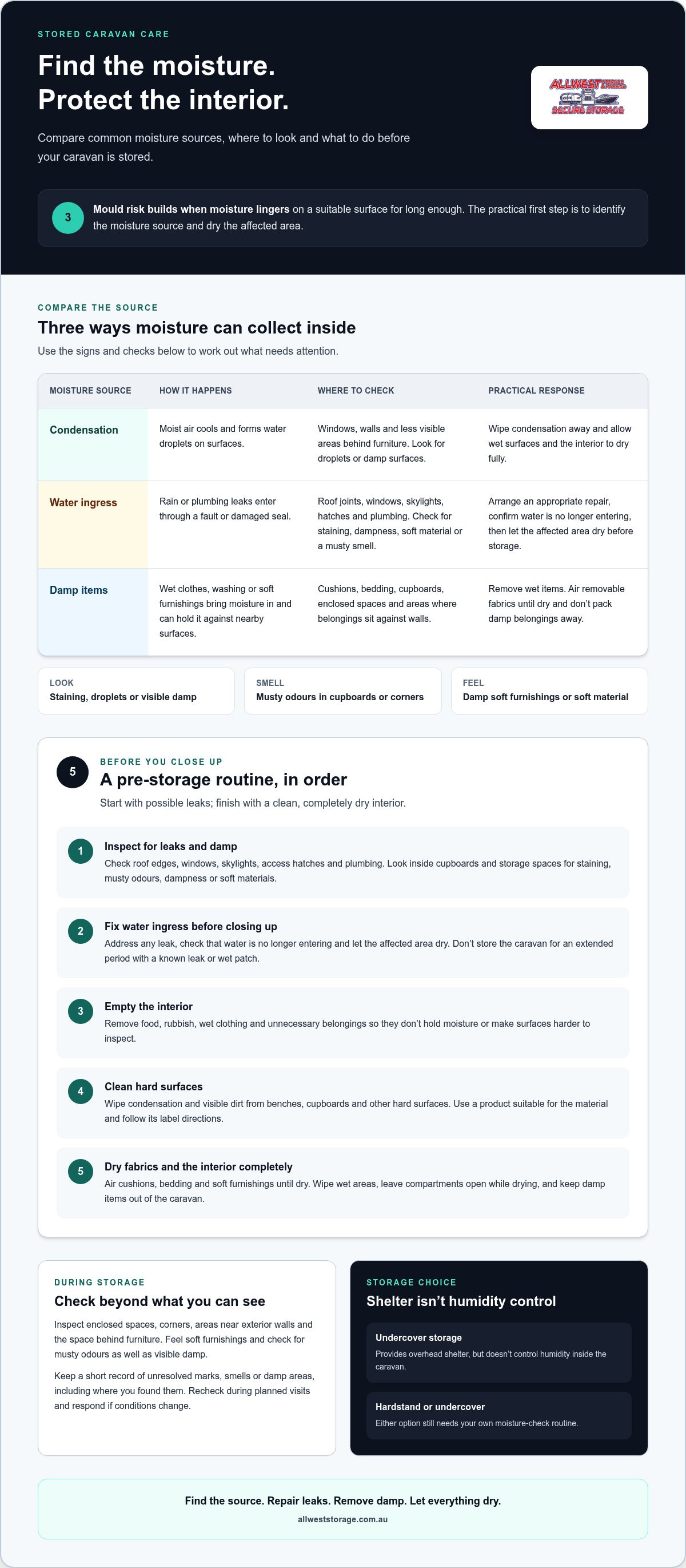
- Condensation: Moist air cools and forms water droplets on windows, walls or less visible surfaces.
- Water ingress: Rain or plumbing leaks allow water to enter through a fault or damaged seal.
- Damp items: Wet clothing, washing or soft furnishings bring moisture inside and can hold it against nearby surfaces.
Persistent damp can also affect comfort and belongings. For general information about potential health effects, see Wikipedia’s overview of Mold Health Issues. The practical first step is to reduce moisture and find its source.
Where caravan moisture comes from
Everyday use can leave moisture behind. Cooking and washing add water vapour to the air, while wet clothes, towels and damp cushions can continue releasing moisture after use. If these items stay inside before storage, they may keep nearby surfaces damp.
Temperature changes can cause condensation on windows and walls, including surfaces behind furniture. Check roof joints, window seals, hatches and plumbing for possible leaks. Look for staining, soft material or a musty smell. Condensation forms inside the caravan; a leak allows water to enter through a fault.
Why a stored caravan can still become damp
A closed-up caravan may retain moisture when air movement is limited. Damp trapped in upholstery or a cupboard can be easy to miss during a quick walk-through. Feel soft furnishings and inspect enclosed spaces, corners and areas near exterior walls, not just visible windows and benchtops.
Perth’s weather changes with the seasons, so don’t assume the interior will stay dry throughout storage. Cooler, wetter conditions and temperature changes inside the caravan can contribute to damp. Check its condition during planned visits and respond to signs of moisture rather than relying on the forecast or a dry first impression.
Prepare a caravan for storage by removing moisture first
A careful pre-storage routine helps you spot water problems and clear away moisture before the caravan is closed up. Work through the steps in order. If you find visible water ingress, address it and ensure the affected area is dry before storing the caravan for an extended period. Cleaning over a leak won’t solve its cause.
A clean, dry starting point gives moisture fewer places and less time to cause trouble. The US Environmental Protection Agency also emphasises moisture control as a key part of mould prevention in its EPA Guidelines on Mold Control.
- Inspect for leaks and damp. Check roof edges, windows, skylights, access hatches and plumbing. Look inside cupboards and storage spaces for staining, musty odours, dampness or soft materials. Note signs that need attention before storage.
- Fix water ingress before closing up. Arrange an appropriate repair for any leak, then check that water is no longer entering and the affected area has dried. Don’t seal the caravan away for an extended period with a known leak or wet patch.
- Empty the interior. Remove food, rubbish, wet clothing and unnecessary belongings. These items can attract pests, hold moisture or make it harder to inspect surfaces during storage.
- Clean hard surfaces. Wipe condensation and visible dirt from benches, cupboards and other hard surfaces. Use a cleaning product suitable for the material and follow its label directions. Cleaning removes residue, but surfaces still need to dry fully.
- Dry fabrics and the interior. Air removable cushions, bedding and soft furnishings until they’re dry before putting them away. Wipe wet areas and let them dry completely. Don’t pack damp items into cupboards or leave them pressed against walls.
Clean, dry and clear the interior
Give particular attention to places where air may not move freely, such as cupboard corners and the area beneath cushions. Remove items that can trap moisture, then leave doors or compartments open while you finish drying the interior. If a soft furnishing still feels damp, keep it out of the caravan until it has dried. A surface that looks clean isn’t necessarily ready for storage if moisture remains in the fabric or underneath it.
Check likely leak and damp spots
Keep a short record of unresolved marks, odours or damp areas, including where you found them. This makes it easier to see whether a condition changes and arrange an appropriate repair before long-term storage. Don’t cover a damp patch with belongings or assume it will dry once the caravan is closed. If home parking isn’t practical, Perth caravan storage options include hardstand and undercover arrangements. Either way, keep up your own moisture checks.
Ventilation, dehumidifiers and moisture absorbers: what helps?
There isn’t one measure that suits every stored caravan. Ventilation and fans move air, while dehumidifiers and passive absorbers collect moisture in different ways. Each has limits. For preventing mould in stored caravan interiors, use these tools alongside fixing leaks and removing damp items. Airflow can reduce stagnant pockets, but it can’t repair water ingress or dry a wet cushion tucked away in a cupboard.
- Ventilation allows air to circulate through suitable vents or openings, but exposed openings can also admit rain, dust or pests.
- Fans circulate air and can help reduce stagnant areas. They don’t remove moisture from wet materials or fix leaks.
- Electric dehumidifiers actively collect moisture, but need a suitable power supply and must be used according to the manufacturer’s instructions.
- Passive absorbers collect moisture without power. Their capacity is finite, so check and replace or empty them as directed.
How ventilation and airflow support prevention
Roof vents, window vents and fans can help keep air moving when conditions allow safe ventilation. Follow the caravan manufacturer’s guidance on vent positions and covers, and consider local weather before leaving any opening exposed. Routine airflow is not the same as leaving a window or hatch open to the elements. Keep vents unobstructed, and don’t expect a fan to remove moisture at its source.
When to consider a dehumidifier or absorber
A dehumidifier may suit a storage setup with an appropriate power source and a practical way to check and manage collected water. Read its instructions for placement, operation and emptying. Passive absorbers can be a supplementary option where power isn’t available, but they won’t deal with an active leak or soaked furnishings. Neither method guarantees a mould-free interior.
Choose a method based on the caravan’s condition and how you’ll check it during storage. A device left unattended still needs a planned inspection routine. Check that an appliance is operating as directed, or inspect the absorber and dispose of or replace it according to its label. Once a container is full, it can’t continue collecting moisture effectively.
Pair any moisture-control device with checks for new damp, condensation or musty odours. If moisture returns, investigate the source rather than simply adding another absorber. A leak, damp item or limited airflow may need a different response. Undercover parking offers overhead shelter, but it doesn’t control humidity inside the caravan, so keep checking the interior whatever the storage arrangement.
A practical stored-caravan mould prevention checklist
A repeatable inspection routine helps you catch changes before damp spreads or affects soft furnishings. Check the caravan when you put it into storage, then plan follow-up visits based on how long it will be stored, recent weather and anything you noticed at the last inspection. There’s no single interval that suits every caravan. Keep a simple record so you can compare conditions from visit to visit.
- At handover: Confirm the interior is clean and dry, remove damp belongings, and check that vents and any moisture-control devices are set up as intended.
- At each planned visit: Look for fresh water marks, condensation, musty odours or visible mould. Check cupboards, corners, mattresses and soft furnishings, not only open areas.
- Before leaving: Remove anything that has become damp, dry affected surfaces and check that an absorber or dehumidifier is being managed according to its instructions.
What to check during storage visits
Look for changes since your previous inspection. A new water mark near a window, a musty smell inside a cupboard or a damp mattress may point to moisture that wasn’t present at handover. Check behind cushions and around enclosed storage spaces. If you find condensation or damp items, remove the moisture and allow affected surfaces to dry before closing the caravan again. Note what you found and where.
Use your observations to adjust the routine. If wet weather has passed through or you’ve previously found a damp spot, give those areas closer attention at the next visit. Don’t assume that a dry exterior means the interior is dry too. For broader trip and storage planning, see this guide to long-term caravan storage preparation.
What to do if you find mould
First, look for the moisture source. Check for a leak, condensation or damp material, and address the cause before cleaning visible mould. For a small affected area, follow the cleaning product’s label and use suitable protective measures, such as gloves and good ventilation. Avoid spreading mould to nearby furnishings, and don’t mix cleaning products.
Extensive growth, mould that keeps returning or health concerns need more than a quick wipe. Seek qualified remediation advice rather than attempting a larger clean-up yourself. Once the source has been dealt with, continue checking the affected area during storage. Note its location and any recurrence to help track whether the problem has been resolved.
Consistent checks are part of preventing mould in stored caravan interiors, but they work best alongside moisture control and a suitable storage arrangement. If you need a place to store your caravan in Perth, explore caravan storage options and keep your own inspection routine in place.
Choose caravan storage that fits your mould-prevention routine
Storage location affects how much weather your caravan is exposed to, but it doesn’t manage moisture inside the vehicle. An undercover bay provides overhead shelter, while hardstand storage leaves the caravan more exposed to weather. Neither option controls interior humidity or replaces your own checks, airflow and moisture-control routine.
Allwest Storage & Parking provides hardstand and undercover caravan storage in Perth, with short- and long-term arrangements. Choose an option that fits your storage needs and plan how you’ll maintain the caravan during that period. For preventing mould in stored caravan interiors, schedule inspections and moisture checks as carefully as the parking arrangement itself.
Undercover or hardstand storage: what the choice changes
Undercover storage can reduce direct exposure to rain and sun from above, while a hardstand bay is open to weather. These options change external exposure, not the conditions inside the caravan. Even under cover, condensation or an existing leak can leave surfaces damp. Consider how long the caravan will be stored when planning inspections and upkeep. This guide to long-term and short-term vehicle storage can help you think through the difference in planning.
Allwest’s 24/7 CCTV monitoring is a security feature. It doesn’t detect or prevent moisture, so it shouldn’t replace interior checks. Keep those needs separate: select a parking arrangement that suits the caravan, then maintain your own routine for monitoring damp and ventilation.
Make storage visits part of the prevention plan
Before storage, decide how you’ll keep track of the caravan and when you can inspect it. Match the routine to the planned storage period, recent weather and any moisture issues you’ve noticed. There’s no universal visit interval that suits every caravan. For a longer storage period, plan to check the interior rather than leaving it unchecked until your next trip.
During each visit, inspect areas where moisture may be easy to miss, including cupboards, corners and soft furnishings. Check for new water marks, condensation, musty odours or damp items. Remove anything that has become wet, and dry affected surfaces before closing up. Keep a brief record of what you checked and any changes. This makes it easier to notice recurring damp and adjust your routine.
If you need a Perth base for your caravan between trips, Allwest’s flexible short- and long-term storage arrangements offer hardstand and undercover options. Storage provides a place to keep the vehicle; mould prevention still depends on moisture control and regular owner inspections. Explore caravan storage in Perth as you plan where to park and how to keep up your checks.
Set up a routine that keeps your caravan ready
Make your next step a simple storage plan. Decide when you’ll inspect the caravan, what you’ll check and how you’ll respond if you find damp. Keep a note of any areas that need attention, so each visit has a clear focus. A consistent routine makes preventing mould in stored caravan interiors an ongoing part of ownership, rather than a last-minute task before your next trip.
Choose a storage arrangement that fits how long the caravan will be away and how you’ll keep up those checks. Allwest Storage & Parking offers hardstand and undercover options, with flexible short- and long-term arrangements and 24/7 CCTV monitoring. These features support storage and security, while moisture prevention remains part of your own care routine.
Ready to plan where your caravan will stay between trips? Explore caravan storage options in Perth and take the next step towards a well-organised storage period. With a practical routine in place, you can look forward to getting back on the road with greater confidence.
Frequently Asked Questions
Can a caravan develop mould while it is in storage?
Yes, a caravan can develop mould in storage if moisture remains inside. A small damp patch beneath a mattress or inside a cupboard may go unnoticed until you open the caravan again. Check enclosed areas as well as visible surfaces, particularly if soft furnishings or belongings stayed inside. Storage doesn’t automatically cause mould, but a closed interior can conceal developing damp.
How do I prevent mould in a caravan during long-term storage?
To prevent mould in a caravan during long-term storage, start with a dry interior and keep a record of its condition. Set reminders to inspect it, then adjust your checks if damp returns or the weather changes. Note where you find condensation or an unusual odour. Comparing visits can help you spot a recurring issue that a one-off clean might miss.
Should I leave caravan windows open to prevent mould?
Not necessarily. Leaving windows open can let rain, dust or pests into the caravan, depending on the weather and where it’s parked. Follow the manufacturer’s advice for window positions, roof vents and covers rather than leaving openings exposed by default. Use designed ventilation where appropriate, and check after conditions change. Airflow can support a prevention plan, but it isn’t a reason to leave the interior unprotected.
Do moisture absorbers stop mould in a stored caravan?
No. A moisture absorber can collect some moisture, but it can’t guarantee that mould won’t develop. It won’t fix a leak or dry wet upholstery, and its capacity is limited. Follow the product directions for placement and replacement, and check it during planned visits. If it has filled or needs replacing, deal with that promptly and investigate persistent damp rather than relying on another absorber alone.
Is an undercover storage bay enough to prevent caravan mould?
No. An undercover bay provides overhead shelter, but it doesn’t regulate humidity inside your caravan. Interior condensation, a leak or damp belongings can still create a moisture problem. Think of undercover parking as a way to change the caravan’s exposure to weather, not as a mould-control measure. Continue your own checks and moisture routine, whether the caravan is parked undercover or on hardstand.
What should I do if I find mould in my stored caravan?
Find and address the moisture source before cleaning the affected area. For a small patch, follow the cleaning product’s directions and use suitable protective measures. Avoid disturbing extensive growth, and seek qualified remediation advice if mould covers a large area, keeps returning or raises health concerns. Record where you found it and check the area again after the underlying moisture issue has been dealt with.
Does Perth weather affect mould prevention in a stored caravan?
Yes, changing weather can affect the checks your caravan needs. After wet weather or during cooler conditions, it may make sense to inspect sooner, especially if you’ve previously found condensation or damp. Perth weather isn’t constant throughout the year, so don’t rely on a single dry-day check as proof the interior will stay dry. Use recent conditions and past observations to guide your inspection plan.
Leave A Comment