
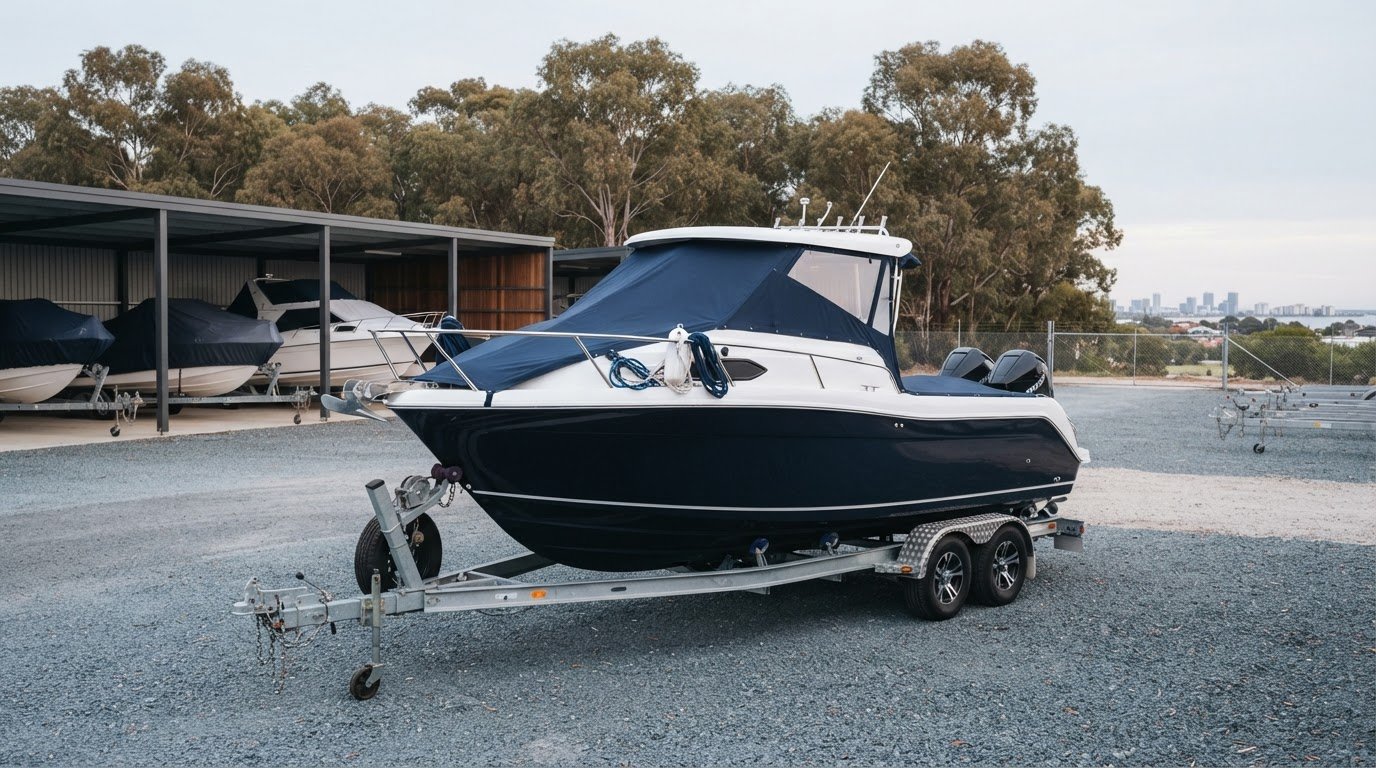
Preparing a boat for winter storage Perth owners can plan for means managing exposure to rain, damp, wind and sun, rather than focusing only on severe freezes. A suitable cover or storage setup matters, but it’s only one part of keeping avoidable problems at bay.
It’s understandable to be unsure which systems need attention before a boat is laid up, especially when the right steps vary by vessel and engine. This guide offers a practical sequence for preparing your boat, with the manufacturer’s instructions in mind.
Work through the key tasks, from cleaning and drying to checking onboard systems and securing the boat for its storage period. Then compare hardstand and undercover storage against your boat, trailer and exposure needs. Allwest Storage & Parking offers both options in Perth, with short- and long-term storage available, so you can plan where your prepared boat will stay until it’s time to get back on the water.
Key Takeaways
- Use a practical checklist for preparing a boat for winter storage in Perth, adapted to your vessel and its planned time off the water.
- Separate routine owner checks from engine or system work that calls for a qualified marine professional, and follow the vessel and engine manuals.
- Clean and dry the hull and interior before covering, and include the trailer in your pre-storage checks.
- Compare hardstand and undercover storage by exposure, cover needs, access and your priorities for the storage period.
- Before storing the boat, note completed work, remove valuables and keep manuals or service notes where you can find them.
Why preparing a boat for winter storage in Perth still matters
What should you do before your boat sits unused through a Perth winter? Start with a straightforward preparation plan, not a full maintenance manual. Identify checks that suit your vessel, reduce avoidable storage-related problems and choose a setup that matches the boat’s exposure and lay-up period.
Winter boat preparation means cleaning, checking and securing a vessel before it is left unused, following the manufacturer’s instructions for its engine and equipment. A practical plan takes account of local weather, the boat’s design and where and for how long it will be stored.
Perth winters are generally mild, but seasonal preparation still has a purpose. Rain, damp conditions and changing temperatures can affect a boat’s storage environment. They don’t guarantee damage, but collected water, trapped moisture or unattended systems can create issues worth reducing. Winterization of boats offers useful background on cold-weather preparation. Perth owners should follow guidance for their own vessel and local conditions rather than assume it needs the same treatment as a boat stored in a freezing climate.
What changes for a boat during Perth’s winter lay-up?
When a boat is used less often, there are fewer chances to notice a developing problem. A loose fitting, damp cabin or battery issue may go unchecked for weeks or months. Inspect the boat before storage and decide how it will be kept dry, ventilated and secure for the period ahead. These are sensible considerations, not predictions that a particular problem will occur.
Exposure depends on where the boat is kept. A vessel stored outdoors may face more direct rain and wind than one kept undercover. A boat near the coast may also be exposed to salt in the air. Consider the actual storage location when deciding what to clean, cover or inspect. A cover that sheds rain but traps moisture calls for a different approach from an uncovered boat exposed to the elements.
Which boats and storage periods need a preparation plan?
All boats benefit from preparation, but the tasks differ. For a trailer boat stored ashore, consider the trailer and how the hull is supported. A vessel kept afloat has different storage conditions and checks, so don’t treat the two situations as interchangeable.
Base your plan on the vessel’s design, engine, onboard equipment and expected lay-up duration. A short pause between outings may call for a different approach from a longer off-season stay. Use the owner’s manual and engine manufacturer’s instructions for model-specific requirements, particularly for fuel, cooling and other systems. If a task falls outside your experience, separate it from routine owner checks and seek help from a qualified marine professional. Preparation is a sequence of relevant checks, not a one-size-fits-all service schedule.
Prepare the boat’s engine, batteries and onboard systems step by step
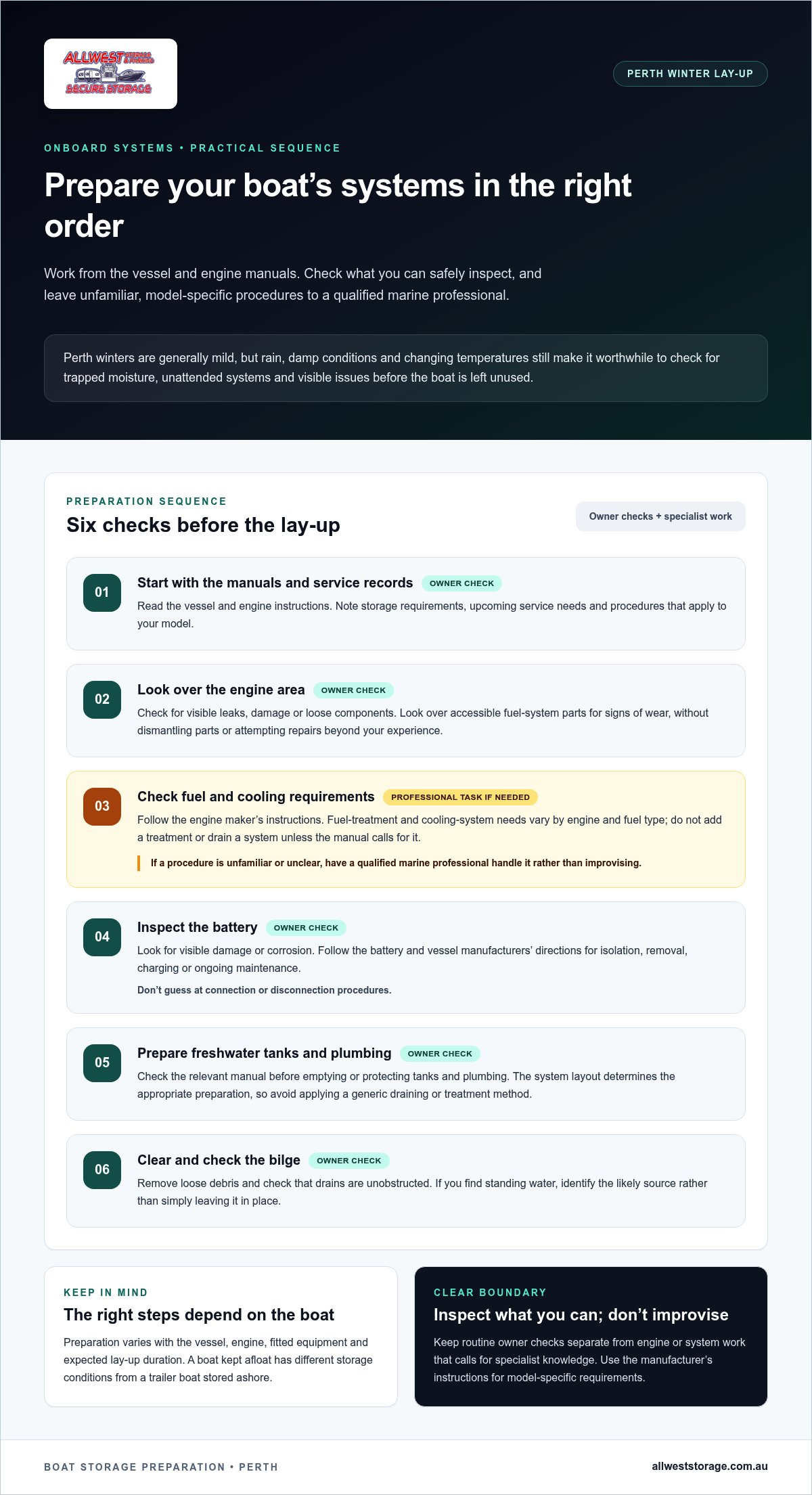
Work through the systems in a set order, starting with the vessel and engine manuals. Keep owner checks separate from work that needs specialist knowledge. Winterisation steps vary by engine and vessel model. A process suited to one boat may not suit another, so don’t apply fuel, cooling or battery instructions as universal rules.
This sequence helps you identify what you can inspect and where a qualified marine professional may be needed. It’s a practical guide, not a substitute for model-specific service instructions.
Check the engine and fuel system before the lay-up
Start with service timing and the manufacturer’s storage recommendations. Fuel treatment, cooling-system care and service requirements depend on the engine and fuel type. If a procedure is unfamiliar or the manual’s instructions aren’t clear, leave that work to a qualified marine professional rather than improvising.
- Owner check: Read the engine and vessel manuals. Note storage instructions, upcoming service requirements and steps that apply to your model. Check service records to identify work due before the boat is laid up.
- Owner check: Inspect the engine area for visible leaks, damage or loose components. Look over accessible fuel-system parts for signs of wear, but don’t dismantle components or attempt repairs beyond your experience.
- Professional task if needed: Follow the engine maker’s requirements for fuel and the cooling system. Fuel-treatment needs differ by fuel type and engine, so don’t add a treatment or drain a system unless the manual calls for it. Have a qualified marine professional handle model-specific procedures you’re not equipped to do.
Protect batteries, freshwater and bilge systems
Battery and water-system instructions vary with the boat’s design and fitted equipment. Check each system against the relevant manual before changing connections, draining tanks or carrying out maintenance. These checks matter whether the boat is ashore or kept afloat, but the steps must suit the vessel.
- Owner check: Inspect the battery’s general condition and look for visible damage or corrosion. Follow the battery and vessel manufacturers’ instructions for isolation, removal, charging or ongoing maintenance. Don’t guess at connection or disconnection procedures.
- Owner check: Empty or protect freshwater tanks and plumbing according to the vessel’s design and manual. The system’s layout determines how it should be prepared, so avoid applying a generic draining or treatment method.
- Owner check: Clear loose debris from the bilge area and check that drains are unobstructed. If you find standing water, identify the likely source rather than simply leaving it in place. Record any issue that needs attention before the next outing.
Once the systems are checked, note completed work and outstanding tasks alongside your manuals or service records. Then consider boat storage in Perth that suits your lay-up period.
Protect the hull, interior and trailer before storing your boat
Once the engine and onboard systems are addressed, prepare the boat’s exterior, interior and trailer. Cleaning removes dirt and salt where relevant, while drying surfaces before covering helps reduce the chance of moisture becoming trapped under the cover or in enclosed spaces.
When preparing a boat for winter storage in Perth, account for the boat’s materials, location and cover. Follow the vessel manufacturer’s care instructions, especially when choosing cleaning products or handling particular finishes.
Clean and dry the hull, deck and interior
Remove loose gear and personal items before washing. This gives you access to surfaces where dirt or moisture can collect and prevents belongings being left inside during storage. Rinse away salt and grime where appropriate, then allow the hull and deck to dry before covering the boat.
- Clean accessible hull and deck surfaces using products and methods suited to the vessel’s materials.
- Remove loose items, rubbish and personal belongings from the cockpit and cabin.
- Check lockers, cushions and enclosed areas for dampness. Let them dry before closing or covering the boat.
Don’t overlook small enclosed spaces. A cushion may still be damp underneath even when its top feels dry, and a locker can retain moisture after the rest of the interior has dried. Check these areas directly rather than assuming they’re ready to close. If the boat has been exposed to coastal salt, rinse it where suitable for its finish and fittings.
Set up the cover and check the boat trailer
Choose a cover that fits the boat and can be arranged to shed water without sealing in damp air. Check how it sits around the hull and deck. A sagging section can collect rainwater, while a cover that restricts airflow may leave moisture trapped beneath it. Fit and ventilation are practical considerations, not a guarantee against weather exposure.
- Secure the cover so it remains in place and directs water away from areas where it could pool.
- Allow suitable airflow, following the cover and vessel guidance for your setup.
- Inspect trailer tyres, lights and visible components before parking the boat.
- Use the trailer and tyre manufacturers’ recommendations for an extended stationary period.
For trailer checks, look for visible damage or changes that may need attention before the boat is moved again. Don’t rely on a quick glance alone if something appears worn or damaged. Follow the relevant manufacturer’s guidance rather than guessing at tyre care or trailer adjustments.
A clean, dry boat under a well-fitted, ventilated cover is a sensible foundation for off-season care, though it can’t remove every risk from the weather. Record any issues you’ve noticed so they’re not forgotten when it’s time to use the boat again.
Choose hardstand or undercover boat storage in Perth
After preparing your boat for winter storage, match the setting to the vessel, trailer and level of exposure you’re comfortable managing. Hardstand and undercover storage offer different conditions. Neither removes every weather, corrosion or security risk.
Use this comparison to weigh the practical differences. The right choice depends on your boat’s dimensions, cover setup, planned storage period and priorities.
| Consideration | Hardstand storage | Undercover storage |
|---|---|---|
| Exposure | Open-air setting, with greater direct exposure to rain, wind and sun. | Overhead shelter changes the level of exposure, but the space isn’t sealed or fully weatherproof. |
| Cover needs | A suitable cover is an important part of the owner’s preparation plan. | A cover may still be useful, depending on the boat, conditions and owner’s preference. |
| Access and fit | Consider the boat and trailer dimensions, parking arrangement and access needs. | Consider whether the boat and trailer fit the space and suit the owner’s plans for access. |
| Owner priorities | May suit owners who are comfortable managing outdoor exposure and cover arrangements. | May suit owners who value overhead shelter as part of their storage choice. |
When might hardstand storage suit a boat owner?
Hardstand is an open-air option. Plan for direct exposure and arrange a suitable cover that fits the boat and sheds water while allowing appropriate airflow. Check that the trailer setup is practical for the space, and consider the overall length and width of the boat-and-trailer combination. This option may suit owners who prefer outdoor storage and are prepared to manage the cover themselves.
Think about the boat’s location during storage and how much exposure you want to manage. A cover can form part of that plan, but it can’t guarantee protection from all weather or prevent corrosion.
When might undercover storage be worth considering?
Undercover storage provides overhead shelter, changing the boat’s exposure compared with an open-air hardstand space. It isn’t an enclosed or climate-controlled environment, and conditions can still vary. Consider the vessel’s dimensions, trailer arrangement and how the space fits your storage needs. You may prefer the overhead cover while still planning suitable protection for the boat.
Allwest Storage & Parking offers both formats, with short- and long-term boat storage in Perth. Compare the practical differences with your priorities, then view Allwest’s boat storage options and choose a suitable next step for your prepared boat.
Finish your winter checklist and arrange boat storage in Perth
Before the boat is put away, review the work you’ve completed. A brief record helps you track outstanding tasks and gives you a useful reference when preparing to use the boat again. Confirm the essentials, note anything that needs follow-up, and choose storage that suits the boat and expected lay-up period.
Use a final pre-storage checklist
Use this last pass to confirm the preparation is complete. Follow your vessel and equipment manufacturers’ instructions, especially when a step depends on the boat’s design.
- Confirm the boat is clean and dry, with its cover arranged appropriately for the storage setting.
- Check that the hull, interior and trailer are ready for the planned period ashore.
- Make sure personal gear and valuables have been removed.
- Secure access points in line with the vessel’s guidance.
- Write down the date, checks completed and any work still needed.
- Keep manuals, service notes and relevant records together so they’re easy to find later.
A dated note can be a short list of completed checks and anything you chose to leave for follow-up. Record unusual observations too, so you don’t have to rely on memory after the boat has been stored for some time. Keep the notes with the manuals or service records, rather than leaving important paperwork on board.
Plan the storage period and access you need
Estimate how long the boat is likely to be laid up, then match that period to the storage arrangement. Allwest offers short- and long-term boat storage in Perth, with hardstand and undercover options. Hardstand is open-air, so consider how your cover plan suits that exposure. Undercover storage provides overhead shelter, but isn’t sealed or climate-controlled. The boat’s dimensions and trailer setup also matter when deciding which format is practical.
Think about what you may need to access during storage and how often. Keep essential documentation and your own records organised, and remove valuables before the boat is left. Allwest’s facility has 24/7 CCTV monitoring. This is a feature of the premises, not a guarantee that incidents or damage cannot occur.
With your preparation recorded and the storage period in mind, choose a space that fits your boat and cover plan. Explore boat storage with Allwest and compare the hardstand and undercover options for your off-season needs.
Make your return to the water easier to plan
Before the off-season gets underway, decide when you’d like to use the boat again and note when to review its condition before the first outing. A calendar reminder can bring your records back to hand and give you time to address outstanding work. That small step makes storage part of a practical plan for the next boating season.
A checklist for preparing a boat for winter storage in Perth is most useful when it reflects your vessel and intended lay-up period. Keep the plan easy to revisit. Record changes to your storage arrangements or return date, and use the vessel’s manuals when planning checks ahead of relaunch.
Choose a storage arrangement that fits your plans. Explore boat storage options in Perth with Allwest and find a suitable place for your boat during the off-season. A clear plan now can make getting ready for the next trip more straightforward.
Frequently Asked Questions
When should I prepare my boat for winter storage in Perth?
Start before the boat’s planned lay-up, leaving time for checks and any recommended servicing. The ideal timing depends on your boating plans, vessel and the work required. Factor in the forecast and choose a suitable window for washing and drying rather than leaving these jobs until the last available dry spell.
Should I winterise an outboard motor in Perth?
Follow the outboard manufacturer’s storage instructions, even if Perth’s winter feels mild. Requirements can differ with engine model, fuel system and storage duration. Check the manual for applicable guidance on flushing, fuel and servicing, and note any steps specific to your outboard. If you’re unsure how to carry out a procedure, don’t guess. Ask a qualified marine mechanic to handle the technical work.
Can I leave fuel in my boat during winter storage?
Whether to leave fuel in the tank depends on the engine, fuel type and how long the boat will be unused. Check the engine maker’s instructions before adding stabiliser, draining fuel or changing the tank level. Avoid copying another owner’s approach, as their engine may have different requirements. Write down what you did and keep the note with the boat’s service records for reference before the next start-up.
Should I remove my boat’s battery during storage?
Not necessarily. The right approach depends on the battery type, boat equipment and manufacturer guidance. Consider whether equipment such as an alarm or bilge pump relies on battery power before deciding what to isolate. If you disconnect or remove the battery, follow the correct procedure for your setup. Record any settings that may need restoring, and keep that note with the manuals for when the boat returns to use.
Is a boat cover enough protection for winter storage?
A cover can help shield a boat from exposure, but it isn’t the whole storage plan. Check that it fits the boat, sheds water and allows suitable airflow. A loose or poorly arranged cover may collect water or trap moisture, so follow the cover maker’s fitting instructions. Consider the storage position too: open-air hardstand and undercover settings have different exposure, and neither is completely weatherproof.
What should I do before using my boat again after winter storage?
Before launching, follow the recommissioning instructions for your boat and engine. Check systems affected by the lay-up, including the battery, fuel, cooling and bilge, and inspect safety equipment and the trailer as applicable. Compare your findings with the notes you made before storage. If you spot deterioration or an engine or onboard-system issue that needs technical attention, have a qualified marine professional assess it before the first trip.
Leave A Comment