

Leaving your boat on a suburban Perth nature strip is often a countdown to a council fine or sun-damaged gelcoat. Finding exactly where to store a boat in Perth shouldn’t feel like navigating a gale without a compass. You’ve likely realised that your driveway is too cramped and local council bylaws are making street parking nearly impossible. It’s a genuine worry to watch your high-value asset sit exposed to the elements or risk vandalism because there isn’t enough room at home.
We know that your priority is keeping your vessel in peak condition for your next trip to Rottnest. This guide provides a clear path to choosing the right facility while protecting your upholstery from Perth’s harsh UV rays. You’ll discover the most secure storage types available. We provide an expert checklist to ensure your boat doesn’t deteriorate while it’s out of the water. We’ll also cover security features, flexible contract terms, and essential maintenance steps to take before handover.
Key Takeaways
- Compare different storage options to determine the safest and most cost-effective place for where to store a boat in Perth.
- Follow a professional preparation checklist to protect your motor, fuel system, and hull from long-term deterioration.
- Understand the impact of Perth’s high UV index on your vessel and how undercover storage prevents upholstery and gelcoat damage.
- Identify critical security features, such as 24/7 CCTV and perimeter fencing, that offer superior protection compared to a residential driveway.
- Discover the advantages of flexible, no lock-in contracts that provide the freedom to store your boat only when you need it.
Types of Boat Storage in Perth: Comparing Your Options
Choosing exactly where to store a boat in Perth depends on your vessel’s size and how often you hit the water. Many owners start by using their own property, but Perth’s growing boating community has led to more diverse professional solutions. Each method offers different levels of protection, cost, and convenience.
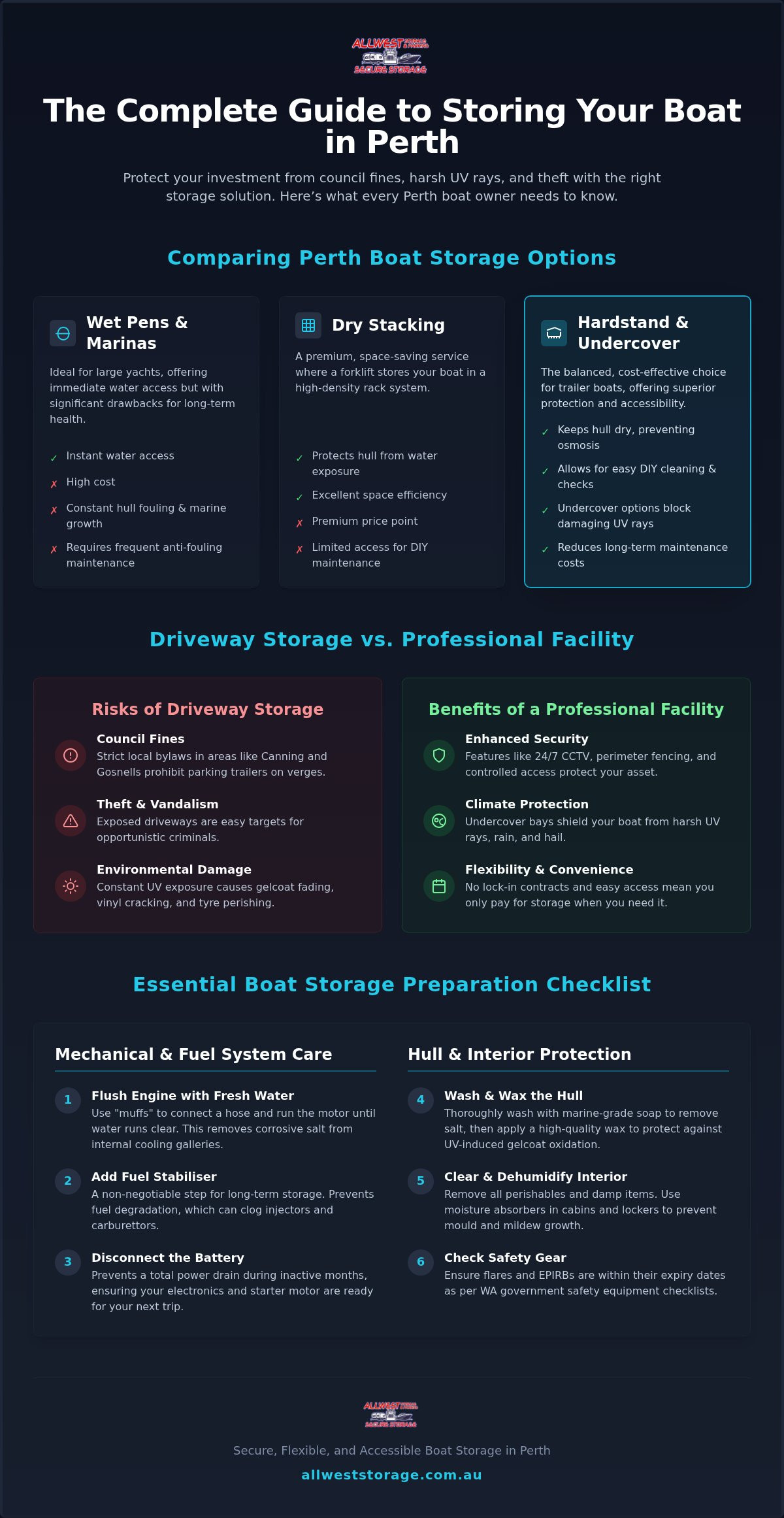
- Wet Pens and Marinas: These are suitable for large yachts that aren’t easily trailered. They offer immediate water access but are expensive. Constant water exposure also leads to hull fouling and requires regular anti-fouling maintenance.
- Dry Stacking: A forklift moves your boat into a high-density rack. This is a premium service that saves space. However, it often limits your ability to perform DIY maintenance and usually comes with a higher price tag.
- Professional Hardstand and Undercover Storage: This is the balanced choice for trailer boats. It keeps the hull dry and secure while allowing you to perform your own cleaning and basic checks.
Driveway vs. Professional Facility
Storing a boat at home seems like the cheapest option, but it often carries hidden costs. Many Perth local governments, including the City of Canning and the City of Gosnells, have strict bylaws regarding trailers parked on verges. Parking a large vessel on the street can lead to council fines or complaints from neighbours if it obstructs sightlines.
Security is another major concern for residential storage. Driveways are easy targets for opportunistic theft and vandalism. Beyond security, the environmental toll is significant. Constant exposure to the elements causes gelcoat fading and tyre perishing. Moving your vessel to a dedicated facility removes these risks and keeps your driveway clear for daily use.
The Hardstand Advantage for Trailer Boats
Hardstand storage consists of secure, land-based bays specifically designed for boats on trailers. It is a fundamental part of boat storage and preparation in Western Australia. By keeping the boat out of the water, you prevent osmosis and marine growth on the hull. This significantly reduces long-term maintenance costs compared to keeping a boat in a pen.
For those seeking maximum protection, premium undercover bays are the best investment. These physical structures shield your boat from Perth’s intense UV rays. This prevents vinyl seats from cracking and keeps electronics from overheating. If you own a large trailer boat over 6 metres, look for facilities with wide turning circles. This ensures you can park and retrieve your vessel without the stress of tight manoeuvres.
The Essential Boat Storage Preparation Checklist
Proper preparation is what separates a boat that is ready for summer from one that requires an expensive trip to the mechanic. Once you have decided where to store a boat in Perth, you must follow a methodical shutdown process. Neglecting these steps leads to fuel degradation, flat batteries, and seized components. Taking the time now saves you both money and frustration when the snapper start biting again.
Mechanical and Fuel System Care
Saltwater is highly corrosive. Always flush your outboard motor with fresh water to remove salt deposits from the internal cooling galleries. Connect a set of “muffs” to the water intake and run the engine until the water exiting the tell-tale is clear and fresh. While the engine runs, use this time to check for any visible leaks or unusual vibrations in the block.
Modern fuels like E10 or 95 unleaded begin to break down in as little as 30 days. Adding a high-quality fuel stabiliser is non-negotiable for long-term sits. It prevents the fuel from turning into a gummy residue that clogs injectors and carburettors. Finally, disconnect the battery to prevent a total drain during the winter months. This simple step ensures your electronics and starter motor are ready to fire up without a jump-start.
Hull and Interior Protection
A simple hose-down is insufficient for long-term storage. Salt spray clings to every surface and accelerates corrosion on stainless steel fittings and aluminium rails. Wash the hull thoroughly with marine-grade soap and apply a high-quality wax to create a protective seal. Gelcoat oxidation is a chemical reaction where the hull’s protective resin breaks down due to UV exposure, resulting in a chalky, dull finish. A thick wax coating acts as a vital barrier against this process.
Inside the vessel, remove all perishables and damp life jackets to prevent mould growth. Use moisture absorbers in the cabin or storage lockers to manage humidity levels. This “Mould Prevention Strategy” protects your upholstery and keeps the boat smelling fresh. While you’re organising the interior, it’s a good time to consult the WA government safety equipment checklist to ensure your flares and EPIRB are still within their expiry dates.
Don’t forget the trailer. Check the tyre pressure and grease the wheel bearings before parking up. This prevents the bearings from seizing due to moisture ingress while the trailer is stationary. If you’re looking for a secure space with enough room to complete these final checks, hardstand storage provides the stability and accessibility you need to prepare your boat properly.
Protecting Your Vessel from the Perth Climate
Perth’s climate presents a unique set of challenges for boat owners. While the previous section focused on mechanical readiness, your choice of where to store a boat in Perth must also account for extreme environmental exposure. Western Australia experiences some of the highest solar radiation levels in the country. Without adequate protection, a vessel’s resale value can plummet in just one or two seasons.
The Impact of WA Sun on Marine Materials
The UV index in Perth frequently reaches extreme levels of 11 or higher during the summer months. This intense radiation causes rapid degradation of marine-grade plastics and synthetic rubbers. Vinyl seats are particularly vulnerable. Constant solar heat leaches the plasticisers from the material, leading to brittle surfaces that crack under the weight of a passenger.
Undercover storage acts as a primary defence against this damage. By removing the boat from direct sunlight, you effectively double the lifespan of your upholstery and dashboard components. This protection also extends to your electronics. High internal temperatures in an exposed cabin can cause LCD screens to fail and delicate wiring to become brittle. Choosing a shaded bay ensures these high-value components remain functional and reliable.
Choosing the Right Cover for Hardstand Storage
If you opt for open-air hardstand storage, a professional boat cover is essential. However, not all covers are suitable for the Swan Coastal Plain. You must find a balance between waterproof protection and breathability. A completely airtight cover traps humidity inside the vessel. On a 40-degree February day, this creates a “greenhouse effect” that can warp plastic fittings and encourage mould growth. Select a cover with integrated vents to allow hot air to escape.
- Breathable Fabrics: These allow moisture to evaporate while blocking dust and UV rays.
- Heavy-Duty Straps: These are vital for securing the cover against the “Fremantle Doctor” and sudden summer gales.
- Support Poles: Use these to create a “tent” shape that prevents water pooling during winter downpours.
Secure fitment is critical. Loose fabric will flap in the wind, which acts like sandpaper against your hull’s gelcoat. Ensure all tie-down points are tensioned correctly and check them periodically. A well-fitted cover combined with a secure facility provides a robust shield against the elements, keeping your boat ready for the water at a moment’s notice.
Evaluating Security and Accessibility in Perth Facilities
Security and accessibility are the two most critical factors when deciding where to store a boat in Perth. A facility might be affordable, but it offers little value if your vessel is at risk or if you cannot access it when the weather is perfect for a dawn trip. You need a location that balances robust protection with the logistical ease of getting your trailer on the road quickly.
Security Features to Demand
True security goes beyond a simple padlock on a front gate. High-quality facilities invest in 24/7 CCTV monitoring with digital recording. This provides a continuous, timestamped record of all site activity, which is far superior to basic gated access. Industrial-grade perimeter fencing and bright, sensor-activated LED lighting are also essential. These features act as a powerful deterrent to unauthorised entry and provide peace of mind during the off-season. A “Reliable Guardian” approach to asset protection means every security layer is maintained with methodical precision to ensure your vessel remains exactly as you left it.
Accessibility and Manoeuvrability
Location strategy is often overlooked until you are stuck in morning traffic with a heavy trailer. Choosing boat storage in Maddington is a strategic move for many Perth boaties. The suburb’s proximity to Roe Highway and Tonkin Highway allows you to bypass congested local streets. This saves significant time and fuel when heading to major boat ramps like Woodman Point, Hillarys, or Deep Water Point. Before signing a contract, check the facility’s access hours. If you are planning a 4:00 AM dawn raid at Rottnest, you need a facility that accommodates early departures without restricted gate times.
- Wide Turning Circles: Essential for navigating large trailers without the risk of clipping other vessels.
- Spacious Bays: Look for bay widths that allow you to reverse in and park without unnecessary stress.
- Highway Proximity: Reduces the “stop-start” driving that puts extra strain on your towing vehicle.
Transparency in Storage Agreements
Many traditional storage providers try to lock owners into long-term leases or complex club memberships. This is often unnecessary for seasonal boaties who only need professional storage during the winter months. You should look for facilities that offer no lock-in contracts. This flexibility allows you to pay only for the time you actually use, providing a more cost-effective solution than a rigid annual commitment. Always confirm that there are no hidden fees or lengthy notice periods before you commit to a bay.
If you need a dependable, no-nonsense solution for your vessel, secure your boat storage bay at our Maddington facility and enjoy the freedom of flexible, high-security terms.
Why Flexible Storage in Maddington is the Smart Choice
Choosing exactly where to store a boat in Perth often comes down to a choice between overpriced coastal pens or risky residential driveways. Allwest Storage & Parking in Maddington provides a middle ground that prioritises both security and financial flexibility. Our facility is designed for boaties who value a straightforward service without hidden complexities or long-term debt. By moving your vessel off the street, you immediately eliminate the risk of council fines and opportunistic theft.
The Benefit of No Lock-In Contracts
Seasonal boaties shouldn’t pay for storage they don’t use. Many coastal marinas and yacht clubs require fixed annual fees or long-term memberships just to secure a spot. This is a significant waste of money if you spend four months of the year with your boat on the water or at a holiday home. We offer flexible weekly and monthly rates that allow you to store your vessel only when it’s necessary. This “Straight-Talker” approach ensures you maintain control over your budget throughout the year.
The value of Maddington storage is clear when compared to premium coastal facilities. While you might be further from the ocean, the cost savings are substantial. These savings can be better spent on fuel for your next trip or upgrading your onboard electronics. Our facility provides both cost-effective hardstand bays and premium undercover storage. This range of options ensures that whether you have a small runabout or a high-value offshore fisher, there is a bay that fits your specific budget and protection requirements.
Getting Started with Allwest
Securing your spot is a simple, methodical process. We encourage all owners to view the facility and select their preferred bay before moving their vessel. This allows you to check the turning circles and ensure you’re comfortable with the space. Our team acts as a “Reliable Guardian” for your asset, providing a clean and well-maintained environment from the moment you arrive. We don’t believe in high-pressure sales; we provide the facts and let the facility’s security features speak for themselves.
To secure a bay today, you’ll need to provide your current vessel registration and proof of insurance. These requirements ensure that every boat on-site is accounted for and meets our safety standards. Once the paperwork is sorted, you can move your boat in immediately and enjoy the peace of mind that comes with 24/7 CCTV monitoring. Don’t leave your vessel exposed to the elements or council scrutiny for another night.
Enquire about boat storage rates at Allwest Storage & Parking to find the perfect bay for your vessel and protect your investment today.
Protect Your Investment for the Next Season
Securing your vessel in a professional facility is the most effective way to prevent UV damage and avoid council parking disputes. By following a methodical preparation checklist, you ensure that your motor and hull remain in peak condition. You now have a clear understanding of where to store a boat in Perth to balance cost with high-level security. Choosing a specialist facility means your boat is ready for the water as soon as the weather clears. It’s a smart long-term move.
Allwest Storage & Parking provides the reliability you need with 24/7 CCTV monitoring and easy access near Roe and Tonkin Highways. Our flexible, no lock-in contracts mean you only pay for the space you use without being tied to a long-term commitment. Whether you require hardstand or undercover storage, we offer a secure environment for your asset. Secure your Perth boat storage bay today – Contact Allwest Storage & Parking. Get your boat off the street and rest easy knowing it’s protected by local specialists.
Frequently Asked Questions
Do I need insurance to store my boat in a Perth facility?
Yes, most professional facilities require proof of current insurance before you can secure a bay. This typically includes comprehensive cover and third-party liability to protect against accidental damage or fire. For facilities managed by the Department of Transport, a minimum of $10 million in third-party liability is mandatory. Always check your policy to ensure it covers storage at a commercial site away from your primary residence.
Can I perform maintenance on my boat while it is in storage?
Basic maintenance is generally permitted in hardstand areas, but major mechanical repairs are not allowed on-site. You can usually wash your vessel, flush the outboard motor, or check electronics within your allocated bay. However, activities involving grinding, painting, or hazardous chemical use are prohibited for safety and environmental reasons. Allwest Storage & Parking does not provide on-site maintenance services, so you must bring your own equipment for basic upkeep.
Is undercover boat storage worth the extra cost in Perth?
Undercover storage is a valuable investment for boats with high-end upholstery or sensitive dashboard electronics. Perth’s UV index often reaches extreme levels, which causes vinyl seats to crack and gelcoat to oxidise rapidly. While hardstand storage is more cost-effective, undercover bays provide a physical shield against solar radiation and hail. This protection significantly reduces your long-term detailing costs and helps maintain a higher resale value when you decide to upgrade.
How much space do I need for my boat and trailer?
You must measure the total length from the outboard motor to the trailer hitch. Don’t rely on the boat’s hull length alone, as trailers often add an extra 1.5 to 2 metres. When considering where to store a boat in Perth, ensure the bay width allows for comfortable reversing. Most standard bays accommodate widths up to 2.5 metres, but larger vessels may require specialised wide-access spaces to avoid clipping neighbouring trailers.
What is the difference between hardstand and dry stacking?
Hardstand storage keeps your boat on its own trailer in a secure outdoor or undercover bay. You maintain full control over the vessel and can perform your own checks. Dry stacking involves a forklift placing your boat into a high-density rack. While dry stacking is convenient, it is often more expensive and limits your ability to access the boat for DIY maintenance or late-night preparation without providing prior notice to the facility staff.
Can I access my boat 24/7 at Allwest Storage & Parking?
Access hours are designed to balance high-level security with the needs of early-morning boaties. While the facility is monitored by 24/7 CCTV, gate access is typically restricted to specific operating hours to ensure site integrity. It is best to confirm current gate times before planning a dawn trip to Rottnest. This approach ensures that only authorised owners are on-site during late hours, providing a more secure environment for your high-value asset.
How do I prevent my boat battery from dying in storage?
The most effective method is to disconnect the battery terminals completely before parking. This prevents parasitic draw from clocks, memory backups, or small electrical leaks. If you use a professional facility, consider using a portable jump-starter pack for your first trip back rather than relying on a solar charger, which may be blocked by undercover roofing. Checking the voltage every few months ensures the cells don’t drop below a recoverable level.
What are the council rules for parking a boat on the street in Perth?
Most Perth councils prohibit parking boat trailers on the street or verge for extended periods. In suburbs like Canning and Gosnells, trailers must not obstruct pedestrian footpaths or create safety hazards for other motorists. Continuous street parking often leads to infringement notices or community complaints. Moving your vessel to a dedicated facility is the only way to avoid these fines while ensuring your boat isn’t targeted by vandals in an unsecured public area.
Leave A Comment