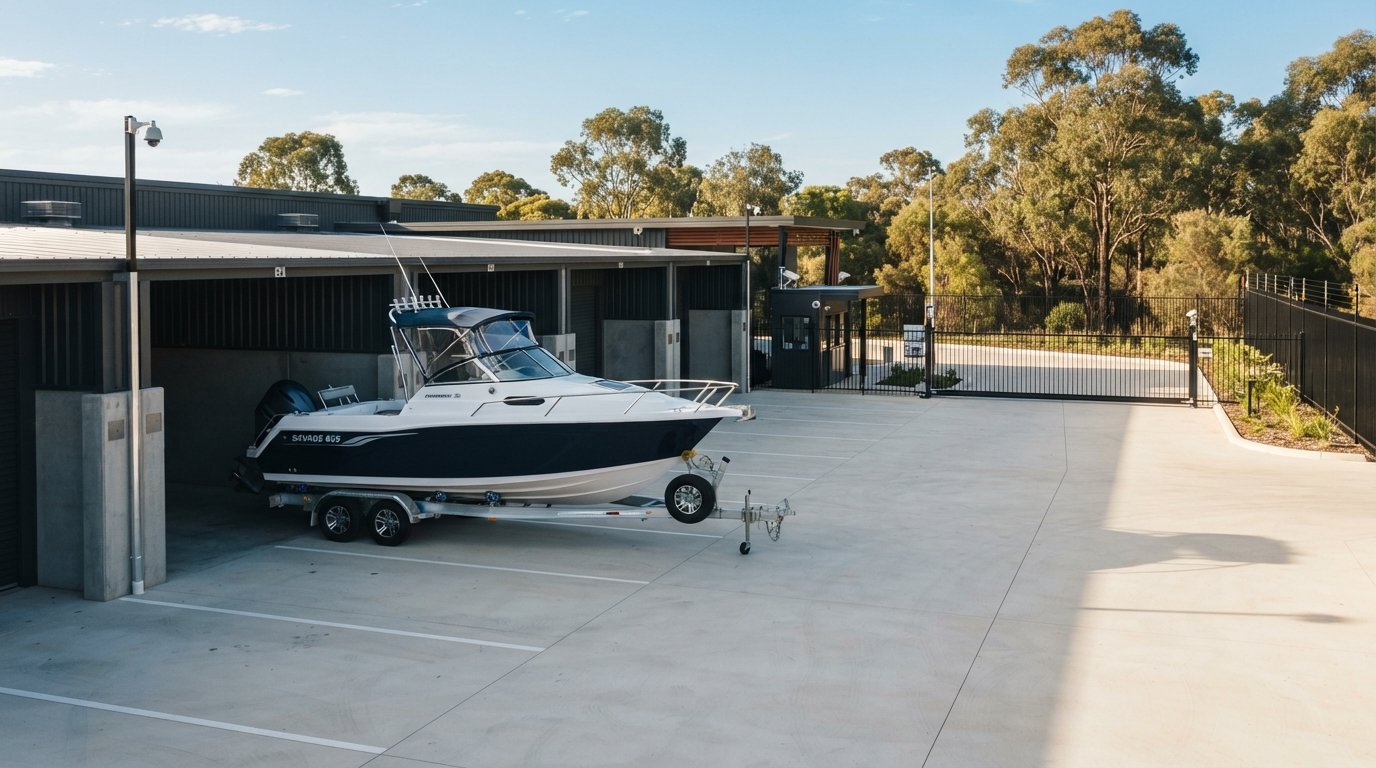
With more than 104,000 registered recreational vessels in Western Australia, finding somewhere secure to park your pride and joy has become a genuine challenge. Squeezing a trailer onto a narrow residential verge invites steep council fines and neighbour disputes, while leaving your boat exposed to the Perth sun quickly degrades canopies and chalks expensive gelcoat. That’s why demand for dedicated local boat storage facilities has surged, giving Perth boaties a practical alternative to cramped driveways and tight suburban streets.
You shouldn’t have to dread reversing your trailer through tight gates or worry about gear theft between weekend launches. Discover how to choose the right secure local boat storage facility in Perth to safeguard your vessel. We examine essential gate and aisle turning clearances for stress-free parking, compare undercover bays against open hardstands, and highlight the key security measures needed to protect your hull, outboard, and electronics year-round.
Key Takeaways
- Assess driveway widths and gate clearances before booking to ensure your tow vehicle and trailer can turn without jackknifing.
- Compare undercover storage against hardstand options to balance sun protection for gelcoats and electronics with your budget.
- Prioritise purpose-built local boat storage facilities over generic self-storage yards to avoid tight corridors and domestic vehicle collisions.
- Verify essential site security measures, including fully fenced perimeters, automated access gates, and continuous 24/7 CCTV surveillance.
- Choose flexible, contract-free rental agreements close to primary arterial roads for effortless transit to your preferred launch ramps.
Key Criteria for Evaluating Local Boat Storage Facilities
Dedicated vehicle storage facilities operate quite differently from standard domestic self-storage centres. Household facilities cater to rental moving vans and private cars. In those tight laneways, one careless turn by a weekend mover can easily gouge your hull or clip a trailer mudguard. Purpose-built local boat storage facilities eliminate this risk by isolating trailered vessels within wide, vehicle-only layouts.
When shortlisting prospective facilities, assess these non-negotiable operational features:
- Perimeter physical security: Heavy-duty perimeter fencing, automated pin-code gates, and high-output night lighting deter opportunistic trespassers.
- Asset surveillance: Continuous 24/7 CCTV cameras monitoring internal avenues protect exposed outboards, stainless props, and lockable deck hatches.
- Flexible agreements: Transparent month-to-month or weekly rental terms avoid lock-in contracts during peak summer stretches when your vessel spends weeks on the water.
Proximity to Waterways and Perth Arterial Roads
Towing a multi-tonne boat through congested suburban side streets strains transmissions and burns unnecessary fuel. Choosing a storage yard positioned directly off major transit routes, such as Albany Highway, Roe Highway, or Tonkin Highway, removes transit friction. Fast arterial access cuts transit times to popular ocean launch facilities like Woodman Point or Cockburn Sound. Always confirm gate operating hours before committing. Serious Perth skippers require early-morning weekend access and reliable evening entry to match dawn tides and dusk retrieves.
Bay Dimensions and Vessel Clearance Heights
Never measure your vessel using manufacturer hull specs alone. Measure the total real-world footprint from the trailer hitch coupler back to the propeller on a tilted outboard. Height is just as critical. Elevated wakeboard towers, radar arches, and rigid hardtop biminis frequently push overall height above standard suburban garage limits. Verify vertical door and roof clearance before booking undercover storage. Finally, check lateral bay width. You need enough walk-around clearance on both sides to deploy boarding steps, inspect trailer tyres, and pack heavy eskies without stepping into adjacent bays.
Undercover vs Hardstand Storage: Selecting the Right Protection
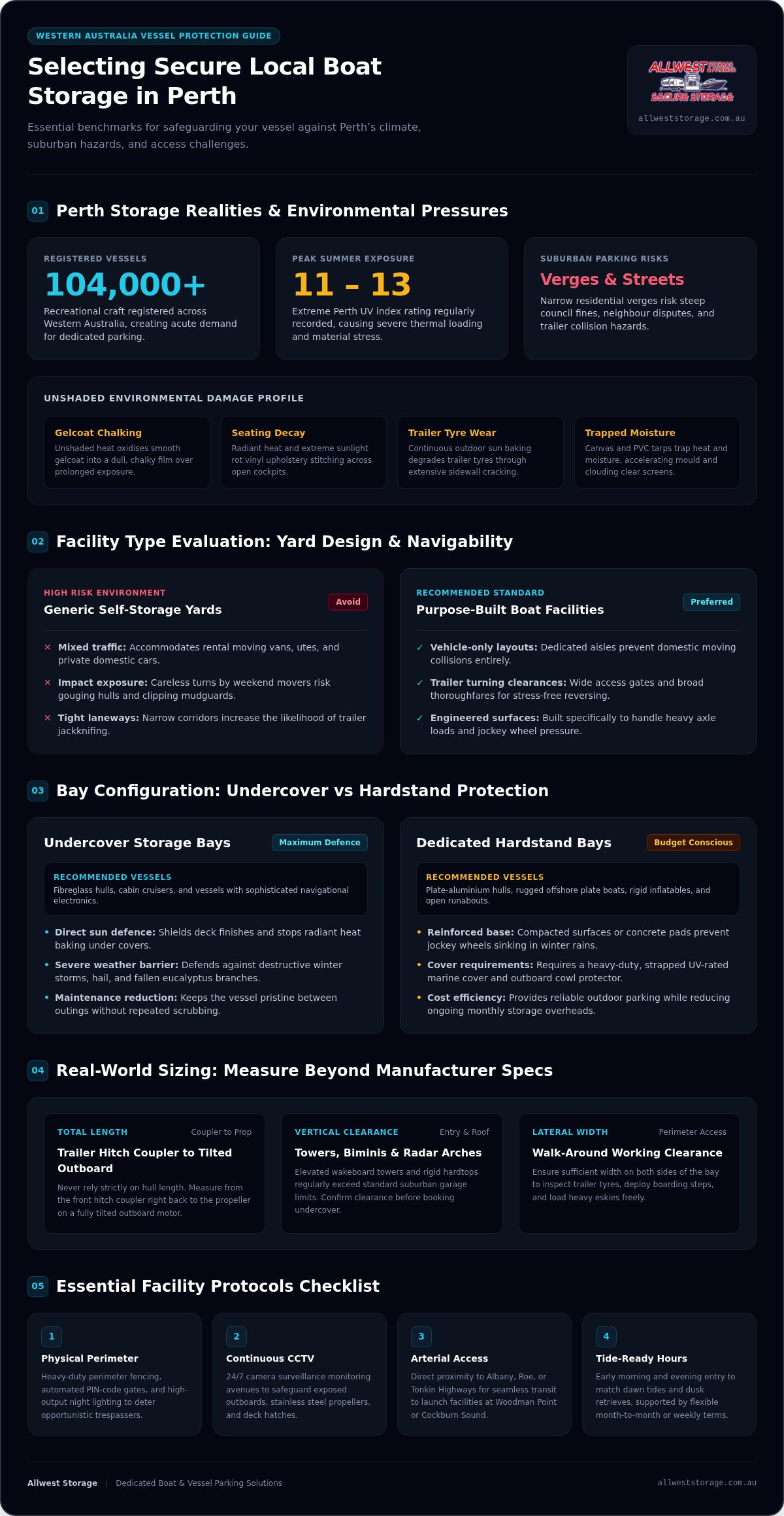
Perth summer conditions place severe environmental stress on trailer boats. The local UV index regularly reaches extreme levels between 11 and 13, baking exposed decks and hull sides. Over prolonged periods, unshaded heat oxidises gelcoat into a dull, chalky film, rots vinyl seating stitching, and degrades trailer tyres through sidewall cracking. Choosing the right bay configuration at local boat storage facilities directly preserves your vessel’s long-term resale value.
The choice between open-air and covered bays generally depends on your boat’s build material and onboard systems:
- Fibreglass hulls and cabin cruisers: Best suited to undercover storage to preserve glossy finishes and protect costly navigational electronics from thermal loading.
- Plate-aluminium hulls and open runabouts: Well suited to open hardstand parking, provided you fit a heavy-duty, UV-rated marine cover.
Undercover Bays for Premium Sun and Weather Defence
Canopy roofing prevents severe radiant heat from building up beneath trailer boat covers. Heavy canvas or PVC tarps trap moisture and heat when exposed to direct sunlight, accelerating mould growth and degrading clear plastic windscreen inserts. Undercover bays also provide vital shelter against destructive winter storm fronts, falling eucalyptus branches, and sudden hail. If you want to keep your vessel pristine between outings, booking dedicated undercover storage in Perth gives you dependable overhead protection without the fuss of repeated scrubbing.
Dedicated Hardstand Bays for Durable Aluminium Craft
Open-air hardstand parking offers a practical, budget-conscious solution for rugged aluminium craft, offshore plate boats, and rigid inflatables. Purpose-built local boat storage facilities construct these open areas using engineered, compacted surfaces or thick concrete pads. This prevents heavy jockey wheels from sinking into soft ground during winter rains. Fitted with a secure, strapped marine cover and outboard cowl protector, tough aluminium hulls easily withstand outdoor exposure during standard workweeks while saving you ongoing storage overheads.
Navigating Turning Radiuses, Gate Clearance, and Trailer Access
Reversing an articulated boat trailer into a tight bay tests even experienced skippers. Standard light-vehicle combinations stretching 12 to 13 metres, such as a dual-cab four-wheel drive hitched to a seven-metre offshore hull, require significant room to turn. Conventional self-storage yards feature narrow corridors designed for compact furniture vans. Attempting multi-point turns in those confined lanes introduces severe jackknife risks, crumpled trailer mudguards, and damaged vehicle panels. Specialist local boat storage facilities eliminate this stress through purpose-built layouts designed specifically around vehicle dynamics.
Safe trailer movement requires specific infrastructural clearances across three critical zones:
- Entry gate clearance: Automated security gates need a minimum clear width of 3.5 to 4.0 metres to safely pass standard 2.5-metre trailer beams and extended towing mirrors.
- Internal driving aisles: Thoroughfares require 10 to 12 metres of clear width between parked rows, enabling a smooth, single-attempt turn into your bay.
- Perimeter walkaround spacing: Marked bays should allow at least one metre of perimeter clearance on all sides for securing tie-downs and checking wheel bearings.
Wide Driveway Clearance and Towing Turning Circles
Extended towing rigs produce a wide swept path when executing 90-degree turns. In cramped yards, blind corners and jutting roof posts turn everyday departures into an exercise in frustration. Purpose-designed vehicle storage yards provide sweeping internal avenues that allow long towing rigs to turn smoothly without mounting kerbs. Level, obstruction-free driving corridors give you clear visibility across the entire turning arc, keeping trailer tyres away from hard obstacles.
Hitching and Unhitching Ergonomics Onsite
Solo unhitching demands stable, level ground conditions. High-calibre local boat storage facilities build their pads with reinforced hardstand surfaces that comfortably bear the concentrated weight of heavy dual-axle trailer jockey wheels. A flat parking surface prevents dangerous trailer rollaways when releasing the tow ball coupling. Ample working room around the trailer drawbar also makes it effortless to fit heavy-duty hitch locks, run safety chains, and connect lockable wheel clamps securely.
Essential Security Protocols and Pre-Storage Site Checklist
Trailer boats, outboard engines, and marine electronics represent substantial investments. Never rely solely on marketing photos when comparing local boat storage facilities; an in-person site walk reveals whether a facility takes physical protection seriously. Inspect the perimeter thoroughly before signing an agreement.
Use this pre-storage checklist to evaluate any prospective storage yard:
- Perimeter barrier integrity: Ensure the facility uses high commercial chainwire or palisade security fencing with zero gaps, sagging sections, or overgrown brush nearby.
- Electronic access logging: Verify that automated gates record individual entry and exit timestamps, ensuring complete accountability for everyone entering the grounds.
- Commercial yard insurance: Confirm the management carries full commercial premises liability coverage to safeguard their property and operational footprint.
Verifying Active Electronic Surveillance and Physical Barriers
Look beyond simple cameras focused only on the main gate. Reliable vehicle protection requires continuous 24/7 CCTV surveillance positioned across internal driving avenues and pointed directly toward parked hulls. High-output overnight floodlighting must illuminate all corners without casting shadows between parked trailers. Clear illumination deters tampering and provides excellent visibility when hitching up for early-morning fishing runs.
Inspecting Facility Cleanliness and Drainage Standards
Standing water pools around trailer tyres accelerate brake caliper seizure and corrode wheel bearings. Purpose-built vehicle yards feature engineered drainage gradients that direct stormwater away from parked assets during winter storms. Ground hygiene matters just as much. Clean, weed-free hardstand surfaces deter vermin from chewing through wiring looms, while dust-suppressed yards prevent abrasive grit from settling onto polished gelcoats.
Ready to inspect a facility built specifically for heavy trailers and ocean hulls? Take the guesswork out of vessel security and book a secure boat bay at Allwest Storage today.
Why Allwest Storage Delivers Perth’s Premier Boat Parking Solution
Choosing between generic corporate storage yards and specialist vehicle depots comes down to how much you value your towing confidence and vessel safety. Allwest Storage & Parking operates purpose-built vehicle facilities in Maddington, Western Australia. Unlike warehouse chains focused on household clutter, this site prioritises vehicle accessibility. Broad driving avenues, heavy-duty perimeter fencing, and continuous 24/7 CCTV surveillance ensure your trailer rig remains secure between trips.
Allwest Storage & Parking stands out among local boat storage facilities by catering specifically to vessels of all sizes:
- Undercover storage bays: Keep valuable runabouts and cabin cruisers shielded from punishing summer sun and winter squalls.
- Spacious hardstand storage: Provide rock-solid, well-drained outdoor parking for rugged offshore plate-aluminium hulls and tinnies.
- Effortless manoeuvring: Generous driving corridors eliminate the hazard of tight multi-point turns and trailer jackknifing.
Strategic Maddington Location for Effortless Towing
Positioned right near Tonkin Highway, Albany Highway, and Roe Highway, the Maddington depot acts as a seamless staging hub for Perth skippers. Hooking up your trailer and heading out early avoids the stress of navigating narrow suburban roundabouts and congested coastal backstreets. Whether you are launching into Cockburn Sound from Woodman Point or heading north to Hillarys, direct highway access cuts towing fatigue and gets your hull in the water faster.
Flexible Month-to-Month Terms and Secure Bay Booking
Rigid annual lock-in contracts make little sense for seasonal boaties. Western Australian boating patterns shift with weather windows and fishing runs. Allwest Storage & Parking offers straightforward weekly or monthly rental terms with zero lock-in contracts, giving you complete freedom to adapt your storage schedule as your boating habits change. Transparent billing avoids corporate bond hassles and unexpected admin fees.
Ready to inspect an allocated bay that fits your vessel, trailer, and tow vehicle comfortably? Reserve your secure Perth boat bay today and give your boat the reliable local protection it deserves.
Protect Your Maritime Investment with Confidence
Selecting the right parking space protects both your vessel’s resale value and your peace of mind. As suburban blocks shrink and verge parking regulations tighten across Perth, choosing purpose-built local boat storage facilities ensures you avoid council fines, sun-damaged gelcoat, and difficult reversing headaches. Whether you opt for shielded undercover bays or durable hardstand parking, prioritising wide driving aisles and solid perimeter security makes every launch day smooth and straightforward.
Allwest Storage delivers dependable vehicle protection in Maddington with spacious bays built for easy trailer manoeuvring, continuous 24/7 CCTV surveillance monitoring, and flexible contracts with no lock-in terms. You maintain complete freedom over your seasonal boating schedule while resting easy knowing your rig is well protected. Secure your boat storage bay at Allwest Storage today and enjoy fuss-free towing on your next trip to the ramp.
Frequently Asked Questions
Can I store my boat on a trailer in an outdoor hardstand bay?
Yes, you can safely store your trailered vessel in an outdoor hardstand bay if the yard surface is properly engineered. Quality hardstands feature compacted road base or solid concrete pads that prevent heavy jockey wheels from sinking into wet soil. Fit a heavy-duty, UV-stabilised marine cover, raise the outboard onto a travel bracket, and install hitch locks to keep the rig protected against the elements.
How much turning space do I need when backing a large boat trailer into a bay?
You generally need at least 10 to 12 metres of clear aisle width to safely reverse a large trailer without jackknifing. Combined towing rigs stretching 12 to 13 metres require sweeping turning arcs. Purpose-built local boat storage facilities design extra-wide thoroughfares and clear corners, letting skippers line up their trailers and reverse into allocated bays in a single, controlled movement without hitting adjacent drawbars.
What happens if I only need boat storage during the winter off-season?
You can rent an allocated bay on a flexible month-to-month or weekly arrangement without signing a long-term lease. Many boaties only need off-site parking during the cooler months when severe winter squalls strike the coast. Selecting an operator with zero lock-in contracts allows you to shelter your vessel throughout winter and relocate it back home when prime summer boating conditions return.
Is undercover boat storage necessary for fibreglass boats in Perth?
Undercover storage is strongly recommended for fibreglass boats exposed to Perth’s intense summer climate. Local UV indexes routinely hit extreme levels, causing rapid gelcoat oxidation, rotted upholstery stitching, and clouded clears. Shaded canopy bays deflect severe solar radiation and prevent radiant heat buildup under boat covers, preserving factory finishes, onboard electronics, and long-term resale value far better than open parking.
Can I access my boat outside regular business hours for an early morning fishing trip?
Access hours vary across yards, so you should always verify the facility’s specific gate schedules before booking. Many vehicle storage depots accommodate weekend skippers by providing electronic gate access during extended morning and evening timeframes. Check whether gate hours match your typical launch routines so you can retrieve your trailer before sunrise and drop it off after an afternoon on the water.
What security features should I look for before leaving my boat at a storage yard?
Look for fully fenced perimeters, automated security gates, bright night lighting, and continuous digital surveillance. Reputable local boat storage facilities install 24/7 CCTV monitoring focused directly on parking aisles and individual vessel bays rather than just the main entrance. Electronic logging of each visitor’s arrival and departure provides clear site accountability, ensuring your outboards, hulls, and marine accessories remain secure.
Leave A Comment