

Can you keep your caravan on your driveway if a neighbour objects? Neighbour complaints about caravan on driveway can feel unfair when it’s on your own property, but a complaint is a useful prompt to identify the actual concern and check the rules before responding.
Your neighbour may be worried about blocked sightlines, access, appearance, noise or the caravan being used as accommodation. In WA, the rules can depend on whether it’s parked or occupied, your local council’s requirements and any strata or lease conditions. The complaint alone doesn’t tell you whether you’re in breach, and guessing can make a manageable disagreement harder.
This guide explains what to ask your neighbour, which council and property rules to check, and how to choose a practical next step. You’ll also compare options such as adjusting where or how the caravan is parked, agreeing on a temporary arrangement, or using off-site caravan storage to reduce driveway congestion and friction. Start with the specific issue, then decide what needs to change.
Key Takeaways
- Neighbour complaints about caravan on driveway can have different causes. Clarify the specific concern before deciding how to respond.
- Check the rules for your local government area, plus any strata or lease conditions that apply to your property.
- Consider whether the caravan is simply parked or being used as accommodation, as different requirements may apply.
- Compare driveway parking, a layout adjustment and off-site storage against your access needs, property setup and the impact on neighbours.
- Keep a simple record of the concern and steps taken, then choose a proportionate response that helps prevent further friction.
Neighbour complaints about a caravan on your driveway: identify the real concern
A complaint about your caravan can be stressful, especially if you thought parking it on your property would be straightforward. Try not to assume either party is right. A neighbour complaint about a caravan on driveway is a reason to clarify the issue and check the facts, not proof that you’ve breached a requirement.
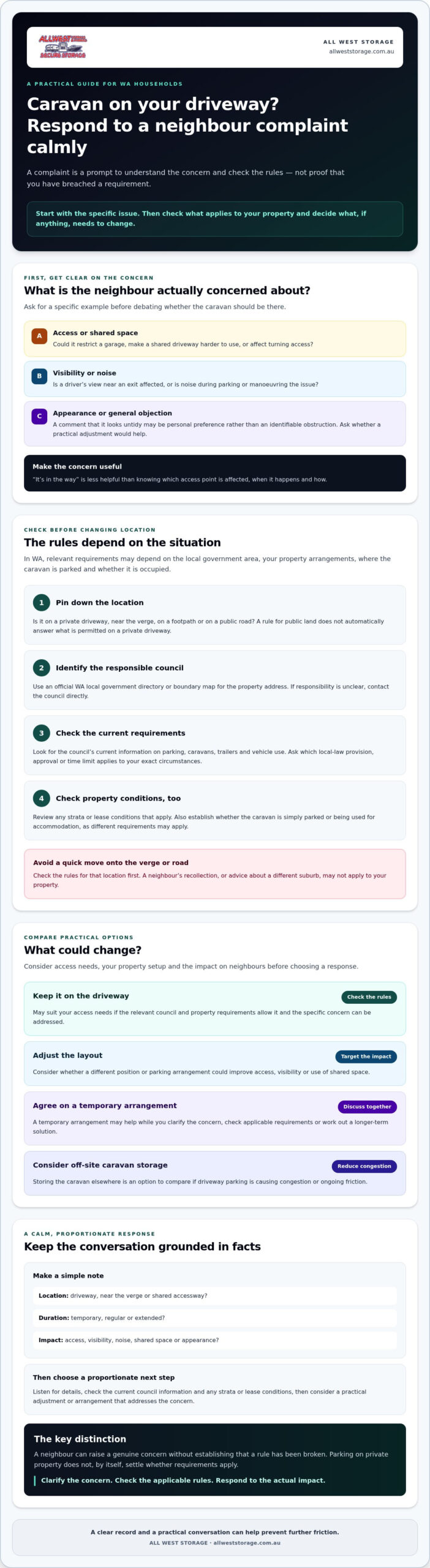
Start by asking what the neighbour wants addressed. A practical concern might be that the caravan blocks a driver’s view when leaving a property, restricts access, or makes a shared driveway difficult to use. Noise during parking or manoeuvring may also be a specific issue. By contrast, a comment that the caravan looks untidy may be about appearance or personal preference, rather than an identifiable obstruction.
Listen for details. “It’s in the way” is less useful than knowing which access point is affected, at what time, and how. A calm, specific conversation can help you separate a fixable impact from a general objection. Approaches such as negotiation and mediation are among the methods for dispute resolution that can help people work through disagreements.
What might prompt a neighbour to complain about a caravan?
Ask which part of the setup is causing difficulty, rather than debating whether caravans belong on driveways. For example, is the vehicle restricting access to a garage, making it harder to turn into a shared drive, or affecting visibility near an exit? If the concern is appearance, ask whether there’s a practical change that would address it. The aim is to understand the request before deciding what is reasonable.
Is a complaint the same as a rule breach?
No. A neighbour can raise a genuine concern without establishing that a rule has been broken. Equally, parking on private property doesn’t automatically settle whether requirements apply. The answer may depend on your property arrangements and the relevant local government’s rules. Check with the appropriate authority before relying on assumptions.
A complaint tells you what a neighbour is concerned about; only the relevant authority and applicable property rules can help confirm whether a requirement applies.
Before responding, make a quick note of three details:
- Location: Is the caravan fully on your driveway, near the verge, or on a shared accessway?
- Duration: Is it there temporarily, regularly, or for an extended period?
- Impact: Does it affect access, visibility, noise or shared space, or is the objection mainly about appearance?
These details give you a clearer starting point for checking requirements and considering a proportionate response. Avoid moving the caravan onto a verge or road as a quick fix until you’ve checked the rules that apply there too.
Which Perth and WA rules should you check before moving the caravan?
Before moving the caravan, establish exactly where it’s parked and which rules apply. Requirements can depend on your local government area, the property itself and whether the caravan is parked or being used for accommodation. A rule for a public road or verge doesn’t automatically answer what’s permitted on a private driveway.
Start with your property address. Use an official WA local government directory or boundary map to identify the council responsible for that address, then check the council’s current parking local laws and guidance. If the boundary or responsibility isn’t clear, contact the council directly. Don’t rely on a neighbour’s recollection or advice about a different suburb.
How do I check my local council’s caravan parking requirements?
Look for the council’s current information on parking, caravans, trailers and vehicle use. If the wording doesn’t clearly cover your situation, ask the council to confirm how it applies. Give them the exact property location and describe:
- Whether the caravan is on a private driveway, verge, footpath or public road.
- Whether it’s attached to a tow vehicle and, if relevant, its type and length.
- How long it will remain there and whether anyone will use it for accommodation.
Ask which current local-law provision, approval or time limit, if any, applies to those details. Check the provision and any conditions against the council’s official information before acting. Requirements can change, and rules for one Perth council may not apply in another area.
Could a verge, footpath or strata arrangement change the answer?
Yes. A driveway is different from a verge or footpath, which may involve public land, council rules and access for pedestrians or vehicles. Parking across a footpath or restricting access can raise practical concerns even if the caravan is close to your property. Check with the relevant council before moving it onto a verge or road.
If you live in a strata or community-title property, review the applicable by-laws and property documents as well as council requirements. Renters should also check their lease and speak with the property manager or landlord where needed. These arrangements are specific to the property, so don’t assume a rule for a neighbouring home applies to yours.
For neighbour complaints about caravan on driveway, keep the discussion separate from the rules check. You can politely raise a concern or ask for a practical change without treating the complaint as a council decision. If the verified requirements or driveway layout make keeping the caravan at home impractical, caravan storage near Perth may be another option to explore. Check current space availability and access arrangements before deciding.
Keep the caravan at home or store it elsewhere? Compare your options
Once you understand the concern and have checked the requirements that may apply, compare options against your routine. Think about how often you use the caravan, whether your driveway has enough room and how much the current setup affects neighbours. No option is automatically suitable or compliant. Your property, local rules and any applicable agreements still matter.
| Option | Access and neighbour impact | What to consider |
|---|---|---|
| Driveway parking | Convenient for regular use, but the caravan may reduce space or affect access and visibility. | Check it fits without blocking a garage, pedestrian route or shared access. |
| Layout adjustment | Can address a specific, manageable obstruction while keeping the caravan at home. | Check the new position still suits the property and applicable requirements. |
| Off-site storage | Frees driveway space and can reduce recurring friction, but adds travel and planning. | Compare location, access arrangements, storage type and likely duration. |
When could keeping the caravan on the driveway still work?
Driveway parking may remain practical if the caravan fits without restricting access, pedestrian movement or visibility. If a neighbour identifies a specific issue, consider whether a small repositioning could resolve it. For example, moving it clear of a shared driveway entrance may help. Before relying on a changed layout, check the relevant council requirements and any property documents again.
When is off-site caravan storage worth considering?
If the caravan is rarely used, takes up essential parking space or remains a source of neighbour complaints about caravan on driveway, storing it elsewhere may be a practical alternative. The trade-off is extra travel. Consider how often you’ll collect it, whether the facility’s location suits your usual trips and what access arrangements are available. Confirm those details before choosing.
Storage type is another factor. Hardstand storage provides an outdoor parking option; undercover storage may suit owners who prefer the caravan to be sheltered from direct exposure. Consider your priorities and the storage conditions available rather than assuming one type suits every vehicle.
Allwest Storage & Parking offers caravan storage near Perth, including hardstand and undercover options, with short- and long-term stays. These may be options to investigate if reducing driveway congestion is a priority. Check current space availability, access arrangements and facility details before deciding. Choose the arrangement that balances convenient use, property suitability and a workable relationship with your neighbours.
Responding to neighbour complaints calmly and constructively
A calm response gives you room to understand the concern without agreeing to something before you’ve checked it. Start by listening. Ask what’s happening, where it occurs and when they notice it. A complaint about a caravan may point to a specific access problem, or it may reflect a broader disagreement. Keep those possibilities separate while you establish the facts.
Use a straightforward sequence:
- Listen and clarify: Let your neighbour explain the impact. Ask for a specific example if the concern is unclear.
- Check the facts: Review the caravan’s position, relevant council requirements and any strata, community-title or lease documents that apply.
- Consider a practical response: If the concern is specific and a change seems reasonable, discuss options once you understand what the rules allow.
- Keep a neutral record: Note the date, concern raised, information checked and any steps taken. Record facts, not assumptions about your neighbour’s intentions.
A brief record helps you keep track if the issue continues. It doesn’t need to read like a case file. Avoid retaliating, making threats or stating legal conclusions you haven’t verified. Those responses can increase tension without resolving the caravan’s position or the original concern.
What should I say when a neighbour raises a caravan concern?
Try: “Thanks for raising this. I’d like to understand what impact the caravan is having. Could you tell me where or when it’s causing difficulty? I’ll check the relevant requirements and consider whether there’s a practical adjustment.” This acknowledges the concern without admitting a breach or dismissing the neighbour. If you discuss a change, confirm it works with the applicable rules and property arrangements first.
If the exchange becomes heated, pause it and suggest returning to the conversation later. Where appropriate, keep follow-up communication brief, factual and respectful. For ongoing neighbour complaints about caravan on driveway, a clear written summary of what was raised and what you’ve checked can reduce crossed wires.
When should I ask the council or property manager for guidance?
Contact the relevant council if you’re unsure which local requirements apply or whether the caravan is on private property or public space. Describe its exact location, type and intended parking duration, and ask where to find the current official guidance. For strata or community-title properties, ask the strata body about applicable by-laws. Renters can check with their landlord or property manager about lease conditions.
If you receive a formal notice, don’t ignore it. Follow the stated instructions and seek qualified legal advice if you’re unsure how to respond or the dispute remains unresolved. If you’ve checked the rules and decide driveway parking isn’t workable, explore caravan storage options as one practical way to reduce congestion at home. Check current availability and access arrangements before making plans.
A practical next step if driveway parking is no longer working
If the caravan is causing ongoing friction or the driveway no longer suits your needs, take the next step in order: clarify the concern, verify the requirements that apply to your property, then choose a proportionate response. That may mean adjusting the setup at home or considering off-site storage. You don’t need to make a permanent decision before you’ve checked the practical details.
For neighbour complaints about caravan on driveway, a workable plan should address both the original concern and your own use of the caravan. Before comparing storage options, note how often you expect to travel, how much extra distance you’re comfortable driving to collect it, and how long you may need storage. Then weigh those needs against the available space and protection options.
What should I look for in Perth caravan storage?
Location matters most if you use the caravan often. A facility near your usual routes may make collection and return easier, while less frequent use may give you more choice. Ask the provider about current space availability, access arrangements, the terms and whether the space suits your caravan’s size. Confirm these details before arranging a move.
Also consider the storage type. Hardstand is an outdoor option. Undercover storage may suit owners who prefer shelter from direct exposure. Your choice depends on your protection preference and the options available for your vehicle. Check the facility details rather than assuming every space offers the same conditions.
How can I explore a flexible storage option?
Allwest Storage & Parking offers caravan storage near Perth, with hardstand and undercover options, 24/7 CCTV monitoring, short- and long-term stays and no lock-in contracts. These features may be worth comparing with your expected storage duration and access needs. Confirm current availability, arrangements and terms directly with the provider before deciding whether it’s suitable.
Use a simple decision check:
- Location: Does it fit your usual travel routes?
- Access: Can you collect the caravan in a way that suits your plans? Confirm arrangements with the provider.
- Protection: Would hardstand or undercover storage better match your preference?
- Duration: Is your need short term, long term or uncertain?
If off-site storage looks like a practical way to free driveway space, explore caravan storage options with Allwest. Compare the details, check suitability and choose the arrangement that works for your circumstances. There’s no need to treat storage as the only answer; it’s one option if keeping the caravan at home is no longer working.
Choose a practical way forward
A neighbour’s concern is a prompt to check the facts, not a verdict. Identify the specific impact, confirm which council and property requirements apply, then decide whether a driveway adjustment or another arrangement makes sense for your situation.
If keeping the caravan at home no longer works, off-site storage can help free driveway space. Allwest offers hardstand and undercover vehicle storage, 24/7 CCTV monitoring, and short- and long-term options with no lock-in contracts. Check current availability and access arrangements to see whether an option suits your needs.
Explore caravan storage options with Allwest as one possible next step if neighbour complaints about caravan on driveway are affecting how you use your property. Take it one step at a time. With the concern clarified and your options checked, you can make a considered decision and move forward with confidence.
Frequently Asked Questions
Can my neighbour make me move my caravan off my driveway?
A neighbour’s request alone doesn’t confirm whether you must move the caravan. Check the current requirements for your local government area and any strata, community-title or lease conditions that apply to your property. If the caravan is restricting access or creating a safety concern, address the practical impact promptly while you verify the rules. If you receive a formal notice or the dispute continues, consider getting qualified legal advice.
Can I park a caravan on my driveway in Western Australia?
There isn’t a blanket yes or no for every property in Western Australia. The answer may depend on where the caravan is positioned, how long it remains, local government requirements and any applicable strata or lease conditions. Check current official information for your address, or contact your council to confirm. Be clear whether it’s on a private driveway, verge, footpath or public road, as these locations may be subject to different requirements.
What can I do if my caravan blocks a footpath or driveway access?
Check whether the caravan or tow vehicle is obstructing pedestrian movement, a shared accessway or another person’s driveway. If it is, move it clear where possible while you confirm the applicable requirements. A verge or public footpath may be treated differently from private property, so don’t assume rules are the same. Contact your local council with the address and exact location for guidance relevant to your circumstances.
Can a strata or body corporate stop me parking a caravan at home?
Strata or community-title rules may place conditions on caravan parking in addition to council requirements. Review the current by-laws and property documents, and check your lease if you rent. Ask the strata manager, landlord or property manager to clarify how those rules apply to your space. Restrictions can vary between properties, so don’t assume another complex has the same conditions. If formal enforcement or a dispute arises, seek qualified advice.
What should I do if my neighbour complains about my caravan?
Start by asking what specific impact concerns them, such as restricted access or visibility. Then check the caravan’s position and any relevant council, strata or lease requirements before agreeing to a change. Neighbour complaints about caravan on driveway don’t establish a rule breach by themselves, but they can help identify an issue to address. Keep the conversation calm, note what was raised and any steps agreed, and ask the council or property manager for guidance if the disagreement continues.
Is off-site caravan storage a good alternative to driveway parking?
Off-site storage can suit owners who want to free driveway space, reduce neighbour friction or store a caravan between trips. Compare the facility’s location with how often you’ll use the caravan, and check access arrangements, storage duration and whether hardstand or undercover space suits your preferences. Ask providers about current availability and terms. Storage is one possible practical option, not a substitute for checking council, strata or lease requirements that apply to your property.
How do I find caravan storage near Perth?
Compare Perth facilities by location, access arrangements and storage type. Ask about current space availability, terms and monitoring, and check whether the facility can accommodate your caravan. Allwest Storage & Parking offers hardstand and undercover vehicle storage near Perth, with 24/7 CCTV monitoring and short- and long-term options without lock-in contracts. Confirm current availability, access arrangements and suitability directly with the provider before making a decision.
Leave A Comment