
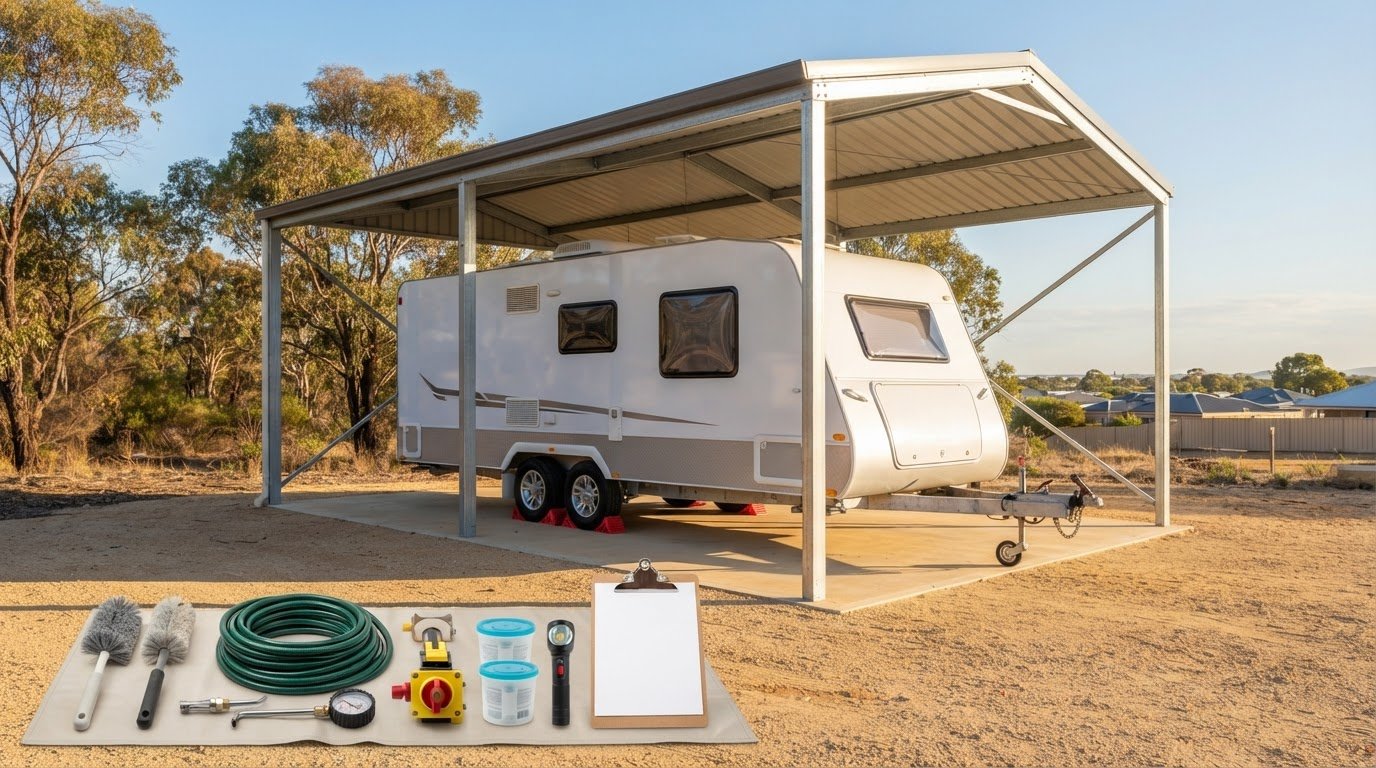
Parking a caravan and walking away is the easy part. Keeping it protected and ready for its next trip takes a routine. If you’re working out how to store caravan long term, it’s understandable to have questions about cleaning, batteries, tyres, moisture and weather exposure.
A few practical steps before storage, followed by periodic checks, can help you avoid preventable problems while your van is unused. The right setup also depends on where it will be parked, whether that’s at home, on hardstand or undercover.
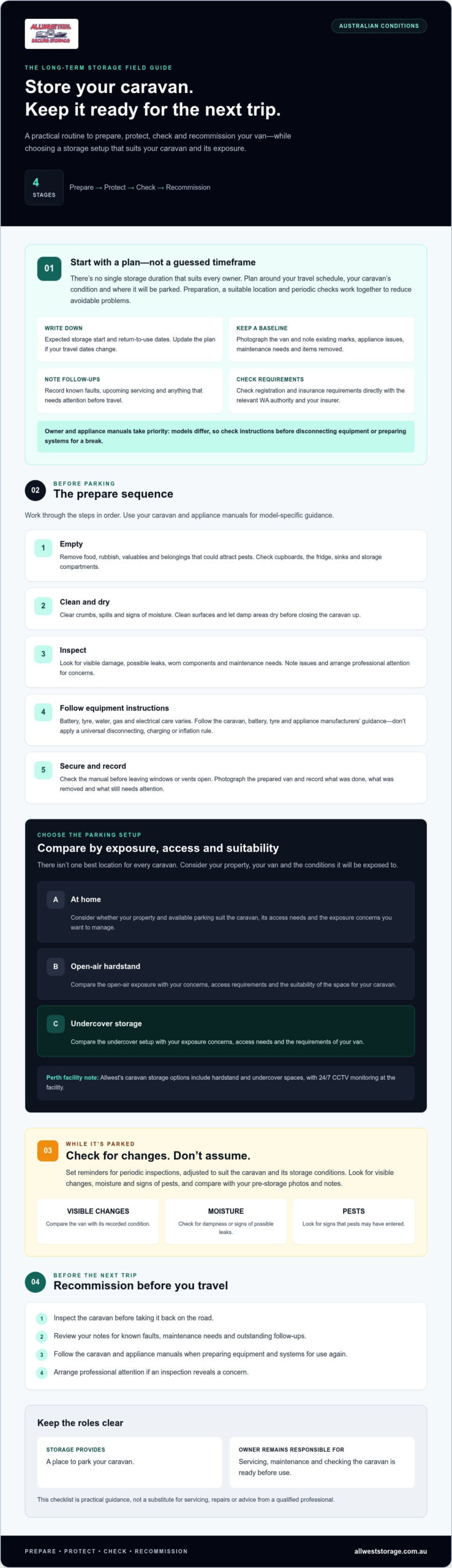
This guide sets out a clear prepare, protect, check and recommission routine for Australian conditions. You’ll learn what to clean and disconnect, how to reduce moisture and sun exposure, and what to inspect during storage. We’ll also cover how to compare home parking with hardstand and undercover options around Perth, so you can choose based on your van, your property and your exposure concerns. Storage provides a place to park, while servicing and maintenance remain your responsibility. Follow the checklist, then take time to recommission the caravan before heading away.
Key Takeaways
- Learn how to store caravan long term with a practical prepare, protect, check and recommission routine.
- Use a clear pre-storage sequence to remove food and valuables, clean and dry the interior, inspect the van and record its condition.
- Compare home parking, open-air hardstand and undercover storage by exposure, access and suitability for your caravan.
- Set reminders to check for visible changes, moisture and pests, then inspect the caravan before taking it back on the road.
- See how Allwest’s Perth caravan storage, hardstand and undercover options may suit your plans, with 24/7 CCTV monitoring at the facility.
How to store a caravan long term: start with a plan
Long-term storage means an extended period when your caravan is parked and not regularly used. There’s no single duration that suits every owner, so plan around your travel schedule, the caravan’s condition and where it will be stored. Preparation, a suitable storage location and periodic checks work together to reduce avoidable problems.
In Australia, “caravan” usually refers to a towable living vehicle. The Caravan (trailer) entry provides background on the term and its use in different places. For storage and appliance instructions, however, your caravan’s owner manual and each appliance manufacturer’s guidance should take priority. Models differ, so check the instructions before disconnecting equipment or preparing systems for a break.
This is a practical storage checklist, not a substitute for servicing, repairs or advice from a qualified professional. Deal with known faults before storage, and arrange professional attention if an inspection reveals a concern.
Decide how long the caravan will be stored
Estimate the storage period and write down your intended return-to-use date. Update it if your plans change. The longer the van will sit unused, the more useful a written checklist and scheduled inspections become. Note any servicing you expect may be due, and check registration and insurance requirements directly with the relevant WA authority and your insurer. Don’t assume existing arrangements will automatically suit the storage period.
Record the caravan’s condition before storage
Take clear photographs of the exterior, interior and any existing marks before parking. Include areas you may want to compare later, such as visible seals, windows and fittings. Keep the images with a short written record of appliance issues, maintenance needs and anything removed from the van. This gives you a useful reference during storage checks and when preparing the caravan for travel again.
A long-term storage routine is a written plan to prepare the caravan, protect it while parked, check it periodically and inspect it before use.
For a simple starting point, note:
- Expected storage start and return-to-use dates.
- Known faults, upcoming servicing and any follow-up required.
- Items removed, including valuables and personal belongings.
- Dates for checks, adjusted to suit the van and its storage conditions.
With the timeframe and baseline condition recorded, you can work through the preparation steps in order and choose a storage location that fits the length of the break.
Prepare your caravan for long-term storage step by step
A consistent sequence makes preparation easier to manage: empty, clean, dry, inspect, secure and record. If you’re deciding how to store caravan long term, follow your caravan and appliance manuals for model-specific instructions. Water systems, gas appliances and electrical equipment can differ, so don’t rely on a generic checklist to tell you what to drain, isolate or disconnect.
Clean, dry and secure the interior
Start by removing food, rubbish, valuables and anything else that could attract pests. Check cupboards, the fridge, sinks and storage compartments for crumbs, spills or signs of moisture. Clean surfaces, then allow damp areas to dry before closing the caravan up. A forgotten wet tea towel or residue in a cupboard can create problems while the van is unused.
Ventilation depends on the weather, the security of the location and the manufacturer’s advice. Check the manual before leaving windows or vents open. If you’re comparing storage facilities, ask about access arrangements and what the storage setup permits. For an example of the details a storage provider may specify, see RACQ caravan storage.
Check the exterior, tyres and battery
Walk around the caravan and look for visible damage, possible leaks, worn components and maintenance needs. Note anything that should be repaired or checked before the next trip. Don’t assume an issue will remain unchanged during storage. Arrange professional attention if you find a concern.
Battery and tyre care depend on the model and equipment. Follow the caravan, battery and tyre manufacturers’ instructions rather than applying a universal rule about disconnecting, charging, inflating or moving components. For more detail, consult a dedicated guide to tyre flat-spot prevention during storage and a caravan battery maintenance guide.
Before parking, record what you’ve done and keep a note of items removed, known faults and checks still required. Take photos of the van after preparation so you have a clear reference point for later inspections. A final check of cupboards, the fridge, compartments and entry points can catch anything missed during cleaning.
- Empty: remove food, rubbish and valuables.
- Clean and dry: check for residue and moisture inside.
- Inspect: note damage, leaks and maintenance needs.
- Secure and record: follow the manuals, then document the van’s condition.
If parking at home isn’t practical, compare suitable Perth caravan storage options alongside your preparation plan. Storage provides a place to park, while maintenance remains the owner’s responsibility.
Choose where to store a caravan long term in Perth
The right place depends on your property, how often you need access and how much exposure you’re comfortable with. Home parking, open-air hardstand and undercover storage each have practical trade-offs. For Perth owners, consider the caravan’s position and exposure to sun, rain and wind, as well as how you’ll reach it for checks.
When home parking may suit
Home parking can be convenient if you have enough space and can move the caravan in and out safely. Check household or strata rules, and ask your local council about any requirements that may apply to parking a caravan on private property. Make sure its position allows you to inspect it periodically and access it without blocking essential areas.
When hardstand or undercover storage may suit
Hardstand provides an outdoor parking option, while undercover storage offers shelter from direct weather exposure. Neither removes the need to prepare and check your caravan. Ask a storage provider whether a bay suits your van’s dimensions and how access works. Confirm current availability and arrangements before making plans. When comparing options, consider how much weather exposure you’re comfortable with and whether the access arrangements suit your routine.
| Option | Potential benefits | Limitations to consider | Questions to ask |
|---|---|---|---|
| Home parking | Convenient for owners with suitable space and straightforward access. | Available space, household rules and local requirements may affect suitability. | Can I park and inspect the van safely? Are there council or property rules to check? |
| Open-air hardstand | A dedicated parking space away from home; straightforward outdoor access may suit your routine. | The caravan remains exposed to the weather, so consider its position and protection needs. | Is the bay suitable for my caravan? What are the access arrangements and current availability? |
| Undercover storage | Provides shelter from direct weather exposure while the caravan is parked. | Suitability depends on the bay and the owner’s access needs. | Will my caravan fit? What access arrangements apply, and is a suitable space available? |
Allwest Storage & Parking offers caravan storage in Perth, with hardstand and undercover options and 24/7 CCTV monitoring. CCTV is a security feature, not a guarantee against theft. Compare the options against your needs, and confirm current access arrangements and availability directly. Storage provides a place to park, while inspections, servicing and maintenance remain the owner’s responsibility.
Check your caravan during storage and prepare it to travel again
A caravan can change while it’s parked, so set a reminder to check it at intervals that suit its condition and storage environment. There’s no single schedule for every van. Consider its exposure, the battery and tyre manufacturers’ guidance, and any instructions in the caravan manual. Record each check and follow up if you spot a problem.
What to include in periodic storage checks
Look over accessible areas for signs of water ingress, unusual odours, pests or new damage. Check the interior for dampness and examine visible exterior areas, fittings and seals. Review the battery condition using its manufacturer’s instructions. Follow the tyre maker’s advice for the caravan’s tyres rather than relying on a universal pressure or inspection interval.
Write down what you find, even if nothing has changed. If you notice a leak, damage, a battery concern or another fault, don’t treat a visual check as a diagnosis. Arrange assessment by a qualified service provider where needed.
Use a safe pre-trip recommissioning checklist
Before loading up, inspect the caravan and confirm its systems are ready for use. Check tyres, lights, brakes and the coupling, along with safety equipment and any required documents. Consult the owner manual for instructions on returning water, gas and electrical systems to service. Confirm appliances operate as directed, and replace any items or removable equipment you took out before storage.
- Check visible tyre condition and follow the manufacturer’s guidance.
- Test lights and inspect the coupling and braking components.
- Confirm safety equipment is present and ready to use.
- Review registration and insurance details, and gather relevant documents.
- Restore caravan systems and appliances according to their manuals.
A visual check can flag concerns, but it isn’t a professional service or a substitute for qualified assessment. If the caravan has been unused for an extended period, or anything seems faulty, arrange servicing before towing. Don’t head off until safety concerns have been addressed.
Keep your inspection notes with the pre-trip checklist. This makes it easier to track what changed during storage and what still needs attention. A planned return-to-use date also gives you time to arrange checks before a trip, rather than discovering a problem on departure day.
If you’re planning a storage period in Perth, explore caravan storage options and confirm current access arrangements directly. Storage provides a place to park your caravan, while inspections, servicing and repairs remain the owner’s responsibility.
Arrange long-term caravan storage with a clear plan
A reliable storage plan has four parts: prepare the caravan, choose a suitable bay, schedule checks and plan its return to use. This makes it easier to keep track of what’s been done and what needs attention before the next trip. If you’re deciding how to store caravan long term, include the storage location and your expected collection date in your checklist.
Allwest Storage & Parking offers long- and short-term caravan storage in Perth, with hardstand and undercover options. The facility has 24/7 CCTV monitoring. CCTV is a security feature, not a guarantee against theft. Flexible storage arrangements are available without lock-in contracts. Confirm rates, bay suitability, current availability and access arrangements directly with Allwest.
Questions to ask before choosing a storage bay
Share your caravan’s dimensions and ask which bay type may suit it. Check what access arrangements apply, how entry works and how to organise retrieval when you need the van. Confirm current availability and the terms for the storage period rather than assuming a particular bay is open. These details help you compare the practical fit of hardstand and undercover storage with your plans.
- Is a hardstand or undercover bay suitable for the caravan’s size?
- How does entry work, and what arrangements apply when retrieving the caravan?
- Is a suitable space currently available for the dates you have in mind?
- What should be completed before drop-off and collection?
Write down the answers, especially any instructions about access or collection. That gives you a clear reference if your plans shift during the storage period.
Make the handover and return simple
Keep your photographs, preparation checklist and relevant caravan documents together. Add the storage provider’s instructions and your planned check dates. Before drop-off, confirm what you need to do and whether there are specific arrival arrangements. Before collection, check what needs to be arranged so you can retrieve the caravan as planned. Allwest provides storage, not caravan servicing or repairs, so organise any maintenance separately.
Before taking the van away, follow your recommissioning checklist and the manufacturer’s guidance. Address faults or safety concerns with a qualified service provider before towing. A little organisation at both ends of storage helps prevent missed steps and makes the return to travel more straightforward.
For a Perth storage option, contact Allwest to check which bay may suit your caravan, confirm access arrangements and ask about current availability. This gives you the details you need to decide whether its hardstand or undercover caravan storage fits your plans.
Put your caravan storage plan in place
A dependable answer to how to store caravan long term comes down to preparation, a suitable place to park and checks while the van is unused. Clean and dry the interior, follow the manufacturer’s instructions for batteries and systems, and record the caravan’s condition before storage. Before travelling again, inspect key safety items and arrange qualified servicing if anything needs attention.
Choose a location that suits your caravan and your circumstances. Home parking, hardstand and undercover storage each have different practical considerations. Allwest Storage & Parking offers caravan storage in Perth, with hardstand and undercover options, 24/7 CCTV monitoring and flexible arrangements without lock-in contracts. Confirm current availability and access arrangements directly. Storage provides a place to park, while maintenance remains the owner’s responsibility.
Ready to compare a storage option? Check your caravan storage options with Allwest and ask about bay suitability, access and current availability. With a clear checklist and a plan for its return to use, you can make the storage period more manageable and prepare for the next trip with confidence.
Frequently Asked Questions
How do you store a caravan long term?
To store a caravan long term, follow a planned routine: empty it, clean and dry the interior, inspect its condition, secure it and record what you’ve done. Choose a parking place that suits your caravan and makes periodic checks practical. Follow the caravan and appliance manuals for water, gas, electrical, battery and tyre instructions. Set reminders to inspect the van, then check safety items and arrange servicing if needed before travelling again.
Should I cover my caravan during long-term storage?
A cover may help reduce direct exposure, but choose one designed for your caravan and follow its manufacturer’s instructions. Breathability matters as well as water resistance, because trapped moisture can contribute to mould or mildew. Check the cover fits appropriately and won’t cause abrasion in its storage position. An undercover bay offers shelter from direct weather exposure, while an outdoor location calls for careful consideration of the cover, ventilation and local conditions.
What should I remove from a caravan before storing it?
Remove food, rubbish, valuables and anything likely to attract pests. Empty the fridge and check cupboards, sinks and storage compartments for crumbs, spills or dampness. Take out personal belongings and any removable equipment you don’t want left inside. Clean surfaces and allow wet areas to dry before closing the caravan. Keep a written note of what you removed, so you can check it against your packing list before the next trip.
How often should I check a caravan in storage?
Set inspection reminders at intervals suited to the caravan’s condition and storage environment. There isn’t one schedule that suits every van. During checks, look for visible damage, signs of water ingress, unusual odours or pests. Review battery and tyre condition according to the relevant manufacturers’ instructions. Record what you find each time. If you notice a fault or safety concern, arrange assessment by a qualified service provider rather than relying on a visual check alone.
Should caravan batteries be disconnected during storage?
Follow the caravan and battery manufacturers’ instructions rather than assuming every battery should be disconnected. The correct approach can depend on the battery type, caravan systems and storage conditions. Check the manual for guidance on isolation, charging and monitoring. If the instructions are unclear, ask a qualified service provider for advice before changing connections. Record the steps you take, and review the battery condition during storage using the manufacturer’s recommendations.
Can a caravan be stored outside long term?
Yes, a caravan can be stored outdoors if the parking location and preparation suit its condition and your exposure concerns. Consider direct weather exposure, safe access for inspections and whether a suitable caravan cover is appropriate. Follow the cover and caravan manufacturers’ guidance, and keep up periodic checks. In Perth, owners can compare home parking with open-air hardstand and undercover storage, including the hardstand and undercover caravan storage options available through Allwest.
What should I check before using a caravan after storage?
Before towing, inspect the tyres, lights, brakes and coupling, and confirm safety equipment and relevant documents are ready. Check for visible damage, moisture or other changes, then follow the caravan and appliance manuals to return water, gas, electrical systems and appliances to use. Review tyre and battery guidance for your model. A visual inspection isn’t a professional service. Arrange qualified servicing if anything appears faulty or needs attention before you travel.
Leave A Comment